
Operation Epic Fury Purple Hearts: Three Soldiers Acted Under Fire to Save Lives
Three U.S. Army soldiers received Purple Hearts for their actions during the Operation Epic Fury Purple Hearts ceremony...
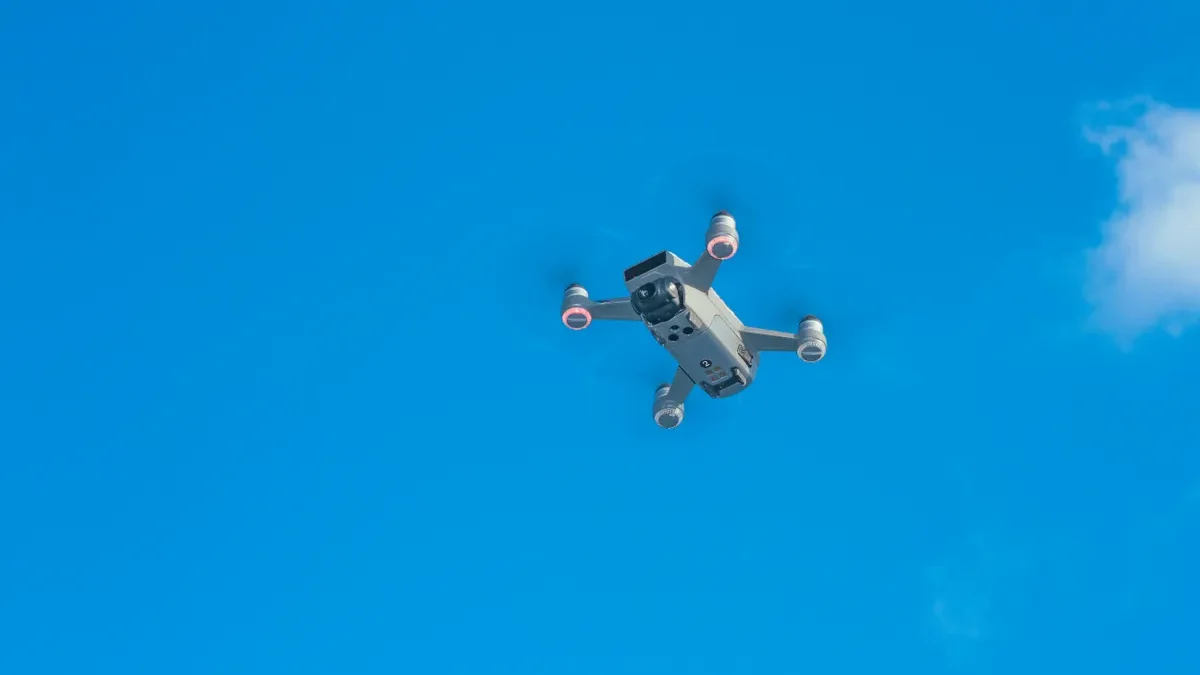
Kongsberg’s Poland counter-drone factory plan, announced at the Warsaw Security Forum on October 12, is more than a manufacturing decision: it is the structural foundation for what the Norwegian group expects to become a significant export platform backed by EU sovereign defense funding. The company plans to invest more than 200 million zloty ($51 million) in a new production facility in northern Poland for counter-drone systems.
The factory is directly tied to the San anti-drone program, a deal between Kongsberg and Polish state defense group PGZ signed with the Polish Armaments Agency on January 30, 2026. Kongsberg’s portion of that contract is worth approximately NOK 16 billion, according to the company’s own press release.
The broader San program, valued at around PLN 15 billion ($3.8 billion) in total, calls for delivery of 18 anti-drone batteries, 52 firing platoons, 18 command platoons, and 703 vehicles to the Polish military. PGZ subcontractor Advanced Protection Systems (APS), based in Gdynia, will provide the command and control architecture that integrates the system’s sensors and effectors with Poland’s national air defense network.
CEO Eirik Lie framed the facility as a dual-purpose asset, both serving the domestic contract and positioning the company for international sales. “We are on good track for deliveries on the San program,” he said. “But also, we expect export contracts, so this enables us to be prepared for these exports from Poland.”
The financing architecture behind the San contract matters for the investment thesis. Poland became the first country to sign the EU’s Security Action For Europe (SAFE) instrument agreements in May 2026, unlocking access to €43.7 billion ($51.6 billion) in EU defense funding, according to Breaking Defense. Of that total, $4 billion is earmarked specifically for the San anti-drone system.
The read here is that Kongsberg is building a factory not just to fulfill a current contract but to sit inside a financing pipeline that is now legally established and sovereign-backed. That materially lowers execution risk on the revenue side.
Kongsberg plans to sign a construction contract by the end of 2026, begin work immediately afterward, and commence serial production of counter-drone systems in the first half of 2028. The plant is expected to create more than 100 jobs once it reaches full capacity.
The bull case is straightforward. European NATO members are accelerating counter-drone procurement following persistent drone incursion concerns across the continent. Lie said Kongsberg expects demand for its solutions to rise significantly in the coming years, and a Polish manufacturing presence positions the company to bid on export contracts from a lower-cost, EU-located base.
The factory also has optionality built in. Lie said Kongsberg intends to expand the facility’s product scope beyond counter-drone systems: “As a company, we are expanding quite a lot. We want to build on this factory for other elements as well.” That signals the $51 million outlay is a platform investment, not a single-program bet.
The bear case centers on execution timeline and contract concentration. The factory does not reach serial production until the first half of 2028, meaning Kongsberg carries capital and construction risk for roughly two years before volume output begins. The San program is also the dominant anchor tenant; if delivery schedules slip or procurement priorities shift, the facility’s utilization rate suffers before any export revenue arrives to compensate.
The European Commission SAFE financing provides a measure of demand certainty, but it also means the customer base is, for now, heavily concentrated in a single sovereign contract financed by a single instrument. Export diversification is the thesis Lie is selling; it is not yet the revenue reality.
The key test for this investment comes in the first half of 2028, when serial production is scheduled to begin. If Kongsberg hits that date and can demonstrate export order flow alongside San deliveries, the factory justifies itself as a platform. A production delay, or a SAFE disbursement hiccup on the Polish end, would compress that margin considerably.
Three U.S. Army soldiers received Purple Hearts for their actions during the Operation Epic Fury Purple Hearts ceremony...
Vector Defense and Nammo announced an expanded partnership Monday at the Association of the United States Army’s annual...

The TSMC earnings season preview is the week’s focal point, with Taiwan Semiconductor Manufacturing (TSMC) reporting Thursday as...