Daimler Truck Defence Lands New Zealand Unimog Order in Indo-Pacific Push

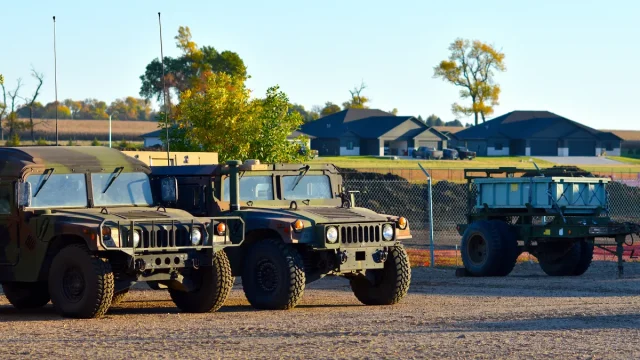
Daimler Truck Defence has secured an order for 61 Mercedes-Benz Unimog trucks from New Zealand’s Ministry of Defence and the New Zealand Defence Force (NZDF), adding Indo-Pacific proof to a revenue growth story that has so far been narrated almost entirely through a European lens.
The contract is part of a broader NZD 59.915 million (USD 33.5 million) government investment covering 121 support vehicles in total, according to the New Zealand Ministry of Defence. The wider package also includes 24 Mitsubishi Triton utility vehicles and 36 Ford Tourneo Sport minibuses, with those platforms and associated communications equipment sourced from New Zealand-based companies. Maintenance across the full fleet will be contracted to local firms.
Phased deliveries of the Unimogs are due to begin in 2027. The vehicles will support day-to-day training, personnel and equipment movement between military sites, and domestic search-and-rescue and disaster-relief operations. The NZDF already operates Unimogs, and financial terms of the Daimler portion were not disclosed.
Daimler Truck Defence’s €1bn Revenue Target Gets Geographic Breadth
The deal matters less for its size than for its geography. In August, Daimler Truck brought forward its target of doubling defence revenue to €1 billion ($1.15 billion) to 2028, two years ahead of the original plan. CEO Karin Rådström has said defence is growing faster than the company’s commercial vehicle business, and the NZDF order illustrates why: the Unimog is adapted from an existing commercial platform, which keeps development costs contained while opening the product to a broad set of military buyers.
The contract pipeline supporting that target is already substantial. Automotive World reports that recent awards include a Bundeswehr logistics order, a contract for at least 1,500 trucks for the Canadian Armed Forces in partnership with General Dynamics Land Systems, and a 7,000-truck framework agreement with the French Armed Forces via Arquus. New Zealand adds a sixth continent to the sales map.
The official Daimler Truck press release, dated October 15, 2026, was issued jointly from Leinfelden-Echterdingen and Wellington, a small detail that underlines the deliberate bilateral optics of the announcement. Chief Sales Officer Daniel Zittel leaned into the platform’s credentials: “The NZDF’s decision to select the Mercedes-Benz Unimog is a strong vote of confidence in the capability, versatility, and reliability of our vehicle.”
The Bull and Bear Read on the Defence Segment
The bull case is structural. Daimler Truck Defence was established as a unified global brand, backed by a planned investment in the mid-three-digit million-euro range and roughly 1,000 employees currently engaged in the segment, with growth anchored at the Wörth production site in Germany, according to a Daimler Truck Defence brand expansion press release. The model is asset-light relative to traditional primes: adapt commercial vehicles, leverage existing supply chains, and sell into a defence-spending cycle that is running hot across NATO and its partners. The NZDF award shows that cycle extends into the Indo-Pacific.
The bear read is that 61 vehicles from a $33.5 million national procurement pot is a small ticket. The Unimog portion represents a fraction of that NZD 59.915 million total, and Janes’ reporting via the Janes defence intelligence platform confirms the remainder went to local and other non-Daimler suppliers. Reaching €1 billion in defence revenue requires winning deals at a pace and scale that individual orders like this one do not, on their own, demonstrate.
The evidence leans bullish on the trajectory, though. The combination of a large French framework, a Canadian fleet contract, Bundeswehr work, and now a Pacific-rim order suggests the commercial-vehicle-to-military-adaptation playbook is finding traction across multiple procurement budgets and alliance structures. The risk is execution: hiring the roughly 1,000-plus specialists the Wörth expansion requires, and delivering phased contracts across multiple continents on schedule.
The real test for the €1bn target will be whether the large framework contracts, particularly the 7,000-truck French agreement, convert to firm orders and revenue on the timeline Daimler has committed to. If they do, 2028 looks achievable. If not, the company has very publicly moved the goalposts once already.