Delta Air Lines 2026 Outlook Slashed as $6 Billion Fuel Bill Hits Home
Delta Air Lines (DAL) slashed its Delta Air Lines 2026 outlook on Friday, cutting full-year adjusted earnings per...
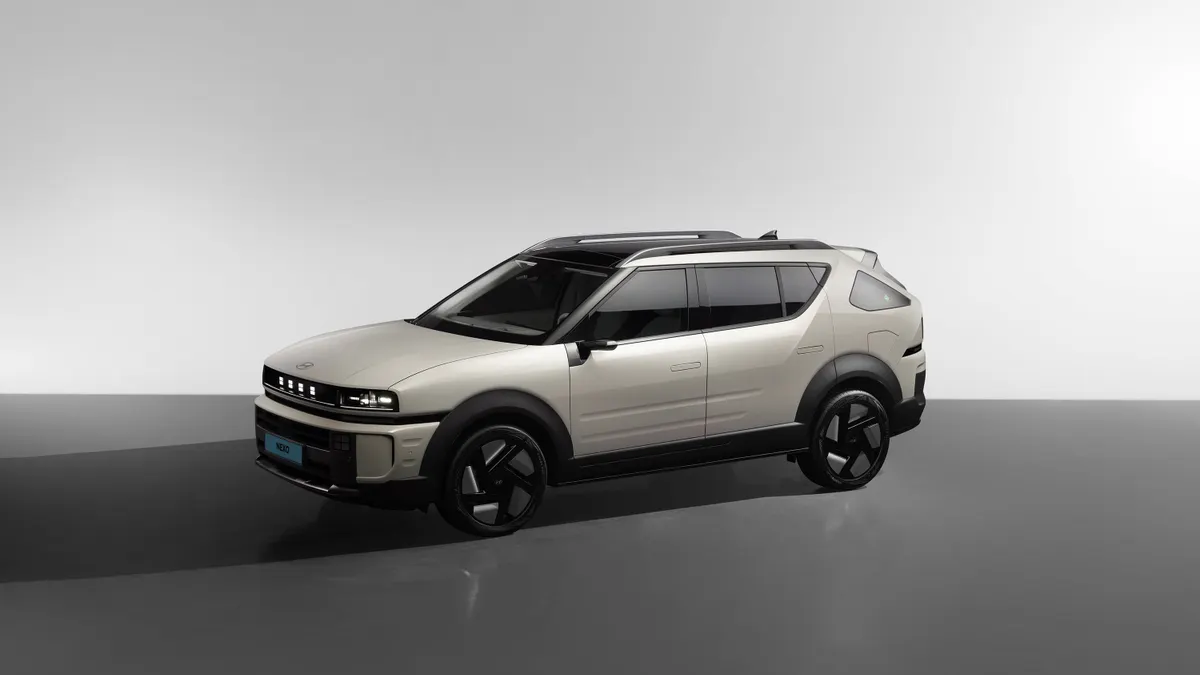
Xiaomi Sky Nomad orders crossed 70,000 in the model family’s first month, a result that lifted the stock and proved demand exists. It is nowhere near enough to salvage the 550,000-unit target for 2026.
The arithmetic is unforgiving. Xiaomi reported at least 286,475 deliveries through the first nine months of 2026, or 52.1% of its annual goal, leaving 263,525 units to deliver in the final quarter. Even if the SU7 and YU7 sustain their summer pace of roughly 30,000 combined per month, the Sky Nomad family would need to supply around 174,000 units by December. That is two and a half times the model’s entire first-month order book.
To hit 550,000 for the year, Xiaomi needs to average nearly 88,000 deliveries a month through December, more than double its best monthly total of 2026. September, boosted by the Sky Nomad launch, cleared 40,000 for the first time this year. That is progress, not a pace.
The 550,000-unit goal was set by founder Lei Jun in January. Bloomberg reported that Lei described the target as a 34% increase on 2025 volumes. The Xiaomi 2025 Annual Report puts the precise 2025 delivery figure at 411,082 vehicles, representing 200.4% year-over-year growth. That trajectory, not any single product launch, is what made the 550,000 target feel achievable in January.
Context matters here. The Xiaomi Sky Nomad orders figure of 70,000 accumulated over a full month includes the 10,000 locked-in reservations placed within four minutes of the September 7 launch. By Xiaomi’s own recent standards, that is modest: the YU7 drew around 300,000 reservations within an hour. Unverified Chinese media reports from August had placed pre-orders above 100,000, suggesting early momentum has not fully converted to committed buyers.
The company did manage execution better than it did at the YU7 rollout. Xiaomi pre-built inventory so buyers could take delivery within one to five weeks, a direct response to the wait-time frustration that followed the YU7 launch. The SkyNomad family spans four variants: the five-seat N70 Pro and N70 Max, the seven-seat N90 Max, and a five-seat camping version with a retractable roof, all running a 1.5-litre turbocharged engine as a range extender. Pricing starts at CN¥209,900 (approximately $31,170).
Investors reacted well, sending the stock up 8% on the order report. The reaction last time was the opposite: in July, Deutsche Bank analysts read Xiaomi’s pricing strategy as volume over margin and the shares fell 7.28%. Launching the N70 Max at its earlier pre-order price kept that aggressive posture intact while the market chose to focus on demand rather than margin risk.
The Sky Nomad enters a segment that is contracting. China Passenger Car Association data show EREV retail sales fell 15.85% year-over-year to 616,000 units across the first eight months of 2026. Li Auto and Huawei-backed Aito hold seven of the ten best-selling extended-range SUV slots. In a shrinking segment dominated by entrenched rivals, most Sky Nomad volume will have to be taken from competitors rather than grown from new demand.
The YU7’s track record shows Xiaomi can compete for share in premium Chinese SUVs. The 2025 Annual Report confirms the YU7 ranked first in mid-to-large SUV sales for seven consecutive months through February 2026, per Autohome data. Replicating that in the EREV space is a different task against Li Auto’s entrenched customer base.
There is also the base-effect problem. At September’s run rate, Xiaomi finishes 2026 at roughly 406,000 deliveries, below the 411,082 it delivered in 2025. The fourth quarter sets the toughest comp: December 2025 alone produced a record 50,212 units.
The Sky Nomad matters beyond 2026. The extended-range architecture is a logical lead product for Xiaomi’s planned European market entry in 2027, given that EU tariffs on Chinese-made EVs largely spare EREVs. The real test for the series is whether it can carry Xiaomi past its own 2025 total this calendar year and build the volume credibility needed before that European push. On current evidence, 2026 delivery leadership is already ceded; the question is whether Sky Nomad makes 2027 a genuine growth story.
Delta Air Lines (DAL) slashed its Delta Air Lines 2026 outlook on Friday, cutting full-year adjusted earnings per...

The Tesla (TSLA) production outlook for 2026 points to a genuine volume recovery, but the more pressing question...
The FAW Toyota deal is Toyota’s clearest admission yet that running two separate joint ventures in China has...