
The Best AI Stocks to Buy Now According to Morningstar — Including One That Wall Street Has Completely Overlooked
When everyone suddenly changes their minds, a certain kind of silence descends upon a market. For a large...
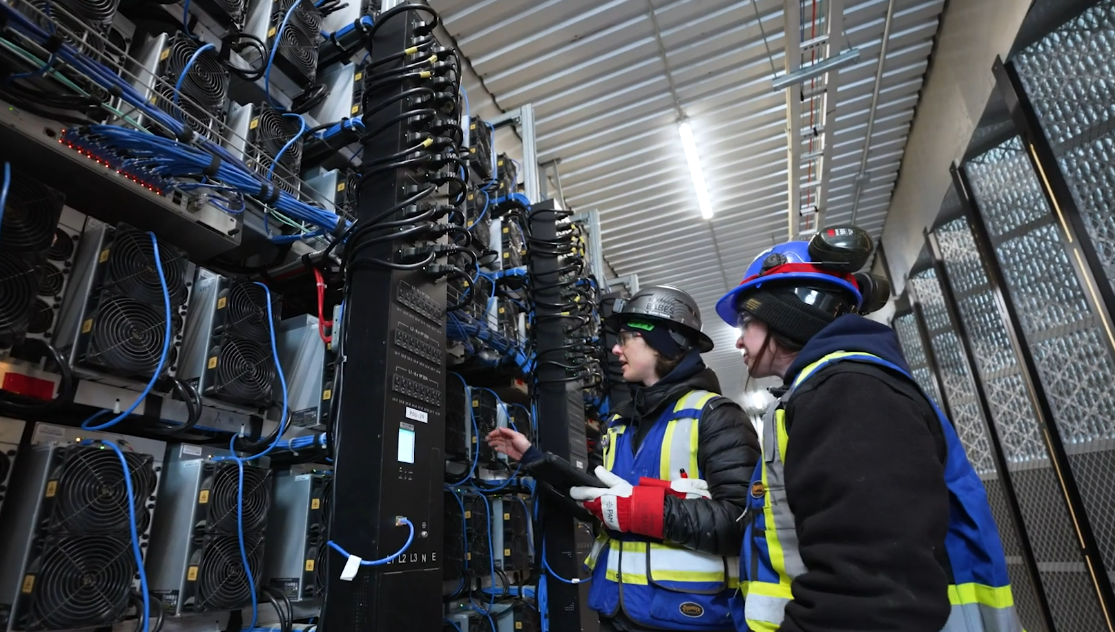
IREN was a company that most people in the tech industry couldn’t put on a map until recently. It was an Australian Bitcoin miner, one of many working in that odd area of the market where nearly everything was determined by the price of cryptocurrency and electricity. Since then, it has made a number of strategic changes, such as switching from mining rigs to AI infrastructure and from speculative cryptocurrency play to partnering with Nvidia. These changes either seem brilliant in retrospect or like a costly wager that paid off. Observing the stock movement this week, it appears that the market is moving in the direction of excellence.
It is difficult to overstate the strategic partnership that IREN and Nvidia announced on May 7. The two businesses intend to install up to 5 gigawatts of AI infrastructure throughout IREN’s global data center pipeline that complies with Nvidia’s DSX standards. As part of the deal, IREN gave Nvidia a five-year warrant to buy up to 30 million common shares at a price of $70 each. If fully exercised, this right could be worth up to $2.1 billion, and it would vest in tranches as real GPU deployments are finished. The arrangement is purposefully set up that way. The capital of Nvidia is not a passive check. As IREN demonstrates that it can truly build and deploy at scale, it gradually unlocks. Analysts are likely viewing the partnership as more credible than a standard press-release arrangement because of this important distinction.
The Nvidia contract is for managed GPU cloud services across about 60 megawatts of existing, air-cooled Blackwell infrastructure at IREN’s Childress, Texas data centers. It is estimated to be worth $3.4 billion over five years. This is intriguing in part because the Childress facility is already operational. This business does not guarantee future capacity. Using hardware that has already been installed, the first deployment is currently taking place inside existing buildings. In a field where many players are still in the rendering-and-announcement stage, the execution has a grounded quality that makes it stand out.
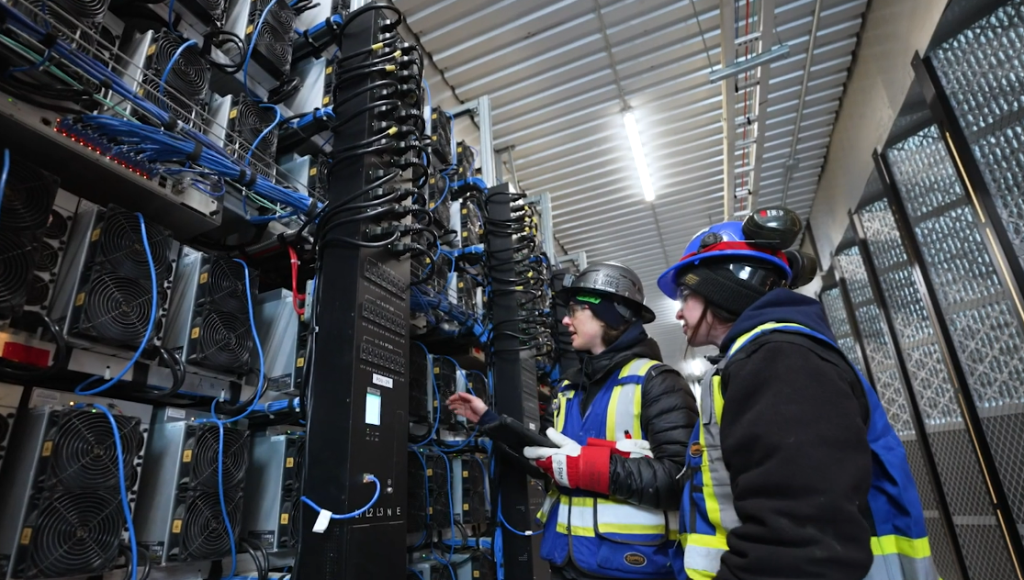
On the surface, IREN’s third-quarter FY2026 results, which were made public that same week, presented a somewhat conflicting picture. The total revenue decreased from $184.7 million in the previous quarter to $144.8 million. However, the company’s deliberate decommissioning of older mining hardware to make room for GPU installations, which resulted in $140.4 million in noncash impairments during the quarter, explained the decline in Bitcoin mining revenue. In a single quarter, the AI Cloud segment’s revenue share increased from 9% to 23%, more than doubling. Anyone considering where this company is going, rather than where it has been, should focus on that acceleration.
The picture of contracted revenue is also noteworthy. $1.9 billion from Microsoft, $700 million from the new Nvidia agreement, and $500 million from Prince George made up IREN’s reported $3.1 billion in contracted yearly recurring revenue. By year-end 2026, the company hopes to generate $3.7 billion in annual revenue (ARR). As Microsoft and Nvidia Blackwell deployments fully go online, the ramp is anticipated to be heavily weighted toward the second half. Although management has framed it around a construction flywheel—standardized, repeatable builds that run in parallel across multiple sites—it’s still unclear if that timeline holds without slippage. At the very least, it offers a structural justification for confidence rather than merely aspiration.
IREN’s trajectory gives the impression that the company has undergone a genuinely challenging transition at a genuinely positive time. As hyperscaler demand surpasses available infrastructure, the strategic logic of controlling land, power, and construction—rather than depending on third parties who experience their own supply chain delays—becomes increasingly clear. IREN appears to be looking beyond its current footprint in ways that could look very different in three years, as evidenced by its expansion into Spain through the acquisition of Nostrum Group and its positioning of Australia as an Asia-Pacific hub with direct submarine fiber links to Japan and Singapore. The execution of Compass Point’s $105 price target will largely determine whether it turns out to be conservative or optimistic. However, the parts being put together are not insignificant.
When everyone suddenly changes their minds, a certain kind of silence descends upon a market. For a large...

Tony Robbins can sound almost archaic when discussing money. He doesn’t offer you a stock ticker. A coal...

These days, there’s a time during earnings calls when you can practically hear the math break in between...