DroneShield’s Leadership Handover Amid a $15 Billion Australian Defense Surge
A major Australian defense spending announcement has arrived just as DroneShield, the counter-drone technology firm, navigates a complete...
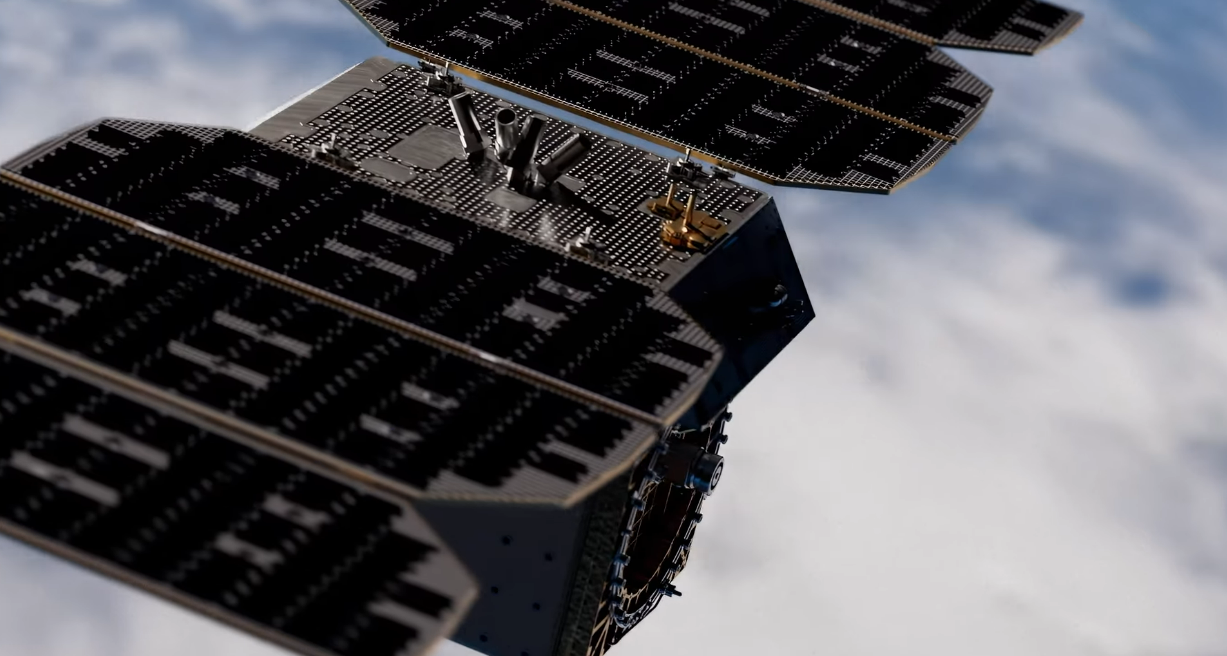
One of Planet Labs’ tiny satellites is currently passing by somewhere above the clouds, most likely directly above where you are sitting, taking a picture. The company was founded on an almost ridiculous concept: take daily pictures of the entire Earth’s surface. Not specific areas, not key sites, but everything, consistently, at a pace that was previously unattainable for any business. That mission, which began in a garage in San Francisco in 2010 and launched its first satellites on a shoestring, is currently valued at almost $14 billion. On May 8 alone, the stock increased by more than 10%.
This week’s catalyst was a contract announcement that might appear modest for a business this size. With support from the European Space Agency, the German operating division of Planet Labs was able to negotiate a two-year satellite imagery contract worth seven figures with the Greek government. On its own, it won’t significantly shift the revenue needle. However, the way the market responded—the stock clearing $39, the increase in implied volatility, and the spike in call volume—indicates that investors are viewing it as more than a single contract. They might interpret it as proof that, at a time when the demand for satellite imagery is actually increasing, Planet Labs is systematically expanding its clientele among European governments and institutions.

It is more difficult to explain PL stock’s overall trajectory using a single data point. $3.47 was the 52-week low. The stock recently reached a new annual high of $41.71. That represents a roughly 1,100% increase in just a year, fueled by a combination of better quarterly results, enthusiasm from the space industry, and an increasing perception that Planet Labs’ data—daily global imagery fed through analytics tools—is becoming genuinely helpful to governments, agricultural operators, defense analysts, and insurance companies in ways that weren’t entirely clear even a few years ago. Revenue for the fourth quarter of FY2026 increased by 41% year over year to $86.82 million, a figure that begins to provide more stability for revenue-based valuations.
Nevertheless, there is a clear tension in the current situation. The stock is currently trading about $9 below the analyst consensus price target of $29.94. Having increased its target to $40 in March, Cantor Fitzgerald has the most optimistic outlook on the Street, but even that number is now in the past. Citigroup and Morgan Stanley ended up at $35. Goldman Sachs has set a target of $20 while remaining impartial. All of them are being surpassed by the stock. The discrepancy between the market price and institutional forecasts indicates either that the market is pricing in a growth scenario that hasn’t yet fully materialized in the financials or that analysts are lagging behind in updating their models. Which reading is more accurate is still up for debate.
It is important to acknowledge the additional layer of ambiguity caused by insider selling. Ashley F. Johnson, the CFO, reduced her holdings by almost 10% and made over $7 million when she sold 200,000 shares at $35.10 in early April. Robert Schingler, another insider, used a pre-planned trading strategy to sell 73,683 shares at about the same time. Insider transactions under 10b5-1 plans are prearranged and don’t always indicate a bad opinion of the company, but the timing—during a period when the stock was moving significantly—is the kind of information that tends to stick in the back of the mind of a watchful investor.
Observing Planet Labs navigate this moment gives me the impression that the company is at a truly fascinating turning point. It created a constellation that can see everything, which is technically remarkable. Now, it must demonstrate that seeing everything is a viable business with strong economics. The European agreement with Greece is a modest but significant step. Professional money is beginning to take the long-term thesis seriously, as evidenced by the institutional accumulation from companies like Baillie Gifford and MCF Advisors. In the end, quarterly results—rather than analyst targets—will determine whether the stock at $39 is pricing it fairly or getting ahead of the story.
A major Australian defense spending announcement has arrived just as DroneShield, the counter-drone technology firm, navigates a complete...

The Australian counter-drone specialist DroneShield finds itself in a curious tug-of-war. While posting its strongest-ever quarterly results, the...

The Australian defense technology firm DroneShield is navigating a critical juncture, where a sweeping leadership transition is colliding...