
Why Goldman Sachs Just Said Industrial and Defense Stocks Are the New “Safe Havens” — and What That Means for Tech
A quiet rewrite has been taking place somewhere on the 43rd floor of Goldman Sachs’ Manhattan headquarters. Neither...
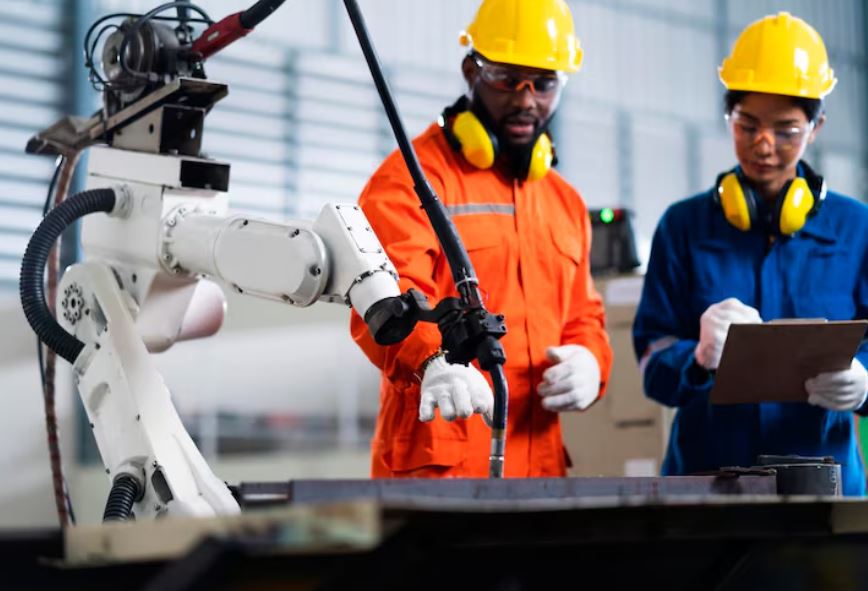
A certain silence permeates the floor of an automation trade show. Not exactly silence—somewhere a conveyor is humming, a sales representative is explaining vision systems to a man in a polo shirt who is constantly checking his phone, and a robotic arm is executing the exact arc it has performed ten thousand times that morning. However, you can sense something different beneath it all. It’s difficult to ignore how frequently the people on those floors have begun discussing who might be purchasing whom rather than products over the last eighteen months.
It’s not an imagined sense. It is supported by the numbers. In just the third quarter of 2025, North American M&A volume hit $762.2 billion, shattering a record that had stood since the frothy days of late 2021. Additionally, the automation and robotics sector has been growing faster than the majority of the overall economy would indicate. In January 2026 alone, Bundy Group, an advisory firm that has been monitoring this area of the industrial world for sixteen years, recorded nine transactions: Siemens acquired Setmetrics, ProMach acquired a group of packaging component companies, and Autotool acquired VC Automation for its integration capabilities.
The timing might not be coincidental. Manufacturers have not experienced a labor shortage in a generation. Hardware is needed for the energy transition more quickly than utilities can install it. Additionally, data centers are being forced to demand cooling systems, switchgear, and motion controls in quantities that no one anticipated two years ago due to AI compute, that runaway train. The quickest way to solve all three issues at once is increasingly to hire an automation specialist.
The deal that best illustrates the larger picture is the Skild AI round, which was announced in the middle of January. Nvidia, Jeff Bezos, Schneider Electric, and Sequoia all contributed to the $1.4 billion fundraising led by SoftBank, which valued the company at more than $14 billion for what it refers to as a “general-purpose AI brain” for robots. A foundation model for physical machines appears to be valued at the same level as a mid-sized industrial conglomerate by investors. Strategic acquirers are becoming anxious because that is an impressive wager.
When the next truly significant merger occurs, the likely buyers are not a mystery. Siemens has the financial capacity to grow significantly and has been discreetly acquiring smaller technology companies for years. Strong cash flow, aging product portfolios, and shareholders raising pointed concerns about AI strategy are characteristics shared by ABB, Emerson, Rockwell, and Schneider Electric. The other half of the equation is private equity. The names Platte River, Union Park, and Arcline keep coming up in the closing announcements, building platforms in silence, and then waiting.
There’s a sense that one of these companies will eventually merge with another to completely change the industry. It’s still unclear if that means Siemens absorbing a robotics pure-play or a private equity-backed roll-up abruptly going public at a valuation no one anticipated. The industrial team at PwC stated that the upcoming year will be about “adaptation, not scale,” which may seem modest, but in this industry, adaptation typically entails writing very large checks.
Last fall, a plant manager in Indiana casually mentioned that his line was producing more while employing thirty percent fewer workers than it did five years prior. He expressed it in a manner similar to how someone would discuss the weather. The dealmakers are pricing in that world.
A quiet rewrite has been taking place somewhere on the 43rd floor of Goldman Sachs’ Manhattan headquarters. Neither...
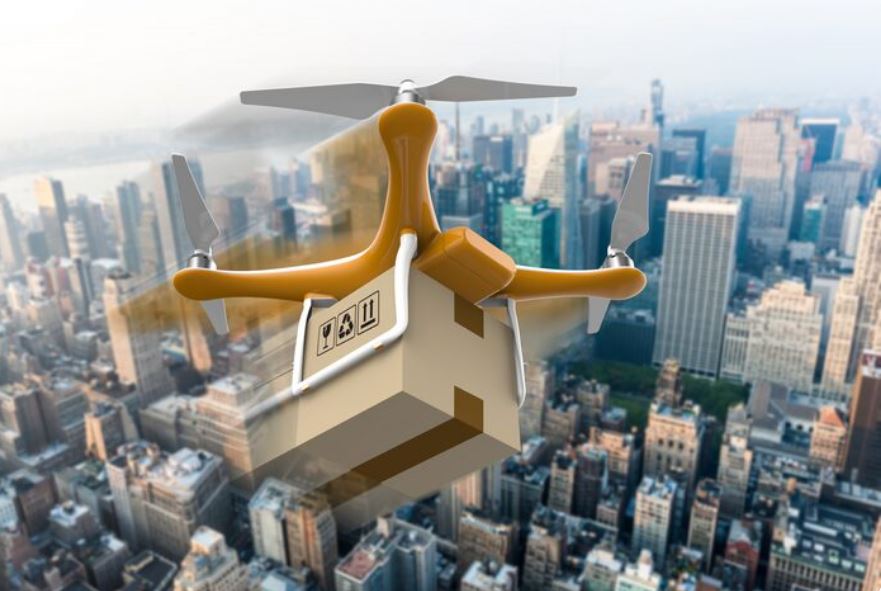
A small white aircraft is hovering thirty feet above a backyard somewhere over a suburb outside of Dallas,...

If you’ve been following Warren Buffett for some time, you’ll notice a subtle contradiction in the way he...