
US Army Brain Health Assessment Hits 97%, but Gaps Loom Large
The US Army brain health assessment program has reached 97% completion across active duty, National Guard, and Reserve...

There was a moment on Tesla’s most recent earnings call when Elon Musk slipped into a sentence that sounded like a routine forward-guidance line and ended up doing something else entirely. He said Tesla would be substantially increasing its investments going forward and that shareholders should expect a very significant increase in capital expenditures. He framed it around Optimus, robotaxis, chip design, AI training. The headlines focused on Tesla. But sitting somewhere in Santa Clara, the people running Nvidia had to be quietly pleased.
It’s hard not to notice how often Musk ends up boosting Nvidia’s stock without entirely meaning to. He has spent years talking about Tesla’s in-house chip program, the Dojo supercomputer, the AI5 processor, the cost benefits of building silicon yourself. And yet every time the company expands its ambitions, the next sentence usually involves more orders going to Jensen Huang. Last year, Musk said outright that Tesla wasn’t looking to replace Nvidia. This year, with capex projected to climb sharply, that statement quietly hardened into something closer to a long-term commitment.
Tesla’s most recent quarter was uneven in the way Tesla quarters tend to be lately. Revenue came in below what analysts had penciled in. Earnings managed to surprise on the upside. The stock moved 2.45% higher to $390.97, trading at a forward P/E of 178.6 that essentially leaves no room for failure on either of its big bets. Optimus, the humanoid robot Musk says will become the company’s biggest product ever, is supposed to ramp into production this year. The robotaxi service, which depends on full self-driving software clearing technical and regulatory bars that have shifted under Tesla’s feet for nearly a decade, is meant to scale alongside it.
Both projects need enormous AI training capacity. There’s a sense that Tesla’s internal chip ambitions, however genuine, are not on a timeline that lets the company avoid Nvidia in the meantime. So Musk is doing what every other major tech company doing serious AI work has had to do. He buys from Jensen and builds his own at the same time, hedging both directions, hoping the internal program eventually catches up while ordering Blackwell chips by the rack to keep training runs moving in the present.
That detail matters because Nvidia’s bull case has been quietly reshaped by it. Huang has been telling investors to expect $1 trillion in orders for Vera Rubin and Blackwell chips through 2027. Numbers that big rely on the assumption that the largest spenders, Microsoft, Meta, Google, Amazon, Tesla, xAI, won’t suddenly pull back. When Musk gets on a call and confirms Tesla is increasing its spending rather than moderating it, he is not handing Nvidia a new customer. He is reaffirming an old one in a way that supports the entire valuation framework Wall Street has been building around the chipmaker.
Nvidia closed at $198.61, with a market cap above $4.8 trillion, still the largest publicly traded company in the world by that measure. Analysts carry an average target of $269.17, suggesting upside of nearly 35% from where the stock currently sits. Whether that target gets hit depends on how durable the AI capex cycle turns out to be, and that question is harder than the consensus sometimes implies. There are real competitive threats. Anthropic, Google, and Musk himself are all working on alternative silicon paths. The moat isn’t permanent. It just happens to be wide right now.
The Bloomberg detail that has been hovering in the background, the possibility of SpaceX acquiring Cursor, the AI coding company Huang has openly championed and Nvidia has invested in, is the kind of subplot that makes the relationship between Musk and Nvidia feel less like a clean alliance and more like an ongoing negotiation. Watching this unfold, you get the impression Musk is happy to praise Nvidia, happy to keep buying from Nvidia, and happy, eventually, to compete with Nvidia, all at the same time. For now, the spending plans he laid out on the earnings call point in the chipmaker’s direction. Whether they still do in three years is a different question entirely.
The US Army brain health assessment program has reached 97% completion across active duty, National Guard, and Reserve...
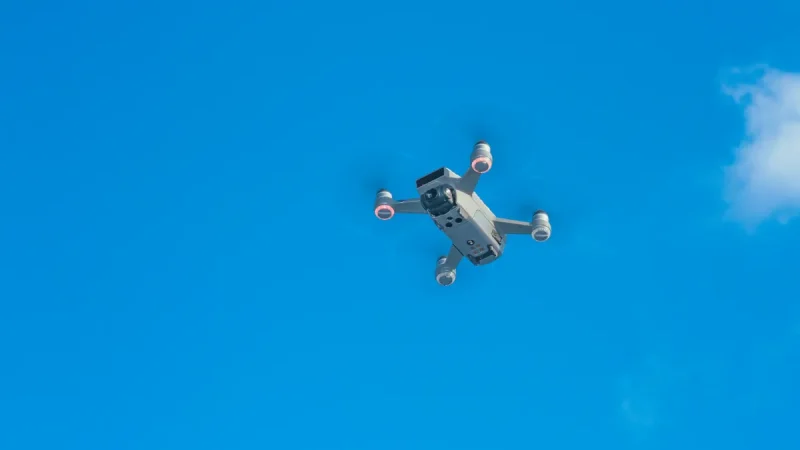
Kongsberg’s Poland counter-drone factory plan, announced at the Warsaw Security Forum on October 12, is more than a...

Three U.S. Army soldiers received Purple Hearts for their actions during the Operation Epic Fury Purple Hearts ceremony...