Jet Fuel Is Up 100% and Airlines Are Paying the Price, Here’s the Financial Model That Separates Survivors From Casualties
Earlier this month, a digital screen flickered through a red column somewhere in the Fort Lauderdale departures hall....
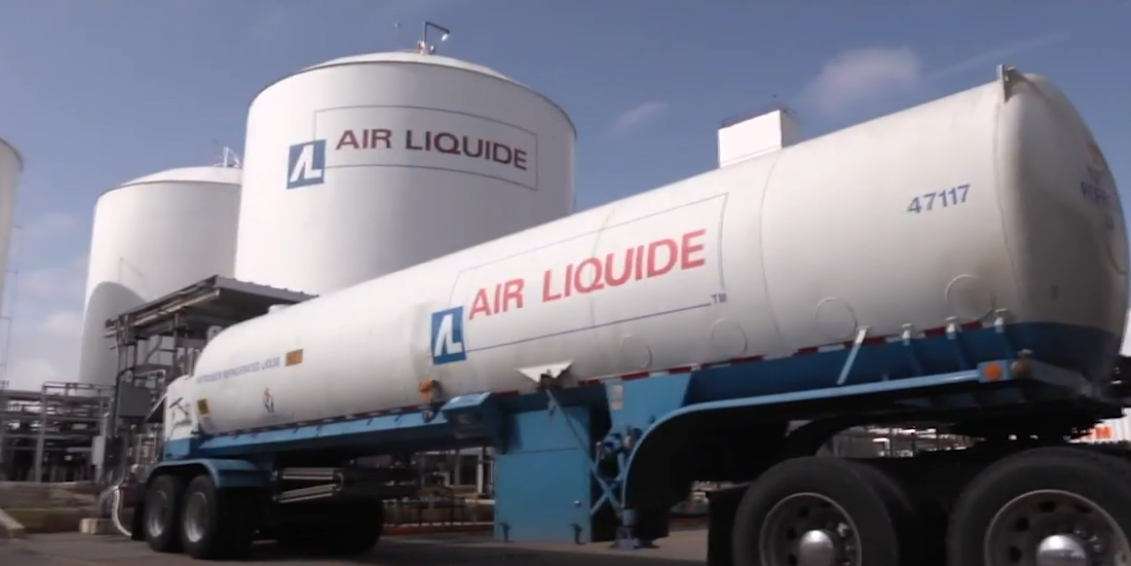
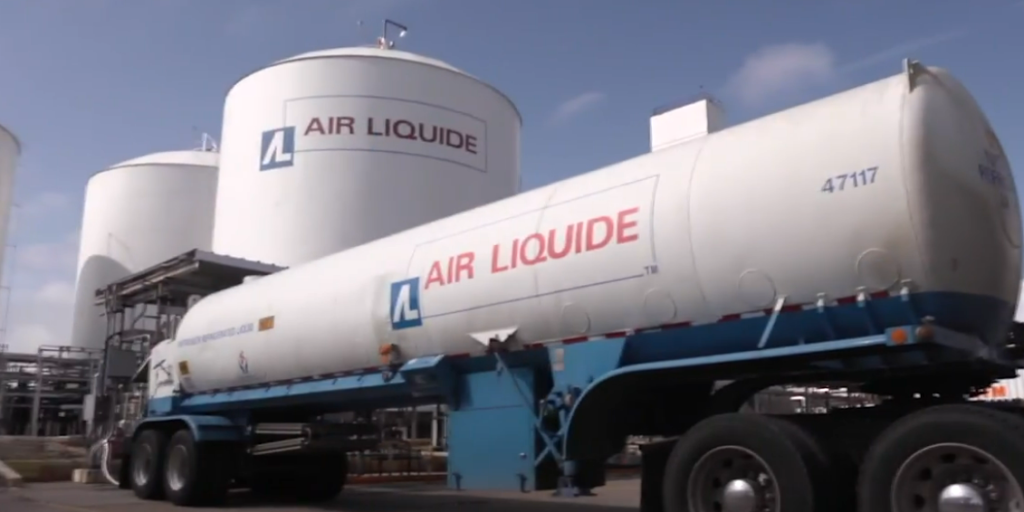
Some investment announcements don’t appear on the front page, but they most likely ought to. That’s precisely what happened when Air Liquide decided to invest €200 million, or about $236 million, in two new industrial gas production facilities in Hiroshima, Japan. It appears to be a French industrial company that constructs gas plants. When you take a closer look, it begins to resemble a map of the quiet, purposeful direction that the world economy is taking.
Ultra-high-purity nitrogen, oxygen, and argon—gases that aren’t glamorous in the traditional sense but are crucial to the production of semiconductors—will be produced by the plants. Chip manufacturing cannot take place without them. The AI revolution that everyone is talking about remains theoretical without chip fabrication. It appears that Air Liquide has been aware of this for more than a century, and they seem to understand it better than most. The fact that the company has been operating in Japan since before World War I is a detail that is often overlooked in press releases but conveys a significant message about sustained commitment.
It’s difficult to ignore the timing here. This pledge is made at a time when the world’s need for cutting-edge AI chips is growing more quickly than anyone could have predicted. Companies like Air Liquide, the suppliers behind the suppliers, are rushing to keep up with semiconductor manufacturers, who are increasing capacity at a rate that would have seemed improbable five years ago. This investment in Hiroshima may be partially defensive, establishing a long-term relationship with a client who will undoubtedly require more of everything. However, it seems more confident than cautious.
| Category | Details |
|---|---|
| Company Name | Air Liquide S.A. |
| Founded | 1902 |
| Headquarters | Paris, France |
| Industry | Industrial Gases, Technologies & Services |
| CEO / Leadership | VP Asia-Pacific: Ronnie Chalmers |
| Annual Revenue (2025) | ~€27 Billion |
| Employees | ~65,000 Worldwide |
| Customers & Patients | 4.3 Million across 59 Countries |
| Presence in Japan | Over 100 years; 78 Electronics facilities |
| Investment Announced | €200 Million (~$236 Million USD) |
| Investment Location | Hiroshima, Japan |
| Project Timeline | Operational by end of 2028 |
| Purpose | Ultra-high-purity gas supply for next-gen AI chip manufacturing |
| Stock Exchange | Euronext Paris (AIRP.PA) |
Not to be overlooked is the geography. Hiroshima was not chosen at random. Since the 1980s, Japan has been a significant player in the semiconductor industry. Although it lost some ground in the ensuing decades, there has been a clear, conscious effort to regain that position. Major international players have been reacting to the Japanese government’s clear desire to rebuild domestic chip-making capacity. Stability, quality standards, and regional security are more important to capital than the lowest cost. Air Liquide’s action is another piece of evidence supporting the reality of that shift.
Japan has been a semiconductor powerhouse since the 1980s and continues to be a global leader in technology, according to Ronnie Chalmers, Group Vice President of Air Liquide, who is in charge of Asia-Pacific operations. That’s not language used in marketing. That is a business telling you where and why it is allocating its funds. Instead of the ambiguous, aspirational language that occasionally permeates these announcements, the new facilities are scheduled to start operations by the end of 2028.
Air Liquide currently runs 78 electronics-related facilities throughout Japan, including an Innovation Campus in Tokyo that opened in 2019 and an Advanced Materials Center in Tsukuba. This isn’t a business showing up late for a party, then. They have been a part of Japan’s industrial fabric for many years, and this $236 million is an expansion of what is already effective. There’s something telling about how infrequently that context is discussed in the coverage; instead, the emphasis is always on the new deal, the new number, and the new plants. However, the story’s more significant aspect may be the century-long presence.
It’s difficult to ignore the fact that industrial gas suppliers are subtly emerging as some of the AI supply chain’s most strategically positioned businesses. Everyone talks about semiconductor fabrication plant operators, chip designers, and data center builders. The businesses that supply the gases necessary to physically fabricate wafers are mentioned less frequently. The names Air Liquide, Linde, and Air Products are not particularly eye-catching. However, in a global manufacturing process that the world has suddenly decided it cannot afford to take for granted, they are at a chokepoint.
How quickly the demand for AI chips increases, whether geopolitical conditions in Asia remain stable, and whether the particular semiconductor partner in question continues to grow at the anticipated rate are all factors that will determine whether this investment yields the returns Air Liquide is anticipating. These are significant variables. However, the deal’s structure—long-term agreement, dedicated facilities, embedded partnership—indicates that Air Liquide isn’t placing a wager on a rapid increase. They’re wagering on ten years.
When serious people think something is real, real capital tends to go toward that kind of patient, infrastructure-level commitment. Whether the AI chip boom will continue on its current course indefinitely is still up in the air. However, witnessing a 120-year-old French industrial group wager $236 million on the answer being “yes” in Hiroshima by 2028 seems like a signal that should be taken seriously.
Earlier this month, a digital screen flickered through a red column somewhere in the Fort Lauderdale departures hall....
The math just works in a quiet area of aviation finance. The majority of the work in the...
Three days after the United Arab Emirates formally left OPEC, on May 4, 2026, ADNOC hosted its first...