
Why Goldman Sachs Just Said Industrial and Defense Stocks Are the New “Safe Havens” — and What That Means for Tech
A quiet rewrite has been taking place somewhere on the 43rd floor of Goldman Sachs’ Manhattan headquarters. Neither...

For almost forty years, Warren Buffett warned anyone who would listen that investing in airlines was a bad idea. He referred to the area as a “death trap.” In his 2007 letter to shareholders, Berkshire cautioned that investors had thrown money into a bottomless pit because they were drawn to growth when they ought to have been turned off.
The reasoning was straightforward and, to be honest, difficult to refute. Just to stay in business, airlines spend money on maintenance and aircraft. Customers shop based on price because they sell a commodity—a seat from one city to another. In addition to harsh fixed costs like fuel, the industry is set up for price wars that no one truly wins due to the temptation to dump that last empty seat at a discount.
The way he wrote about it has an almost intimate quality. In 1991, he acknowledged that his USAir investment was made “almost the exact moment” the company faced serious difficulties, referring to it as an unforced error in tennis parlance. The sentence makes you wince. Even his supporters were taken aback when he changed his mind and invested in all four major US carriers in 2016.
His logic at the time was somewhat cautious in and of itself. Fuel prices had decreased, capacity had finally been disciplined, and a wave of mergers had thinned the field. He joked on CNBC at the beginning of 2017 that the airlines had “a bad century out of the way,” likening them to the Chicago Cubs—long-suffering, perhaps ready for a turn. He likened the consolidated industry to railroads, an industry Berkshire was familiar with and confident in. It was a wager that the boom-bust cycle would eventually be broken by consolidation.
It appeared clever for a while. In 2019, the industry reported its tenth consecutive year of profitability. Then the pandemic struck, causing travel demand to drop to almost nothing over night—a shock that no typical business cycle can explain. Buffett sold everything in May 2020, informing shareholders that the airline industry had changed and that he was unsure of whether or how travel habits would improve. The carriers were kept afloat by bailouts, but the debt and government warrants they incurred diluted any potential future profits.
When airline stocks later recovered, he was ridiculed. Armchair traders believed they had outwitted the Oracle after making significant gains on small accounts. It was difficult not to believe they had completely missed the point as they watched that unfold. The rebound was not being traded by Buffett. He decided the thesis had failed, looked twenty years ahead, and walked—no averaging down, no hoping.
That’s the lasting lesson. Watch out for companies that devour capital in order to survive. Recognize that a leveraged company can be destroyed in a matter of weeks by exogenous shocks. Additionally, sell rather than pray when the narrative you had faith in truly fails. However, the coda is worth mentioning. Under new CEO Greg Abel, Berkshire discreetly acquired a $2.65 billion share in Delta in the first quarter of 2026—the same industry Buffett vowed to avoid. It’s still too early to tell if that’s a new error or confirmation. It’s possible that the balance sheets healed. Certain habits may simply die hard.
A quiet rewrite has been taking place somewhere on the 43rd floor of Goldman Sachs’ Manhattan headquarters. Neither...
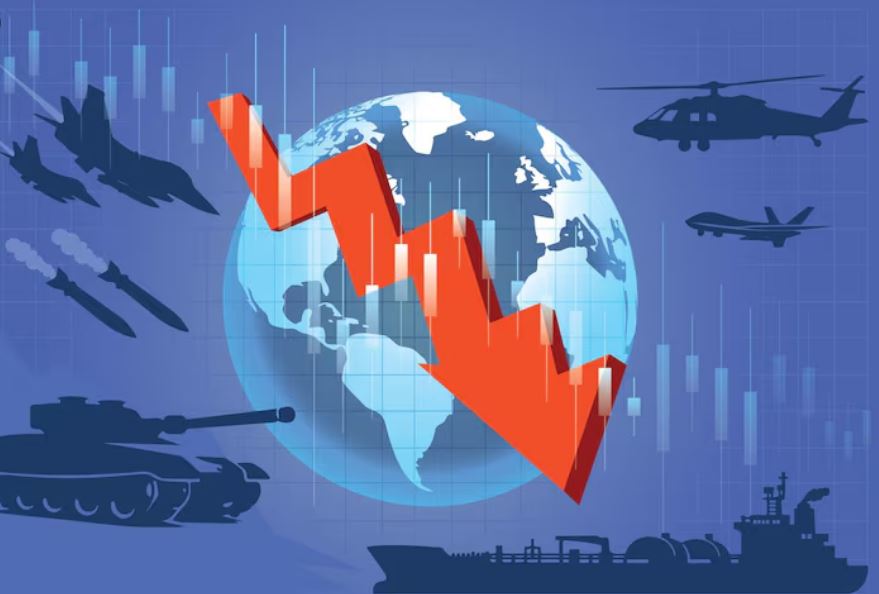
A Rheinmetall plant on the outskirts of Düsseldorf is operating longer shifts than it has in thirty years....

A closed automobile plant has a certain kind of silence. You get the same impression when you read...