
Why Warren Buffett Was Right About Airline Stocks — Until He Wasn’t — and What His Original Logic Teaches You Now
For almost forty years, Warren Buffett warned anyone who would listen that investing in airlines was a bad...

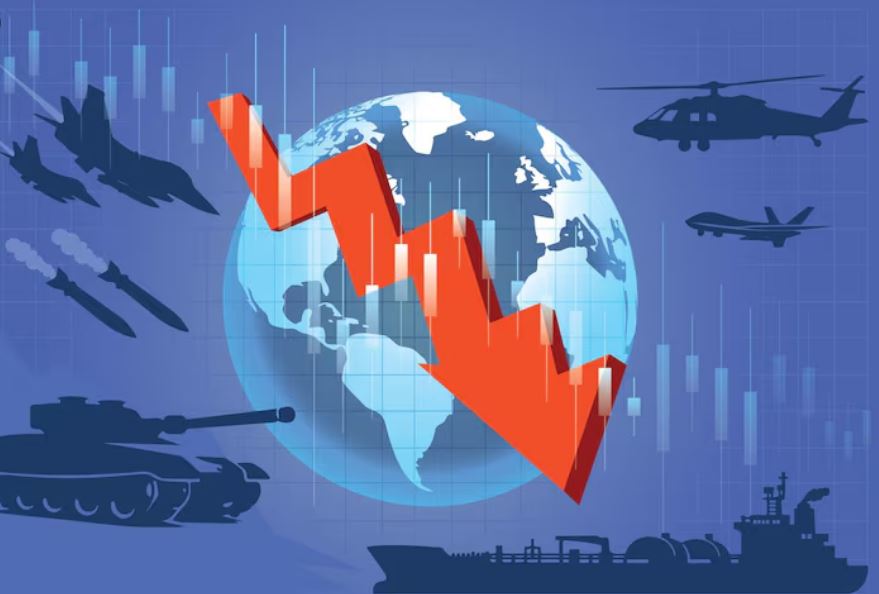
A quiet rewrite has been taking place somewhere on the 43rd floor of Goldman Sachs’ Manhattan headquarters. Neither a banner headline nor a television announcement have accompanied it. Rather, it has appeared in client memos, footnotes, the firm’s Market Know-How publication’s meticulous language, and David Solomon’s current speech pattern, which is measured, slightly perplexed, and occasionally taken aback by his own market. The change is that defense contractors and industrial firms, which were previously viewed as cyclical and slightly out of style, are now being positioned as the new safe havens. Furthermore, the asset class that defined growth and safety simultaneously for over ten years—tech—is no longer the clear answer to either question.
If you’ve watched markets for any amount of time, it’s an odd thing to take in. Gold bars in a Zurich vault, Swiss francs, and Treasury bonds were once considered safe havens. The traditional triad of gold, CHF, and JPY was still listed in Goldman’s own tariff note from April 2025. However, since then, something has loosened. You got the impression that even the oldest hedges were no longer immune when you watched gold sell off in March of this year as margin-called investors scrambled for cash. In short, even safe havens can become sources of liquidity in today’s market, according to Forbes Middle East. Forty years of textbook orthodoxy were upended by that one sentence.
Where does the money end up instead? Through their recent work, Goldman’s analysts have been piecing together an answer that, three years ago, would have sounded almost contrarian: defense-linked industrials, electrification infrastructure, and the dull, capital-intensive businesses perched atop vital minerals. James Ashley’s team’s Market Know-How 2Q 2026 report presents the argument in an unusually straightforward manner. They contend that capital is not the bottleneck of the upcoming economic cycle. Materials are involved. Lithium and copper. uncommon earths. F-35 and Virginia-class submarine magnets. They claim that structural chokepoints are where the strategic premium is located.
I’ve recently spoken with portfolio managers who seem to believe that this isn’t really about loving Caterpillar or Raytheon. It has to do with not liking the alternatives. Despite its strength, the dollar is unstable politically. During the inflation scare, bonds were embarrassing. At the worst possible time, gold trembled. In the meantime, a Lockheed earnings call sounds, to be honest, like it’s being read from a script of government demand that has been in place for forty years. Every major story over the last eighteen months, including tariffs, Iran, the Strait of Hormuz, and the Section 232 ruling on Chinese mineral processing, has directed funding toward businesses that produce tangible goods that the government cannot function without.

This uncomfortably brings us to technology. This is generally interpreted as negative news for the Nasdaq. It’s not quite that easy. Semiconductors are closer to the defense-industrial complex than most people realize, as demonstrated by TSMC’s spectacular Q4, which helped Wall Street back in January. AI clusters are powered by Nvidia chips, and power grids require transformer steel and copper. The pure software names with twenty-fold sales multiples are not the companies that prosper in Goldman’s new framing. They are the ones with fleets of forklifts, factories, fabs, and fuel cells. Microsoft and Meta could easily withstand this repricing. Most likely, a few unreliable SaaS darlings won’t.
The cultural irony in all of this is difficult to ignore. Defense stocks—old industries, lumpy earnings, political baggage—were the outdated part of any allocation deck for ten years. They now occupy Goldman’s “tactical defensiveness, structural conviction” basket next to green bonds and copper miners. In Sydney, Solomon himself stated that it might take a few more weeks for markets to process what has truly transpired. Maybe he’s understating it. The tech sector, which has long existed inside its own gravitational field, is being drawn toward the rest of the economy whether it wants to be or not. The most significant quiet story of this cycle is likely the repricing of what is considered safe. It’s still genuinely unclear if that’s healthy or just uncomfortable.
For almost forty years, Warren Buffett warned anyone who would listen that investing in airlines was a bad...
A Rheinmetall plant on the outskirts of Düsseldorf is operating longer shifts than it has in thirty years....

If you’ve been following Warren Buffett for some time, you’ll notice a subtle contradiction in the way he...