
U740 Valkyrie European Flight Clears Key Milestone on Road to 2029 CCA Delivery
The U740 Valkyrie European flight program hit a concrete milestone on October 12, 2026, when Kratos Defense and...
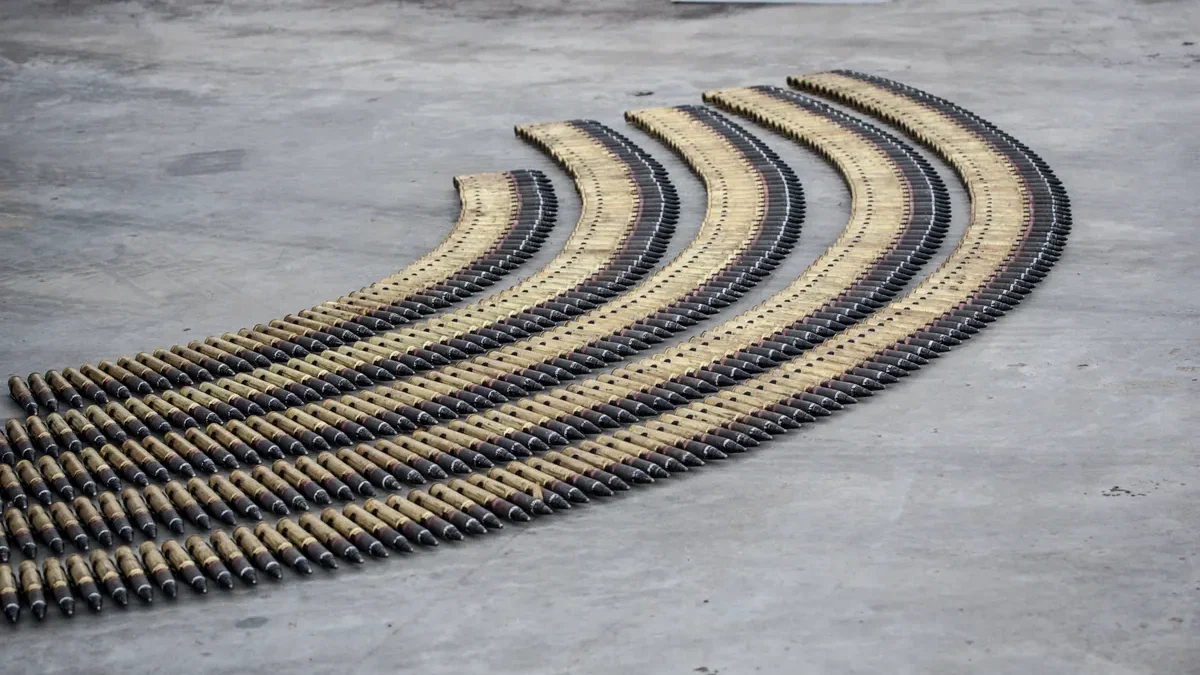
Lockheed Martin (LMT) is putting $300 million into its Grand Prairie, Texas facility, a move that converts contract backlog into bricks, machines, and floor space at a pace the defense industry has not attempted in decades. The read here is straightforward: this is not a ribbon-cutting, it is the physical infrastructure required to make the Pentagon’s missile ramp-up credible.
The plant supports every program in Lockheed Martin missile production, including the PAC-3 MSE, THAAD, Precision Strike Missile, and the AIM-260 Joint Advanced Tactical Missile. The expansion pushes the manufacturing footprint to more than 735,000 square feet, adding 100,000 square feet of new space and converting 85,000 square feet of former office space into factory floor for automated, high-precision machining.
Nearly 800 production employees currently work at the facility, which turned out 250,000 parts in 2025. Lockheed says it has already added more than 30 high-precision machines in recent months and expects to install nearly 100 more by the end of 2026.
The Hadrian piece adds a commercial-speed wrinkle. Under a memorandum of understanding signed in December 2025, the California-based manufacturing startup will install 24 automated machines at Grand Prairie. Lockheed Martin’s newsroom described the arrangement as a “factory-as-a-service” model: Hadrian embeds a scalable machining cell, combining CNC machines, advanced robotics, and its manufacturing execution platform, while Lockheed employees operate the equipment. The cell is expected to be running by early 2027 and will produce parts for PAC-3 MSE, THAAD, PrSM, and GMLRS programs. Hadrian CEO Chris Power put the logic plainly: “The warfighter can’t wait on peacetime timelines.”
The Grand Prairie investment does not exist in a vacuum. It is backstopped by a contract structure that gives Lockheed visibility most defense programs never see.
The PAC-3 MSE production chain illustrates the scale. InsideDefense reports that Lockheed delivered 620 PAC-3 MSE interceptors in 2025, a figure more than 20% above 2024 deliveries and representing a production increase of more than 60% over the prior two years. The Army awarded a $4.7 billion undefinitized contract action in April, of which $264 million came from fiscal year 2026 Army missile procurement funds while $4.5 billion was financed through foreign military sales. In July, that contract was modified into a seven-year production agreement: the total multiyear value reached $58.62 billion, combining the April award with a $53.86 billion undefinitized contract action modification. The goal is to triple PAC-3 MSE production capacity by the end of 2030, with Camden, Arkansas adding roughly 650 jobs (a 50% workforce increase) to support it.
The supply chain is widening beyond Lockheed. Boeing received a seven-year contract under the same framework to triple its output of PAC-3 MSE seekers, the guidance components that allow the interceptor to track and engage threats from aircraft to hypersonic missiles, with hundreds of direct and indirect jobs expected in the Huntsville, Alabama area.
THAAD follows a parallel track. A framework signed in January produced a June contract from the Missile Defense Agency worth more than $35 billion to quadruple interceptor production. Lockheed and the Pentagon announced comparable agreements for the Precision Strike Missile in March and the AIM-260 in September.
Grand Prairie is one node in a larger capital program. Lockheed’s stated plan runs to $8 billion to $9 billion through 2030, covering more than 20 U.S. facilities and targeting 6,000 new jobs nationwide, 2,000 of them in Texas. CEO Jim Taiclet framed it as combining “commercial speed and combat-proven performance.” Pentagon undersecretary for acquisition and sustainment Michael Duffey called the expansion “a stronger supply chain and a more resilient industrial base.”
The bull case rests on contract certainty. Multiyear, undefinitized agreements at this scale give Lockheed a cost structure it can plan around and pricing leverage with suppliers. The 60% production increase already achieved on PAC-3 MSE, confirmed by InsideDefense, shows the ramp is operational, not aspirational.
The bear case is execution risk. Converting office space into precision machining floor, integrating a startup’s “factory-as-a-service” model, and staffing nearly 100 new machines by the end of 2026 (all simultaneously) is an aggressive timeline. Undefinitized contract actions also carry profit exposure: final pricing is negotiated after work begins, and overruns come out of margin until the contract is definitized.
The evidence leans bullish, but only conditionally. The Lockheed Martin 2025 Annual Report confirms Grand Prairie’s role as a core MFC manufacturing location, and the contract stack running through 2033 provides the demand signal that justifies the spend. The watch item is definitization: once the UCA modifications are repriced, the market will know whether the margin assumptions hold. That, not the construction timeline, is where the investment thesis gets tested.
The U740 Valkyrie European flight program hit a concrete milestone on October 12, 2026, when Kratos Defense and...

Pentagon drone production funding took center stage at AUSA’s Project Agincourt panel this week, where Defense Secretary Pete...

The Army Cyber Mastery Incentive pay program has been generating alarm in the ranks since its October 1...