
China Automotive Systems Is About to Report Its 2025 Full-Year Financials, The Previews Are More Interesting Than Expected
There is a specific type of business that works hard but receives very little recognition for it. For...
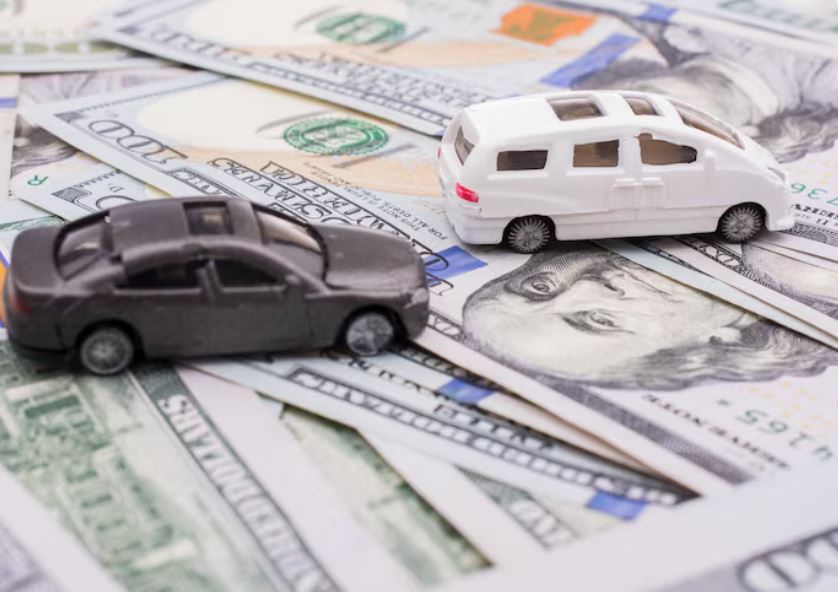
The discussion of car affordability in America over the last two years has primarily taken place from a podcast booth in Los Angeles or a desk in Manhattan. The Fed discusses inflation, Wall Street discusses interest rates, and the auto press discusses EV adoption curves. Meanwhile, the math has quietly stopped working in places like Peckville, Pennsylvania, a village outside of Scranton where Derek Sylvester’s father constructed a Chevrolet store with his bare hands in 1972. Earlier this year, Sylvester sold the dealership to a group in New York. He stated, “It’s just scale,” and that brief statement has greater significance than the majority of quarterly earnings calls.
From Appalachia to the Mississippi Delta, rural counties are repeating the Sylvester story, despite the trade publications’ tendency to portray it as a healthy consolidation. They might be correct. It’s also possible that they’re not seeing what’s truly taking place on the ground. When you drive by a small-town Ford or Chevy lot on a Tuesday afternoon, you’ll notice longer lines of unsold trucks, fewer customers, and a finance manager who has run out of inventive ways to force a buyer with negative equity into a seven-year note. The cars are too costly. The interest rates are excessively high. Underwater are the trade-ins. These observations are not new, but the pressure is absorbed in crowded urban markets where traffic is steady and buyers tend to be wealthier. It isn’t in a town of four thousand.
A portion of it is revealed by the numbers. The average new loan origination now exceeds $33,500, and the total amount of auto debt has reached $1.68 trillion, a 37 percent increase since early 2018. This past winter, subprime delinquencies reached their highest level in over thirty years. In 2024, the number of repossessions increased to 1.73 million, the highest since the 2009 wreckage. However, its texture is flattened by statistics.
The rural dealer who can no longer floor-plan a profitable inventory mix, the service department attempting to absorb 100% of overhead because front-end gross has vanished, and the customer who drives 90 minutes because the nearby store finally closed are all more difficult to see from a Bloomberg terminal.
America’s Car-Mart, a subprime-heavy chain that caters to the exact type of customer that rural America is full of, announced in April that it would close 42 dealerships across twelve states, or about 31% of its footprint. Last autumn, Tricolor filed for bankruptcy due to what a court lawyer called “potentially systemic levels of fraud.” Never one to hold back, Jamie Dimon told analysts that there are typically more cockroaches where there is one. It appears that investors think the worst is limited to subprime, and perhaps it is. Speaking with anyone who works on the floor of a single-point store in a county with a single stoplight, however, gives the impression that the lender wasn’t the source of the rot. The price tag was the first step.
In the meantime, the mega-dealers continue to expand. Both Lithia and AutoNation currently have market valuations of more than $6 billion. Somehow, Carvana, which is valued at $74 billion, has begun discreetly purchasing franchised stores without disclosing its strategy. Ten years ago, only 21 percent of all retail and fleet new cars were sold by the top 150 dealers; last year, that number rose to 27 percent. Both their money and the recovery narrative reside in urban metro areas. As this develops, it seems as though two distinct American auto retail markets are now present in the same nation: one is quietly receiving cease-and-desist letters from floor-plan lenders, while the other is consolidating into glass towers off the interstate. It’s still unclear if the second one becomes a contagion or a footnote. Until it isn’t, it usually is.
There is a specific type of business that works hard but receives very little recognition for it. For...

When an industry consistently delivers on its promises, a certain kind of weariness descends upon it. That fatigue...

These days, you notice a certain kind of silence at car dealerships. Something quieter was taking place inside...