
Trump and Meloni: A Political Clash That Shook the Alliance
The latest clash between Donald Trump and Giorgia Meloni has added fresh tension to an already fragile political...
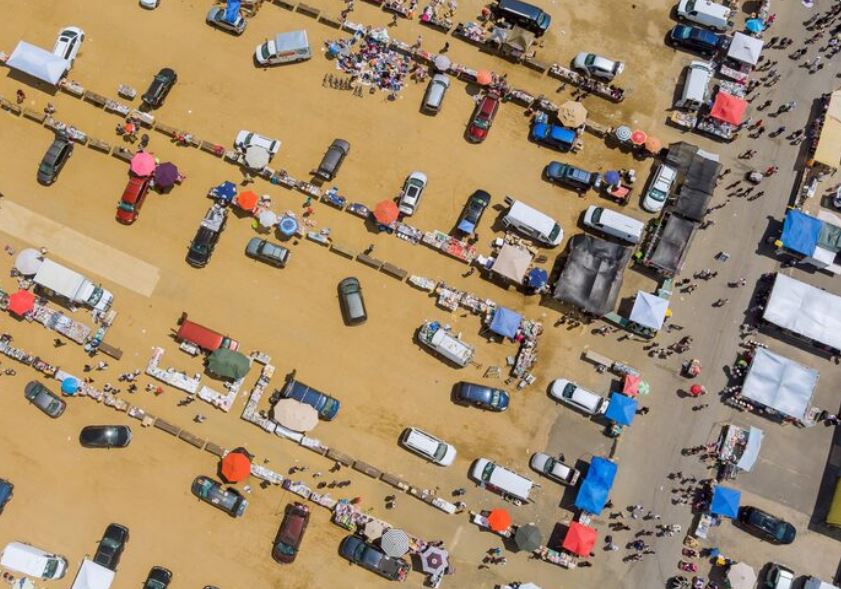
When you first enter one of those cheap car dealerships outside of Chengdu, it’s difficult to comprehend how big the thing is. Five thousand vehicles under one roof. Audis assembled locally for half the price. FAW is selling a seven-seater SUV for about twenty-two thousand dollars, but the sticker says almost sixty. With the serenity of those who no longer pretend this is normal, salespeople wander between rows. It resembles a clearance sale at the end of a season that no one informed the factories was coming to an end, rather than a showroom.
More than any spreadsheet, that picture sums up the current state of the Chinese auto industry. About 54 million cars can be produced in the nation annually. About half of that is sold there. The remainder either sits in lots, is re-registered as “used” with no miles on the odometer, or is shipped abroad at prices that are simply unmatched by competitors in Europe and Japan. A portion of it quietly rusts in formation in weedy fields outside of provincial capitals. The similarity to the property graveyards that Evergrande left behind is difficult to ignore.
Though tangled, the roots are not enigmatic. Beijing had to quickly find a new growth engine after the real estate bubble burst in 2021. Credit that had previously gone to apartment buildings was redirected toward manufacturing, particularly solar, batteries, and electric cars. Then, as is customary in China, the provinces engaged in competition.
The factory was desired by all the governors. The ribbon-cutting was desired by all party secretaries. Demand forecasts were, mercifully, optimistic, land was inexpensive, and subsidies were substantial. The current state of affairs is the result of having too many plants, too many brands, and a domestic market that is unable to absorb the output, no matter how sharply prices decline.
The rest of the world finds the export story to be fascinating. In 2024, China shipped over 5.5 million cars, a remarkable increase from less than a million just six years prior. Although the picture is more complicated, many analysts in Washington and Brussels still refer to this as a flood of subsidized EVs.
Internal combustion vehicles making their way to markets where there is still a need for them, such as Russia, the Gulf, and portions of Latin America, account for the majority of the increase. A decade of grinding work on battery chemistry, software, and supply chains is what gives companies like BYD their true EV competitiveness rather than idle factories. Though it is often overlooked in political speeches, this distinction is important.
Nevertheless, margins everywhere are feeling the effects of the spillover. From sixty-two percent in 2020 to thirty-one percent today, European brands that once relied on high-end Chinese consumers are witnessing a decline in their market share. Volkswagen is reorganizing. Stellantis uses partnerships to hedge. Even Tesla, which was once thought to be unbeatable, is lowering prices in what seems like monthly cycles.
Speaking with employees of these businesses gives me the impression that nobody really knows where the floor is. Xi himself has hinted that Beijing wants the price war to slow down. However, as anyone who has observed Chinese industrial cycles knows, signaling and stopping are two different things. The factories continue to operate. The vehicles continue to depart. As you watch this play out, you get the impression that China and everyone else still have to face the truth.
The latest clash between Donald Trump and Giorgia Meloni has added fresh tension to an already fragile political...

It’s never been done before. On June 15, 2026, the White House lawn became something no one could...

Until you look at the numbers for a minute, they don’t seem quite real. Nebius Group recently reported...