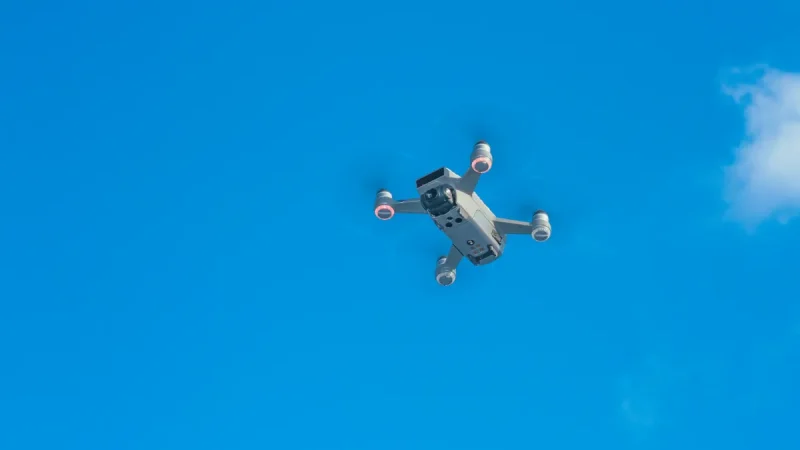
Kongsberg Poland Counter-Drone Plant to Open in 2028 With $51M Investment
Kongsberg’s Poland counter-drone factory plan, announced at the Warsaw Security Forum on October 12, is more than a...

If all goes according to plan, Archer Aviation is constructing the nation’s first commercial-scale eVTOL factory in a small Georgian town outside of Covington. When you walk past the loading bays on a weekday morning, the entire operation seems oddly quiet. This isn’t because nothing is going on, but rather because nearly everything that has commercial value is still awaiting a Federal Aviation Administration stamp. Formally referred to as a type certificate, that stamp has grown to be the most significant document in electric aviation. Additionally, it appears to be the only variable that matters to Wall Street.
It is supported by the numbers. Despite having a war chest of nearly $2 billion, a growing list of partnerships with United Airlines, Anduril, and Abu Dhabi Aviation, and the distinction of being the first eVTOL manufacturer with 100% of its Means of Compliance approved by the FAA, Archer’s stock is down roughly 25% year-to-date in 2026, trading near $5.09. The market’s primary concern, which is when the Midnight aircraft will be authorized to transport paying passengers, has not been addressed by any of that. Almost nothing else the company does seems to have a lasting impact until that date is known.
The market has rewarded Joby Aviation, Archer’s more valuable competitor, for handling the same question marginally better. In February, Joby completed Stage 4 of the FAA’s five-stage certification process with an 80% completion rate, compared to the FAA’s 73%. N547JX, the company’s first FAA-conforming aircraft, has started Type Inspection Authorization flight testing in Marina, California. Later this year, FAA pilots are anticipated. Additionally, Joby is operating in ten states under a White House-backed eIPP program. This year, it intends to transport its first paying passengers in Dubai, where vertiports are already being built at the American University of Dubai and Dubai International Airport. The market capitalization is close to $10 billion. It’s difficult to ignore the fact that Joby is one regulatory step ahead of Archer for nearly every dollar over Archer’s valuation.
Vertical Aerospace, which spent the majority of 2025 in what could be charitably described as a liquidity crisis, makes the pattern even more evident. The UK-based business had about $93 million in cash at the end of the previous year compared to a projected burn of $190–200 million. The stock fell. In other words, the market was betting against survival when short interest surpassed 25% of the float. Then, in early April, Yorkville Advisors and Mudrick Capital reached a deal for up to $850 million in financing, which included up to $750 million in optional equity lines, an extended 2030 maturity on Mudrick’s convertible notes, and immediate equity. In a matter of days, the stock was rated again. The real takeaway from witnessing it was that Vertical’s aircraft remained unchanged. The runway to certification, which is now fundable all the way to the Valo’s intended 2028 UK CAA clearance, was altered.
This distinguishes eVTOL stocks from nearly all other speculative growth names. A biotech company can repurpose a molecule, a software company can change course, and a chip designer can re-tape a product. A type certificate is either issued to an aircraft or it is not. You don’t negotiate down the FAA’s safety bar, which is at least ten times safer than most early projections for eVTOLs, with about one catastrophic failure per billion flight hours. It requires what it requires. Additionally, each quarter that is spent in review results in extra cash expenditure, dilution, and chances for a rival to outperform the incumbents.
Because of this, investors who browse through Joby’s investor deck or Archer’s 10-K keep returning to the same charts. Not deliveries. not a backlog. not the vertiport count. Gantt chart for certification. For those who experienced the early days of SpaceX around the Falcon 9 certification or Tesla in 2013, there’s a sense that this moment resonates with a category of companies where regulation and execution are inextricably linked, and the stock can move sideways for years before snapping on a single piece of news. The distinction is that eVTOLs are not dependent on sales. Nothing commercial occurs until the FAA gives its approval.
Which of these names wins is still up in the air. There could be more than one. It is evident that the FAA’s final two stages are the fastest route to a re-rating for Archer, Joby, Vertical, and all remaining SPAC-origin peers. Context is everything else.
Kongsberg’s Poland counter-drone factory plan, announced at the Warsaw Security Forum on October 12, is more than a...
Three U.S. Army soldiers received Purple Hearts for their actions during the Operation Epic Fury Purple Hearts ceremony...
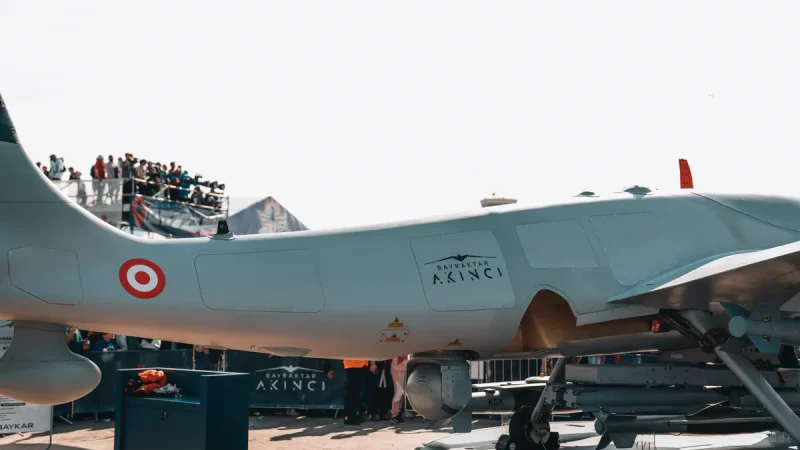
Vector Defense and Nammo announced an expanded partnership Monday at the Association of the United States Army’s annual...