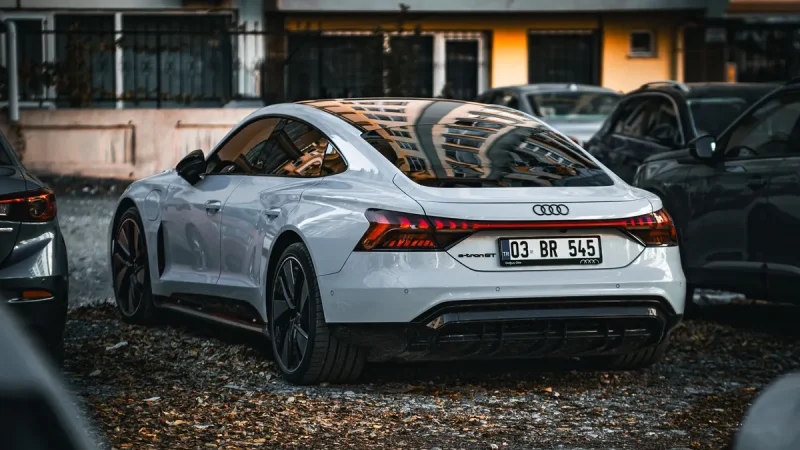
Tesla’s Roadster Reveal Makes the Tesla-SpaceX Merger Case
Tesla’s (TSLA) Roadster reveal makes the Tesla-SpaceX merger case more convincingly than it sells a car. The October...

Maranello is a company town in every significant sense, which is why it feels that way. You can still hear the thin whine of a V12 being wound out on the test track as you stroll down the winding streets behind Via Abetone Inferiore. The sound reverberates off the same buildings where Enzo Ferrari used to reside and quarrel with his engineers. It has an almost defiantly antiquated quality. Although the world has moved on to electric crossovers that are assembled by robots in Guangzhou and Austin, Ferrari continues to produce about 14,000 cars annually by hand, making them one of the most lucrative products in the world of manufacturing.
However, the stock has had a difficult year. After peaking above $519 last year, shares are currently trading at about $373, which is about 31% below the peak and comfortably below the $400 level, which has turned into a sort of psychological line in the sand. Ferrari’s October 2025 Capital Markets Day, when management advised slower growth through the end of the decade than investors had discreetly been projecting, is where the selloff began. The market took it poorly because it was used to beats and raises. Seeking Alpha described the decline as “overblown.” It was noted by The Motley Fool as a unique chance to re-rate. They could both be correct.
Ferrari is a peculiar investment because it doesn’t fit into the traditional framework of the auto industry. About six times its earnings are traded by General Motors. Mercedes-Benz is ranked lower than ten. Ferrari is about 37 times, even after the adjustment. That seems ridiculous on paper. However, the company begins to look more like Hermès than Ford when you look at the financials. 50.8% gross margin on average over a ten-year period. 24.7% is the operating margin. In 2024, the adjusted EBITDA margin was 38.3%. These are not assembly-line numbers; they are leather goods numbers. It’s difficult to ignore the fact that the comparison between Ferrari and Hermès and LVMH is true.
The majority of it is explained by the business model itself. Enzo is credited with creating Ferrari’s rule, which states that the company should always produce one fewer vehicle than the market demands. Customers are essentially pre-paying for cars that haven’t been scheduled yet because the current order book extends through the end of 2027. Almost all of the F80’s allotment was taken as soon as it was revealed that each unit would cost about $4 million. Waiting lists are effective. compounds of scarcity. Customers’ acceptance increases the brand’s value and gives Maranello more pricing power.
To be fair, the risks are not insignificant. The most obvious transition is to electric vehicles. Although 43% of shipments in Q3 2025 had electrified powertrains, Ferrari has done well with hybrids. However, the company’s first fully electric supercar has been delayed, and fans are genuinely divided over whether a silent Ferrari is still a Ferrari. Additionally, the luxury cycle itself has recently faltered. The FT and CNA Luxury have both reported on “luxury fatigue” among mid-tier consumers as a result of excessive price increases by brands. Although Ferrari’s clientele is sufficiently exclusive to feel protected, nobody is completely immune to a decline in the collectibles market, and the F80’s price tag puts that theory to the test.
The combination of a 31% drawdown and a P/E that is below the ten-year trailing average is what makes the calculation “interesting” at the moment. Despite the fact that nothing about the company has changed, it appears as though the market has temporarily reclassified Ferrari back toward automaker valuations. Ferrari continues to report gross margins comparable to those of leather houses. It has been unable to complete orders for the past two years. It continues to function in an area where the term “competition” hardly applies.
At $373, none of these make the stock an obvious choice. It may become less expensive. Any high-end stock can. However, the case—improving cash flow, scarcity-driven pricing, and a hybrid transition actually going well—is more convincing than the chart indicates when it comes to whether Ferrari below $400 is an entry point worth considering for a patient portfolio. The remainder depends on a more difficult-to-model factor: how long the world will continue to be willing to pay a multiple for a business whose primary product is in high demand.
Tesla’s (TSLA) Roadster reveal makes the Tesla-SpaceX merger case more convincingly than it sells a car. The October...
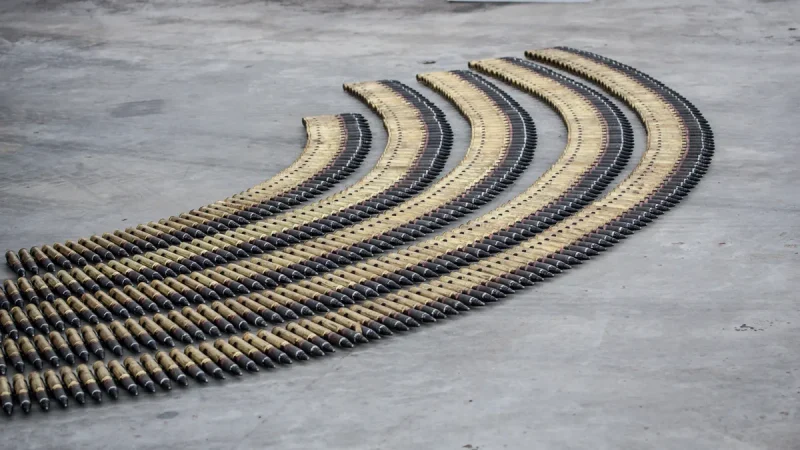
Lockheed Martin (LMT) is putting $300 million into its Grand Prairie, Texas facility, a move that converts contract...

The U740 Valkyrie European flight program hit a concrete milestone on October 12, 2026, when Kratos Defense and...