
US Army Brain Health Assessment Hits 97%, but Gaps Loom Large
The US Army brain health assessment program has reached 97% completion across active duty, National Guard, and Reserve...
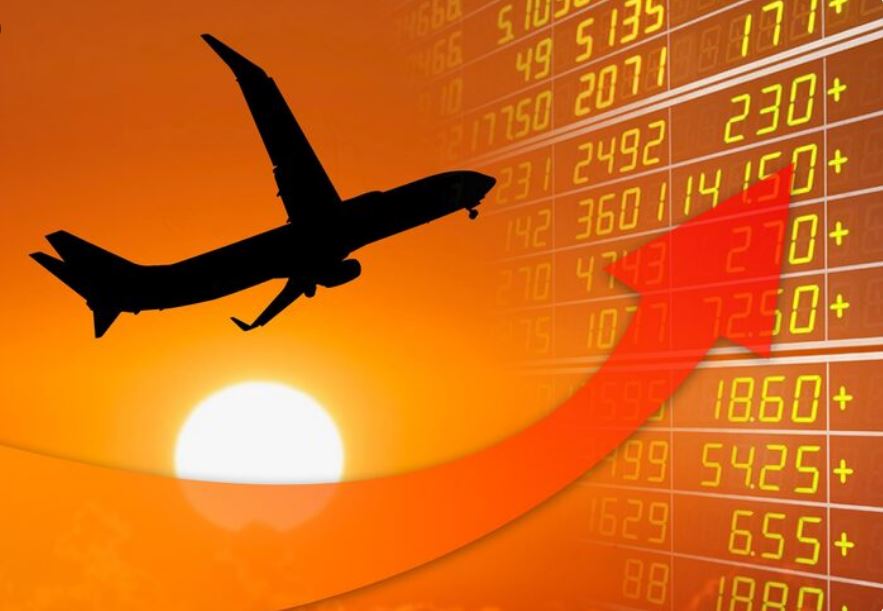
Archer Aviation is definitely one of those stocks that requires you to suspend disbelief. With a beta of 3.24, which indicates that this ticker moves about three times as violently as the overall market, you can’t look at an ACHR chart without experiencing a little vertigo. It goes up to $14.62, back down to $4.80, and up to $6.08. Due to a significant Japanese institutional acquisition and an FAA regulatory breakthrough, Archer saw a 12% increase in just five days this week. The stock was down almost 30% for the year last month. An Archer chart has that texture. Narrative whiplash.
However, the catalyst for the week was genuine and deserving of serious consideration. All of Archer’s Midnight aircraft’s Means of Compliance paperwork was approved by the FAA. Unless you’ve been following eVTOL certification for a few years, that phrase doesn’t really mean anything. After that, it does. In essence, “means of compliance” refers to the regulator’s written approval of the framework Archer has suggested for demonstrating the safety of its aircraft. It’s not a certification. Flying passengers is not permitted. However, the document is what opens the door to the testing and validation that will take place over the next few years. Without it, all discussions regarding “late 2026 passenger flights” were idealistic. Those discussions are at least structurally feasible with it.
The business added another piece of momentum to that announcement. Archer has been identified as a likely early participant in the White House eVTOL pilot initiative, a policy program designed to expedite the commercialization of electric vertical takeoff and landing aircraft. In an industry where regulatory uncertainty has been the primary risk factor for the past five years, that is a significant governmental tailwind. It’s difficult to ignore the fact that, under the current administration, the FAA’s skepticism regarding eVTOL certification has changed to something more akin to active encouragement. For years, Archer’s founder, 38-year-old Brett Adcock, has been making appearances in Washington. Quietly, some of that effort is paying off.
The institutional buying followed. Last week, one of the biggest asset managers in Japan, Sumitomo Mitsui Trust Group, purchased over 1.4 million shares, raising Archer’s overall institutional ownership above 50% for the first time. That’s a subtle but significant signal because Japanese institutions are generally cautious when adding speculative growth names, and their entry frequently indicates a longer-term positioning rather than a trade. Around the same time, the Polish pension manager Generali Powszechne added a million-share position. International, institutional, and patient purchases are made. If Archer is to endure the three or four more years of losses that stand in the way of its commercial operations, it needs that kind of shareholder base.
Because the losses are not insignificant and make up the other half of this tale. In contrast to analyst projections of $1.4 million, Archer reported $300,000 in revenue in the fourth quarter of 2025. The nearly 30,000% year-over-year revenue growth figure appears ridiculous, but that’s because the baseline was essentially zero. In 2025, the net loss was $618 million. Management estimates adjusted EBITDA losses of $160 to $180 million for 2026. The company had roughly $2 billion in liquidity at the end of the previous year, which gives it time but not certainty. Pre-revenue capital-intensive companies nearly always return for additional funding. The Archer investment thesis incorporates dilution in a way that investors either accept or reject.
This week, Parkev Tatevosian, a writer for Motley Fool, upgraded Archer to a Buy rating for the first time. This is a significant change considering his previous cautious stance on the company. The main point of contention is optionality. If its proponents are right, the urban air mobility market has the potential to grow into a trillion-dollar industry in the upcoming decades. The product, the capital runway, and the growing regulatory wind are all on Archer’s side. Execution is everything else. The stock is significantly cheap at $6 if it succeeds. If not, the stock is significantly overpriced at $6. There isn’t much room for compromise.
The story of insider activity is less clear. Early in March, CTO Thomas Paul Muniz sold 94,725 shares at an average price of $6.46. At the same price, Tosha Perkins sold 54,786 shares. Insiders have sold about 255,750 shares totaling about $1.65 million over the last ninety days. That isn’t disastrous, and part of it is probably standard portfolio management. However, it’s also not the leadership style that thinks the stock is going to double. The picture becomes more hazy when you compare it to institutional buying. Japanese money is becoming more astute. Trimming is being done by internal operators. Depending on what is being assessed, both may be correct in different ways.
The difference between the eVTOL landscape in 2026 and even eighteen months ago is difficult to ignore. With a stronger balance sheet and comparable uncertainties, Joby Aviation, Archer’s closest rival, is trading at $9.22. On the same day that Archer moved, Vertical Aerospace saw a 25.56% increase, indicating that the industry as a whole is being re-rated as the FAA gains momentum. The Chinese player, EHang, is already doing business in China. Slowly and painfully, the industry is moving from PowerPoint to reality. It’s still unclear if Archer will become this space’s Tesla or Better Place, and people tend to forget how certain Better Place seemed in 2011.
It is likely that the stock will continue to fluctuate throughout 2026 and well into 2027. It will move with each FAA update. It will move with each announcement of a partnership. It will decline with each dilutive capital raise that occurs. ACHR at $6 is one of the more intriguing wagers available to investors who have a high risk tolerance and a sincere belief in urban air mobility. For everyone else, it’s more of a ticker to observe than a possession. We’ll find out which camp was correct over the course of the next twelve months. I have a suspicion that even those who work for the company are still unsure.
The US Army brain health assessment program has reached 97% completion across active duty, National Guard, and Reserve...

Kongsberg’s Poland counter-drone factory plan, announced at the Warsaw Security Forum on October 12, is more than a...
Three U.S. Army soldiers received Purple Hearts for their actions during the Operation Epic Fury Purple Hearts ceremony...