
Changan European Production Plans Come Into Focus at Paris 2026
Changan European production plans advanced from aspiration to structured optionality at the Paris Motor Show on October 13,...
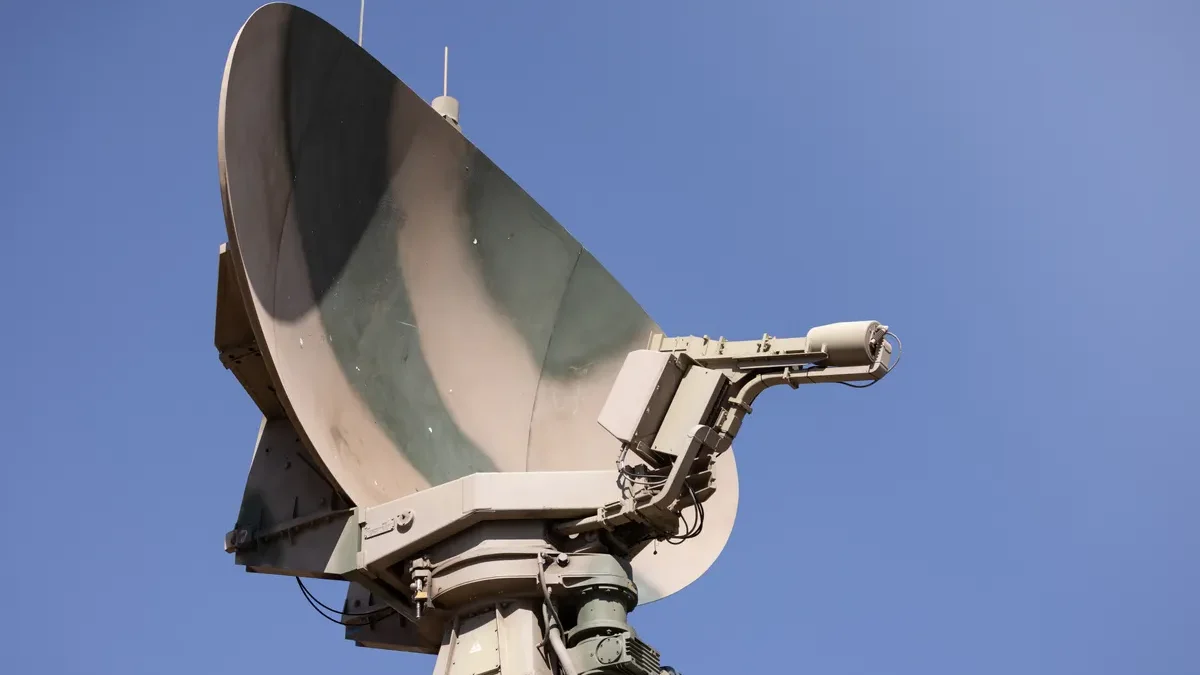
The White House directed Starshield limits for Ukraine, instructing Pentagon leaders to slow the military-grade satellite service Ukrainian forces rely on for drone guidance and battlefield communications, according to two U.S. officials and a Western official briefed on the matter.
The operational impact was immediate. Ukraine’s Defense Ministry confirmed that military-grade Starlink receptors stopped functioning when mounted on fast-moving objects, degrading drone performance over Ukrainian territory. By Thursday, a Defense Ministry official said the receptors were working again, but only at speeds up to 100 miles per hour (160 kph), a ceiling that complicates the high-speed interceptor drones Ukraine uses to shoot down incoming Russian Shahed drones.
Elon Musk, SpaceX’s CEO, stated on X that because Starshield systems are owned and controlled by the U.S. government, any limits on speed or usage are decided by the U.S. military or the president. That framing reflects the contract structure precisely. Starlink’s official support documentation confirms that Starshield Communications Services are procured via task orders submitted through the U.S. Space Force’s Commercial Satellite Communications Office (CSCO), and SpaceX’s listing on GSA Advantage states the service is not available through standard commercial procurement channels.
The national-security service contract was awarded on September 1, 2023, under an indefinite delivery, indefinite quantity vehicle, according to a RAND research report. That structure gives the Department of Defense maximum flexibility to expand or modify service terms without fresh congressional authorization, and places the on/off switch entirely within the executive branch.
The timing tracks closely with Washington’s pressure on Kyiv to halt attacks on Russian refineries. Trump’s advisers, including Jared Kushner and Middle East envoy Steve Witkoff, delivered that message at an October 9 meeting in Miami that also included European representatives and the World Bank. They told Ukrainian officials the U.S. was frustrated with Kyiv’s continued refinery strikes despite repeated requests to stop.
The U.S. delegation also disclosed a diesel supply arrangement with Russia, under which Russia will supply more than 2.25 million barrels of diesel to U.S. and global markets. Several U.S. lawmakers have criticized the deal, arguing it channels revenue to Moscow without extracting concessions from President Vladimir Putin on ending the conflict.
A senior U.S. official, responding to questions about the order, said: “No such request was ever made by the president.” The White House did not address whether other administration officials could have issued the directive. After the restriction took effect, Ukrainian officials contacted senior White House, State Department, and Pentagon officials and were told it was a White House decision, according to a senior Ukrainian official.
SpaceX generates significant recurring revenue from the Pentagon through Starshield, its largest government customer, with cumulative spending running into the billions of dollars across Starlink and Starshield services. The government has also purchased dedicated Starshield satellites, including communications spacecraft for missile-warning missions and a spy constellation for the National Reconnaissance Office, as Reuters reported in 2024. That depth of procurement confirms Washington holds full operational authority over the system, even as SpaceX holds a near-monopoly on the supply side.
The Starshield limits for Ukraine underscore the central tension in SpaceX’s military satellite business: exclusive government procurement channels generate high-margin, reliable revenue, but service decisions are made in Washington, not in Hawthorne. For investors tracking SpaceX’s eventual public market path, that sovereignty clause belongs to the customer and travels with every government contract.
Any further Starshield limits for Ukraine would deepen operational gaps in drone interdiction at a moment when Russian Shahed attacks remain persistent. If the diplomatic temperature drops and the restriction lifts, operational continuity resumes. The administration’s next move on Starshield will function as a diplomatic signal to Kyiv as much as a technical adjustment, which means the risk here is geopolitical, not commercial.
Changan European production plans advanced from aspiration to structured optionality at the Paris Motor Show on October 13,...

Tesla’s (TSLA) Roadster reveal makes the Tesla-SpaceX merger case more convincingly than it sells a car. The October...

Lockheed Martin (LMT) is putting $300 million into its Grand Prairie, Texas facility, a move that converts contract...