
White House Ordered Starshield Limits for Ukraine, Officials Say
The White House directed Starshield limits for Ukraine, instructing Pentagon leaders to slow the military-grade satellite service Ukrainian...
The BYD Malaysia Inokom deal is less a partnership announcement than a concession: BYD has abandoned its plan for a wholly-owned Malaysian factory and handed assembly to a contract manufacturer, keeping its mid-range models legal under new import rules while ceding the mass market to Proton.
BYD entered Malaysia in December 2022 through Sime Darby, with Beyond Auto, a Sime Motors subsidiary, serving as exclusive distributor of BYD passenger EVs. That relationship deepened with a memorandum of understanding signed at BYD’s Shenzhen headquarters, appointing Sime Darby subsidiary Inokom, which already assembles vehicles for several automakers at its Kulim plant, to assemble BYD’s cars locally. The precise models and production timeline remain undisclosed.
The backstory to the deal is a stalled factory plan. BYD announced its own plant at Tanjung Malim in August 2025, but negotiations reportedly broke down over government conditions requiring it to export up to 80% of output and sell the remainder locally above MYR 200,000 (approximately US$49,000). Malaysia wanted an export hub; BYD wanted domestic market access. Neither side moved enough, and contract assembly became the fallback.
The regulatory clock accelerated the timeline. Malaysia’s tax exemption for fully imported EVs expired at the end of 2025. Since July 1, Reuters reported that fully-built EV imports must carry a minimum cost, insurance and freight value of MYR 200,000 and a motor output of at least 180 kW, down from the previously anticipated 200 kW. Several of BYD’s best-selling models fall below that power threshold, making them ineligible for import under the new framework. Locally assembled EVs, by contrast, are wholly exempt from import duty, excise duty, and sales tax through the end of 2027, provided they are priced above MYR 100,000 (approximately US$24,500).
As BYD Malaysia Managing Director Jacob Ma put it: “Local assembly is an important part of BYD’s long-term commitment to Malaysia.” The CKD route solves an immediate legal problem. The economic problem is harder.
BYD led Malaysia’s EV segment in 2025, delivering 14,407 units. That lead has collapsed quickly. Proton, in which Geely holds a 49.9% stake, launched the e.MAS 5 in October 2025 at a special launch price of MYR 56,800 for the Prime variant and MYR 69,800 for the Premium variant, both priced well below the MYR 100,000 CKD floor that now applies to BYD’s locally assembled cars. The result: Proton’s e.MAS unit recorded more than 5,000 e.MAS 5 deliveries within just its first two months of 2026, a pace no other EV brand in Malaysia had matched over a comparable period. Through the first nine months of 2026, Proton registered 24,857 EVs against BYD’s 8,087.
A Kuala Lumpur-based analyst, speaking off the record to Nikkei, said that BYD’s CKD model “will not be able to compete with Proton and Tesla on both price and features.” The same analyst pointed to the MYR 100,000 CKD floor as the structural constraint: “The gap [between BYD and Proton] is likely to stay due to the government’s regulation that put [the] CKD floor price [of 100,000 ringgit] […] to protect national carmakers.” The regulatory architecture is designed to keep Proton’s price advantage intact.
The market is worth fighting for on volume grounds. Malaysia sold 820,752 vehicles in 2025, more than Indonesia’s 803,000 despite a fraction of its population, and EV sales more than doubled in the first half of 2026. But the volume opportunity in EVs sits in the price band BYD cannot legally occupy through contract assembly.
The contrast with Europe is instructive. In Europe, BYD insists on wholly owned factories, has ruled out partnering with other Chinese firms, and is evaluating brownfield sites alongside its Hungary facility. A battery plant is also in planning to satisfy forthcoming EU “Made in Europe” requirements. In Malaysia, that approach is absent entirely.
The BYD Malaysia Inokom deal reflects a localization strategy that bends to each market’s regulatory reality rather than imposing a single model globally: own the factory where deep localization is rewarded; use kit assembly where it is not. That flexibility keeps BYD on the price list in Malaysia, but the MYR 100,000 floor means the high-volume mass market belongs to Proton for now.
The real decision point arrives at the end of 2027, when CKD tax exemptions expire. BYD will then face a choice between renegotiating factory terms it walked away from once, absorbing significantly higher costs, or accepting a structurally smaller footprint in one of Southeast Asia’s most active auto markets.
The White House directed Starshield limits for Ukraine, instructing Pentagon leaders to slow the military-grade satellite service Ukrainian...

Changan European production plans advanced from aspiration to structured optionality at the Paris Motor Show on October 13,...
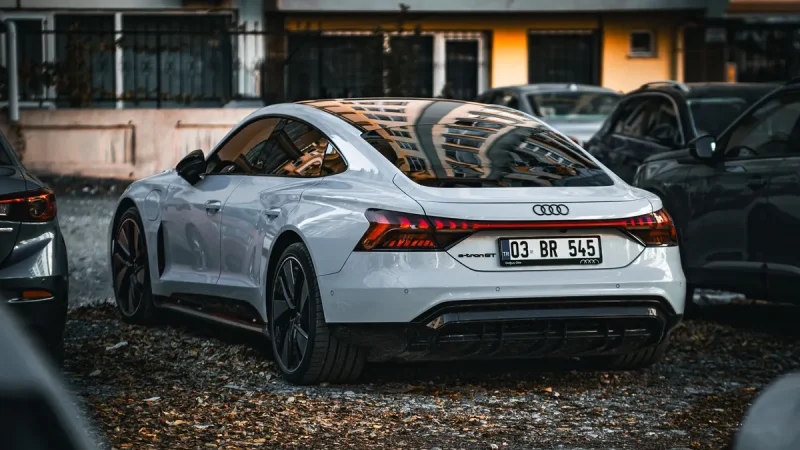
Tesla’s (TSLA) Roadster reveal makes the Tesla-SpaceX merger case more convincingly than it sells a car. The October...