
Xiaomi Sky Nomad Orders Can’t Close the 2026 Delivery Gap
Xiaomi Sky Nomad orders crossed 70,000 in the model family’s first month, a result that lifted the stock...
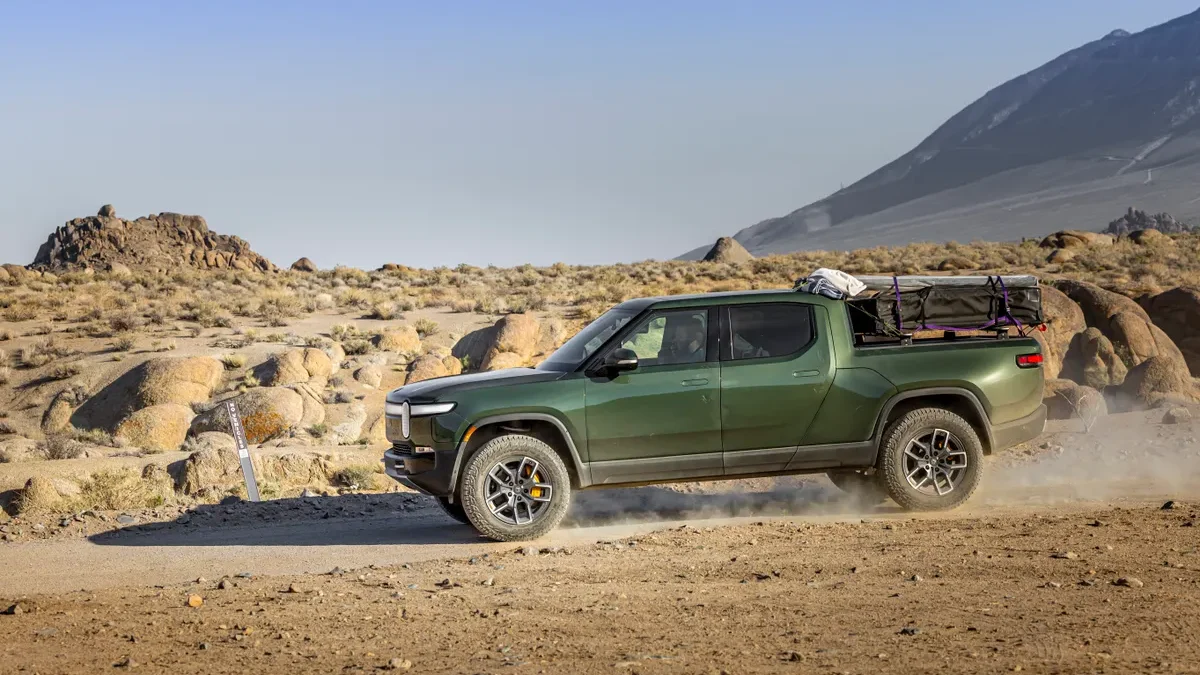
Cybertruck price increases announced this week confirm what the sales data have been saying for months: Tesla (TSLA) is no longer running this truck as a volume play. It is running it as a margin-preservation exercise on a stranded asset.
Tesla raised prices on two Cybertruck trims, lifting the entry-level Dual Motor to $74,990 and the Premium All-Wheel Drive to $84,990. The top-tier Cyberbeast held at $99,990. The Dual Motor’s new price sits $15,000 above the $59,990 promotional launch price from February, after a $10,000 hike in March and the removal of its leasing option.
The Dual Motor AWD offers an estimated 325 miles of range, adaptive damping suspension, a powered tonneau cover, and bed-mounted Powershare outlets. Its 7,500 lb towing capacity, though, trails the Premium trim’s 11,000 lb rating, which matters in a segment where buyers compare specs line by line against the Ford F-150 Lightning and Rivian R1T.
Tesla does not break out Cybertruck deliveries. Cox Automotive estimates US sales fell 32.2% year-over-year to just 7,263 units in the first half of 2026, following a drop from roughly 39,000 units in 2024 to about 20,200 in 2025. Against Elon Musk’s original projection of 250,000 annual deliveries, the truck is running at less than a third of its intended pace.
The read here is straightforward: at low volumes, raising price is the only lever Tesla has to protect per-unit economics. Raw material costs are a real pressure, and dedicated tooling for the stainless-steel body means the cost structure does not flex the way a conventional stamped-steel platform might.
The capacity picture makes the gap more concrete. Tesla’s Q1 2026 10-Q filing lists Gigafactory Texas Cybertruck production capacity at more than 125,000 units annually. Running at roughly 14,500 units on an annualized H1 2026 pace means the line is operating at barely above 10% of stated capacity. That is a factory largely sitting idle, and the fixed-cost absorption is brutal at that utilization rate.
Tesla’s consolidated financials are holding up, which is the bull case for tolerating this. Tesla’s SEC-filed 10-Q for H1 2026 shows net income of $1,619 million for the first half of 2026, compared with $1,610 million in the same period of 2025. The Cybertruck’s drag is real but not company-threatening, at least not yet.
The bear case is that each price increase narrows the addressable buyer pool further, which compounds the volume problem rather than solving it. The Cybertruck price increases price out more potential buyers, volumes stay depressed, and the factory utilization hole deepens. It is a loop with no obvious exit.
Killing the Cybertruck would mean immediate write-offs on specialized gigapresses and dedicated tooling with no replacement vehicle ready to fill the Gigafactory Texas line. Tesla discontinued the Model S and X earlier in 2026 to free up production capacity for the Cybercab and Optimus robot, so the company has already shown it will cut models. The difference is those vehicles had production alternatives stepping in. The Cybertruck’s line has none.
There is also the identity dimension. Musk has said he conducted no customer research before committing to the angular stainless-steel design, and has continued defending it publicly, at one point calling it the “best product ever made.” That is a stance that makes a quiet discontinuation politically difficult for a CEO who has made the vehicle part of his public persona.
So Tesla keeps raising prices, positioning the Cybertruck as a lower-volume, higher-priced niche vehicle in the premium truck segment. Whether that generates positive per-unit margin is plausible. Whether it was the intended outcome for a truck Musk once projected would outsell every other vehicle in the lineup is a different question entirely.
The key risk to watch is whether the H2 2026 sales rate deteriorates further below the H1 pace. If annualized volumes drop below 12,000 units, the fixed-cost argument for keeping the line open becomes difficult to defend on financial grounds alone, and the debate shifts back to whether pride is worth the balance-sheet cost.
Xiaomi Sky Nomad orders crossed 70,000 in the model family’s first month, a result that lifted the stock...
Delta Air Lines (DAL) slashed its Delta Air Lines 2026 outlook on Friday, cutting full-year adjusted earnings per...
The Tesla (TSLA) production outlook for 2026 points to a genuine volume recovery, but the more pressing question...