
Xiaomi Sky Nomad Orders Can’t Close the 2026 Delivery Gap
Xiaomi Sky Nomad orders crossed 70,000 in the model family’s first month, a result that lifted the stock...
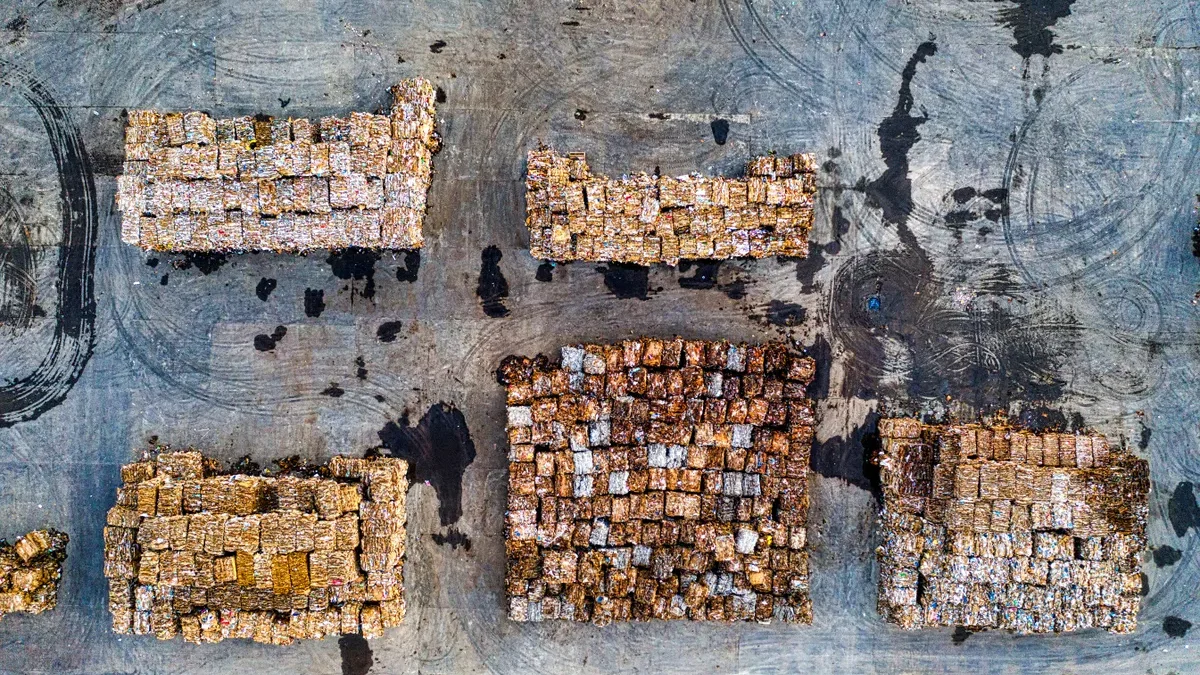
The Porsche-cylib battery recycling pilot has crossed a threshold that separates proof-of-concept from something operationally serious: battery cathode active material comprising lithium, nickel, cobalt, and manganese has been produced using entirely recycled raw materials, with zero primary extraction inputs. For a company whose vehicles depend on minerals sourced from politically complex corners of the world, that is less a green milestone than a supply-chain one.
Launched in 2025, the project has been collecting end-of-life batteries from Porsche Centers across Germany and processing them through a water-based method since May 2026. The resulting recovered materials now fully replace the primary raw materials in cell production within the pilot’s scope. According to the Porsche Newsroom, the battery cells manufactured within the pilot are currently undergoing extensive operational testing, and findings are already being incorporated into Porsche’s regular battery disposal process.
The recovered raw materials are tracked through a dedicated material account managed by cylib. Per the Porsche Newsroom, those materials will be made available to Porsche and selected partner companies for battery cell production from 2028. That is not a distant ambition; it is a two-year runway with an operational structure behind it.
Joachim Scharnagl, Member of the Executive Board for Procurement at Porsche, described the result as “an important technological milestone,” adding that it advances “both circular economy principles and raw material resilience.” Dr. Lilian Schwich, Co-Chief Executive and Co-Founder of cylib, framed the output this way: “valuable raw materials from Porsche batteries at the end of their first life can potentially flow back into new high-performance batteries for Porsche vehicles.”
cylib is an RWTH Aachen University spin-off that commissioned its pilot plant in Aachen in September 2023. Its water-based OLiC (Optimized Lithium and Graphite Recovery) process achieves over 90% recycling efficiency for lithium, graphite, nickel, cobalt, and manganese, with an 80% reduced carbon footprint compared to primary extraction, according to cylib’s own disclosures. Those are the kind of efficiency figures that make a process commercially defensible, not just environmentally appealing.
The company is also moving toward industrial scale. As CNBC reported in September 2024, cylib broke ground on what it describes as the largest end-to-end lithium-ion battery recycling facility in Europe, planned to process roughly 30,000 metric tons of end-of-life batteries per year, located at Chempark, an industrial chemical-sector hub. The North Rhine-Westphalia Ministry of Economic Affairs committed a two-digit million Euro grant to support the facility’s establishment, announced in November 2024, per cylib’s newsroom.
The regulatory calendar is also tightening behind Porsche. Motor1 reports that the EU will require a digital battery passport for batteries above 2 kilowatt-hours starting February 18, 2027. That regulation creates a traceability obligation that closed-loop recycling is structurally better positioned to satisfy than open-market raw material sourcing.
The bull read is straightforward. Porsche is building a European-sourced supply chain for battery-grade cathode materials, with a proprietary material account, a named off-take target date, and a partner whose process efficiency is backed by its own technical disclosures. The regulatory tailwind from the EU battery passport rule arrives before the 2028 supply target, not after it.
The bear read is that this is still a pilot. Initial tests indicate technical feasibility, per the announcement, with further findings due later in 2026. Scaling from a pilot in Aachen to 30,000 metric tons per year at Chempark involves chemistry, logistics, and economics that have not been validated at volume. The 2028 cell supply date is a target, and the material account covers Porsche plus “selected partner companies,” meaning the volume commitment and allocation methodology are not yet public.
The evidence leans bullish on the technology, cautiously so on the timeline. cylib’s process efficiency data is credible from its own technical releases, and Electrive confirms the material account structure is real and operational. What converts this from a press release into a structural advantage is whether cylib’s industrial-scale facility hits its 2026 operational start and whether the recovered material volumes are sufficient to matter at Porsche’s production rates. Those are the two numbers to watch.
Xiaomi Sky Nomad orders crossed 70,000 in the model family’s first month, a result that lifted the stock...

Delta Air Lines (DAL) slashed its Delta Air Lines 2026 outlook on Friday, cutting full-year adjusted earnings per...
The Tesla (TSLA) production outlook for 2026 points to a genuine volume recovery, but the more pressing question...