
Xiaomi Sky Nomad Orders Can’t Close the 2026 Delivery Gap
Xiaomi Sky Nomad orders crossed 70,000 in the model family’s first month, a result that lifted the stock...
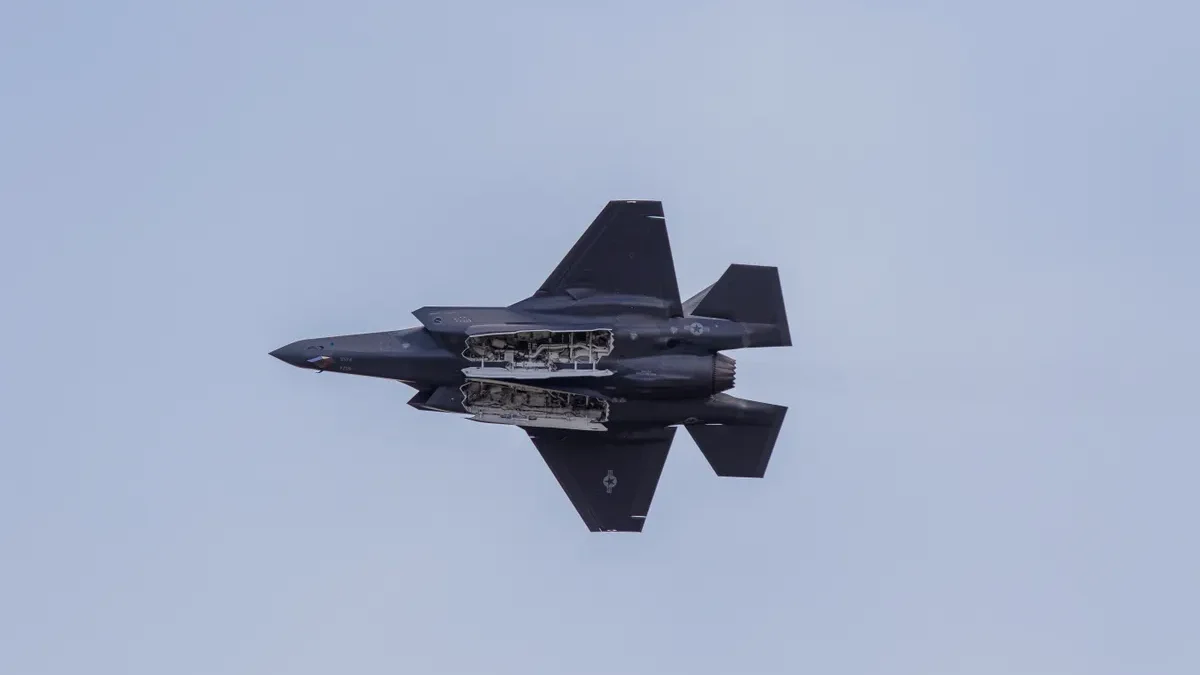
The US Department of State has approved a potential F-35 Saudi Arabia sale worth an estimated $24.3 billion, a shift in policy that directly challenges Washington’s long-standing commitment to preserving Israel’s qualitative military edge in the region. The deal still requires congressional approval, but its notification alone rewrites the calculus around American arms sales to the Gulf.
The package covers 48 aircraft and 49 Pratt & Whitney engines, along with secure communications, precision navigation, electronic warfare, and cryptographic devices, plus spare parts and training, according to Inside Defense. The variant on offer is the F-35A, the conventional takeoff and landing configuration of the fifth-generation platform.
Saudi Arabia appealed directly to President Donald Trump for the jets in early 2025. The kingdom has sought the aircraft for years to modernize an air force that currently flies Boeing F-15s, European Tornados, and Typhoons. Two squadrons of F-35As would represent a generational leap.
Lockheed Martin builds the F-35 Lightning II with stealth technology that allows it to evade enemy detection. Israel has operated the aircraft for a decade and remains the only Middle Eastern country to possess it, holding multiple squadrons. Approving the same platform for Saudi Arabia narrows that gap materially.
Washington evaluates weapons sales to the Middle East against a doctrine requiring that Israel maintain a qualitative military edge over regional Arab states. Selling the F-35 to Riyadh tests that doctrine more directly than any previous transaction. The administration would need to argue either that the F-35A transfer does not erode Israel’s edge, or that the strategic value of a deeper Saudi partnership outweighs the doctrinal cost.
Congress is the next hurdle. Lawmakers previously resisted arms deals with Riyadh following the 2018 murder of journalist Jamal Khashoggi, and some members remain skeptical. A notification of a possible sale does not guarantee approval; it opens a review window during which Congress can block the transfer.
The Trump administration has framed Gulf arms sales in maximalist terms. In 2025, the United States agreed to sell Saudi Arabia an arms package worth nearly $142 billion, which the White House described as the largest defense cooperation agreement Washington has ever concluded. The F-35 notification fits that pattern but raises the political stakes considerably.
The F-35 approval also sits inside a broader recent surge of Saudi-directed sales. The Defense Security Cooperation Agency approved a possible Foreign Military Sale of PATRIOT Advanced Capability-3 Missile Segment Enhancement Missiles to the kingdom for an estimated $9.0 billion on January 30, 2026, and F-15 Sustainment for an estimated $3.0 billion on February 3, 2026, according to the DSCA Major Arms Sales records. A May 2, 2025 approval covered AIM-120C-8 Advanced Medium Range Air-to-Air Missiles for an estimated $3.5 billion, per the DSCA Saudi Arabia arms sales page. The F-35 package, if approved, would dwarf each of those individually.
The Saudi embassy in Washington welcomed the proposal. “The proposed F-35 sale reflects the strength and enduring nature of the Saudi-U.S. strategic partnership and the continued advancement of our defense cooperation,” the embassy said on X.
The diplomatic backdrop adds complexity. The Biden administration explored F-35 transfers as part of a normalization deal between Saudi Arabia and Israel, an effort that stalled. Trump has pursued the same destination by a different route: deepening defense ties first, with diplomatic normalization as a downstream possibility rather than a precondition.
The bull case for the transaction is straightforward: it locks in Saudi Arabia as a long-term F-35 operator, generates a substantial Lockheed Martin production backlog, and reinforces the US-Saudi security relationship at a moment when Riyadh is hedging its partnerships globally. The bear case is equally clear: it hands the region’s largest defense budget a platform that Israel has treated as its asymmetric advantage, and it gives Congress a visible target in an already contentious foreign-policy environment.
The read here is that the notification is a signal of intent, not a done deal. Congressional resistance is the primary risk between approval and delivery, and the QME argument will be tested publicly during that review. If it clears, the F-35 Saudi Arabia sale sets a precedent that reshapes Middle East air-power dynamics for a generation.
Xiaomi Sky Nomad orders crossed 70,000 in the model family’s first month, a result that lifted the stock...

Delta Air Lines (DAL) slashed its Delta Air Lines 2026 outlook on Friday, cutting full-year adjusted earnings per...

The Tesla (TSLA) production outlook for 2026 points to a genuine volume recovery, but the more pressing question...