
Xiaomi Sky Nomad Orders Can’t Close the 2026 Delivery Gap
Xiaomi Sky Nomad orders crossed 70,000 in the model family’s first month, a result that lifted the stock...
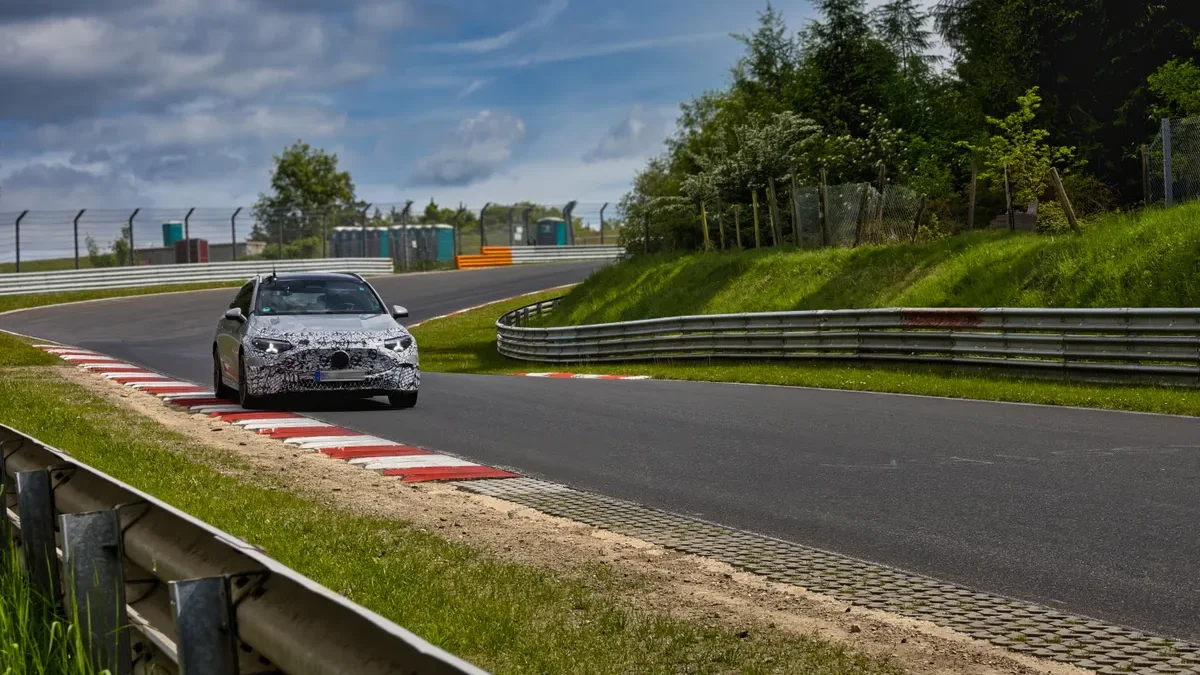
Chery’s announcement of a dedicated UK research centre at the UTAC Millbrook proving ground in Bedfordshire is not a routine expansion decision: it is the clearest sign yet that the Chinese automaker is treating Britain as its primary Western engineering base, with trade policy as much as market momentum driving the choice.
Opening in late autumn 2026, the facility will initially focus on tuning chassis dynamics, steering feel, and driver-assistance systems for UK roads, before eventually expanding into autonomous driving and artificial intelligence research. Chery International UK Chief Executive Gary Lan described it as “the next step in our long-term plan for the UK,” adding that the company had “waited over 20 years for the right time to enter this market.”
The Millbrook site offers more than 43 miles of purpose-built test tracks roughly eight miles south of Bedford and is shared with the Ministry of Defence. Automotive World reported that UTAC UK Vice President Kirsty Andrew framed the arrangement as reflecting “the sustained momentum of a long-term engineering relationship,” rather than a one-off vehicle test program.
Chery has not disclosed investment figures or a headcount target for the centre. The absence of those numbers is beside the point: establishing a standalone engineering base ahead of any confirmed manufacturing deal signals a long-term commitment, not a marketing exercise.
The research centre is being built on top of one of the fastest market-share gains any brand has achieved in UK automotive history. Chery surpassed 100,000 cumulative UK sales in the two years since launching in August 2024, delivering 53,600 cars in Britain in 2025 alone. Its Omoda, Jaecoo, and core Chery brands held around 7% to 8% of the UK market by July 2026, up from just 3% a year earlier, according to the Society of Motor Manufacturers and Traders (SMMT). The Jaecoo 7 SUV is currently the country’s best-selling car outright, with more than 53,000 units shifted and more than three-quarters of those taken as the plug-in hybrid version.
The wider Chinese-brand picture reinforces how quickly the competitive landscape has shifted. Automotive Logistics reported that Chinese-owned OEMs held 11.12% of new UK registrations in Q1 2026, up from 6.41% in Q1 2025, per SMMT data. Even SAIC-owned MG, the segment’s individual share leader at 3.88% in Q1 2026, saw its own figure slip from 4.24% a year earlier. Chery is taking share from rivals as well as from incumbents.
The PHEV preference running through Chery’s sales mix is deliberate. The UK’s EV transition is running well behind its regulatory timetable, so Chery has built its range around hybrid and plug-in hybrid options while keeping battery-electric and combustion alternatives available. That positioning is central to why volume has scaled so fast.
Beyond the research centre, Chery is advancing on UK manufacturing. A non-binding memorandum of understanding signed with Nissan in June covers contract assembly at the Sunderland plant. Under the terms of that MoU, as reported by Automotive Logistics, Nissan would retain full ownership of the facility and all plant employees would remain on Nissan’s payroll. The arrangement is commercially clean for both parties precisely because of that structure.
Sunderland has capacity to offer. Automotive World noted that Nissan had already consolidated its own production from three models across two lines down to a single line before the MoU was signed, leaving the first line available. Earlier reporting cites a potential start date as early as 2027, though as Electrive reported, Nissan’s fiscal year 2027 runs from April 2027 to March 2028, meaning production contemplated for FY2027 could begin as late as early 2028 in calendar terms.
The UK government had pushed for Chery to use excess capacity at Jaguar Land Rover facilities, a proposal reportedly raised by Prime Minister Keir Starmer during his Beijing visit earlier in 2026. Chery appears to have opted for Sunderland instead. That choice fits a broader pattern: the company purchased a former Nissan plant outside Pretoria, South Africa in January 2026 and began production at a former Nissan facility in Barcelona through the Ebro joint venture, suggesting a deliberate strategy of absorbing underused Nissan infrastructure.
The trade arithmetic is what ultimately explains the UK’s priority over the rest of Europe. Post-Brexit, the UK maintains a tariff framework considerably more favorable to Chinese-built vehicles than the EU’s countervailing duties, which run above 40% for some automakers. That gap makes the UK Chery’s highest-margin European entry point. The Chery UK research centre, read alongside Sunderland and a sales trajectory that has no peer among Chinese brands in Western markets, points to a company building a right-hand-drive engineering hub it can eventually replicate across Australia, South Africa, and other RHD markets. The research centre is the infrastructure play. The sales numbers are already proving the thesis.
Xiaomi Sky Nomad orders crossed 70,000 in the model family’s first month, a result that lifted the stock...

Delta Air Lines (DAL) slashed its Delta Air Lines 2026 outlook on Friday, cutting full-year adjusted earnings per...

The Tesla (TSLA) production outlook for 2026 points to a genuine volume recovery, but the more pressing question...