
Xiaomi Sky Nomad Orders Can’t Close the 2026 Delivery Gap
Xiaomi Sky Nomad orders crossed 70,000 in the model family’s first month, a result that lifted the stock...
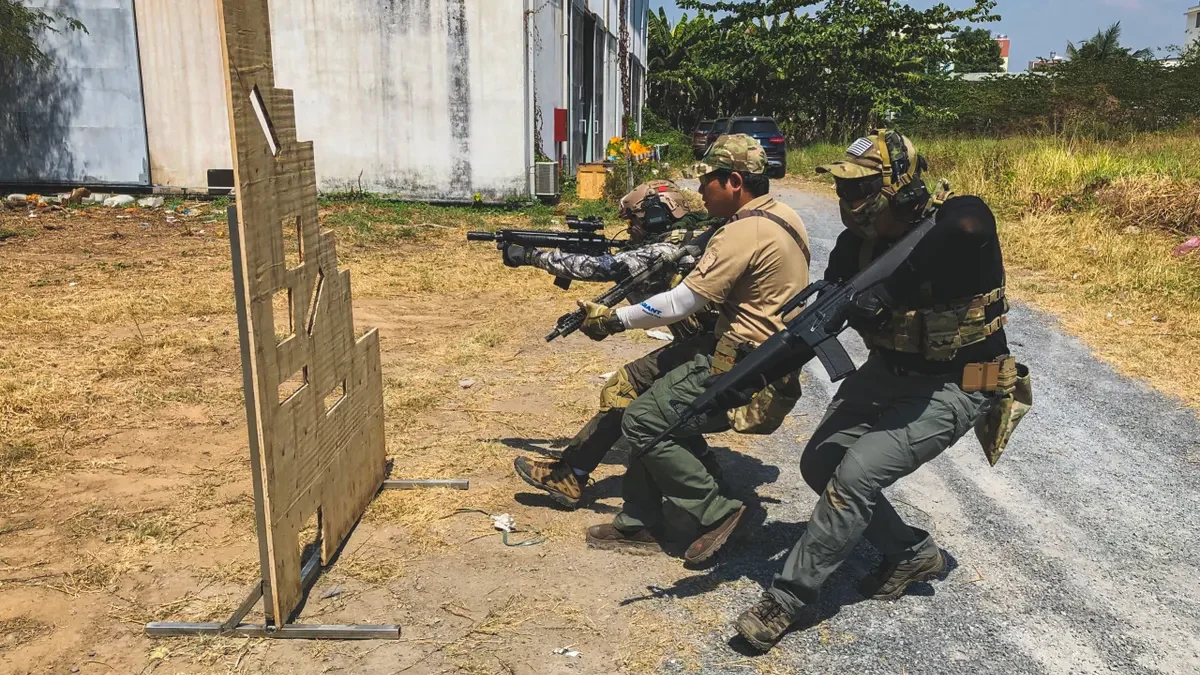
The Ulchi Freedom Shield drills, the largest annual joint exercise on the Korean Peninsula, have been cut from eleven days to five and stripped of their counterattack phase, a decision that trades measurable readiness for diplomatic leverage with Pyongyang. The move is President Donald Trump’s most concrete military concession to North Korea since returning to office, and it came without advance notice to either Seoul or the U.S. commanders who run the exercise.
South Korea’s Joint Chiefs of Staff and a Pentagon official confirmed the exercise, which began Aug. 17, will now conclude Aug. 21 rather than the original end date of Aug. 27. Reuters first reported Trump’s order on Sunday to “substantially reduce” U.S. participation, with the president calling the drills “costly” and “totally inappropriate and hostile” toward North Korea, which he described as “unthreatening and respectful” during his presidency.
South Korean Defense Minister Ahn Gyu-back confirmed the cancellation of the drills’ second phase, which had been designed to simulate a counterattack against North Korea following an initial defensive stage. The Guardian reported that South Korean broadcasters KBS and MBC and the newspaper Kyunghyang, citing unnamed military sources, had described the second-stage scrapping before the official announcement. Some combined field maneuver training will also be scaled back, though details remain under discussion.
The scale of what is being curtailed matters. Air & Space Forces Magazine reports the exercise typically involves about 18,000 uniformed personnel from the U.S., South Korea, and partner nations, with assets operating across land, sea, and air. Previous editions have featured F-22 Raptors, F-35s, and F-16s on the U.S. side alongside South Korean F-35As and F-15 Slam Eagles. This year, Seoul had planned a more technologically complex drill that incorporated tactical lessons from the Russia-Ukraine War, a goal that is now at least partially abandoned.
The Department of Defense said the reduction would preserve “essential readiness” with “no degradation to U.S. training objectives”, language that reads as damage control rather than doctrine. Canceling the counterattack phase is not a minor scheduling adjustment. It removes a core scenario that exercises the transition from defense to offense, precisely the kind of complex combined operation that requires regular rehearsal to execute under pressure.
Trump’s rationale, as reported by CNN, extends beyond Korea: he also cited Seoul’s lack of assistance with the Iran war as a reason for the reduction. That widens the frame. Ellen Kim, senior fellow at the Korea Economic Institute of America, put it plainly: “Trump is trying to catch three birds with one stone here,” targeting Seoul on trade and Iran commitments while reopening a diplomatic channel to Pyongyang.
The timing compounds the message. Chinese Foreign Minister Wang Yi was in Seoul Wednesday and Thursday for regional security talks as the announcement landed, and he called on Washington to change its “hostile policy” toward North Korea, according to South Korea’s Yonhap news agency. The drill reduction hands Beijing a talking point without extracting any visible concession in return.
North Korea’s reaction was carefully calibrated. Kim Yo Jong, sister of leader Kim Jong Un, dismissed the reduction as insufficient, saying the exercises remained “provocative and aggressive” regardless of scale, according to state media KCNA. But she also noted that Kim Jong Un holds “fond personal memories and feelings towards Trump” and that “the relationship between the two leaders remain excellent,” KCNA quoted her as saying.
North Korea also issued a broader commentary calling the U.S. and South Korea “warmongers” but pointedly avoided mentioning Trump, his order, or the scaling back. Hong Min, a researcher at the Korea Institute for National Unification, read that restraint as an effort to preserve diplomatic space rather than escalate. The Wall Street Journal, citing U.S. officials, reported that Trump has pushed aides to arrange an in-person meeting with Kim as soon as this autumn, potentially on the sidelines of a November Asia-Pacific Economic Cooperation summit in Shenzhen.
Neither South Korean nor U.S. officials had advance knowledge of Trump’s order, South Korean Foreign Minister Cho Hyun told a parliamentary hearing Wednesday. That is the structural problem the Pentagon’s reassuring language cannot paper over: an ally that learns about the curtailment of a joint exercise from the news, rather than from the chain of command, has reason to question what other commitments might be quietly renegotiated. The readiness cost is real; the alliance-trust cost may prove harder to recover.
Xiaomi Sky Nomad orders crossed 70,000 in the model family’s first month, a result that lifted the stock...
Delta Air Lines (DAL) slashed its Delta Air Lines 2026 outlook on Friday, cutting full-year adjusted earnings per...

The Tesla (TSLA) production outlook for 2026 points to a genuine volume recovery, but the more pressing question...