
Xiaomi Sky Nomad Orders Can’t Close the 2026 Delivery Gap
Xiaomi Sky Nomad orders crossed 70,000 in the model family’s first month, a result that lifted the stock...

Anthropic’s revenue run rate reached $65 billion annualized at the end of July, a sevenfold increase from a year earlier, according to three sources cited by CNBC. At that pace of acceleration, the Claude maker is building an IPO case that is hard to dismiss, and harder to handicap.
The $65 billion figure, shared with investors over the weekend and first reported by Bloomberg, is only part of the growth story. Anthropic also disclosed preliminary revenue of $11.5 billion for the second quarter of 2026, a 14-fold jump from the $787 million the company posted in the same quarter a year earlier, per CNBC. That quarterly number matters as much as the run rate: run rates can be massaged by a single strong month, but a quarterly revenue print that large is harder to dismiss as a spike.
The trajectory is steep even by AI-era standards. In May, Anthropic reported an annualized run rate of $47 billion, against roughly $10 billion in total 2025 revenue. The $65 billion July figure means the company added the equivalent of nearly two full 2025 annual revenues to its run rate in roughly two months. At chief rival OpenAI, the annualized revenue run rate recently reached $40 billion, putting Anthropic meaningfully ahead on that metric for the first time.
Enterprise adoption is the engine. Anthropic’s Claude models have pulled in large corporate customers across legal, finance, and software development, and the company has leaned into safety positioning as a differentiator in regulated industries. The commercial logic works until it collides with the regulatory environment, and that is where the IPO story gets complicated.
Anthropic officially announced on June 1, 2026 that it had confidentially submitted a draft registration statement on Form S-1 to the Securities and Exchange Commission (SEC) for a proposed IPO of its common stock, noting the offering would depend on market conditions and other factors. Since then, the company has held preliminary meetings with potential investors but has not provided a public timeline for a debut.
The revenue run rate update serves an obvious purpose: it keeps the growth narrative alive in the period between confidential filing and a public roadshow. At a $965 billion valuation, Anthropic needs to demonstrate that revenue is compounding fast enough to eventually justify that price. A sevenfold annualized run rate increase in a year makes that case more credibly than almost any other metric the company could offer at this stage.
The bull case is straightforward. If Q2 revenue of $11.5 billion annualizes and continues to grow, the current valuation multiple compresses quickly. Investors who bought into earlier funding rounds at lower implied multiples are already well positioned, and a public offering at a premium to $965 billion would require the growth curve to hold.
The bear case is centered on government exposure. In June, Anthropic had to temporarily disable Claude Fable 5 and Mythos 5 to comply with an export control directive citing national security authorities. According to Forbes, the order followed reports of a jailbreak that bypassed safety guardrails on the models, potentially turning them into unrestricted cyber tools, with White House adviser David Sacks reportedly involved in the matter. The models were restored after roughly two weeks, and Anthropic said in a June blog post: “We look forward to deepening our government collaboration. We’re also grateful to our users for bearing with us through this disruption, and to the researchers and industry partners who worked alongside us to make Fable 5 and Mythos 5 available again.”
The statement was conciliatory. The underlying situation was not. Anthropic was blacklisted by the Pentagon earlier this year after discussions about military use of its models broke down. A company that generates a significant share of its revenue from enterprise customers, including government-adjacent ones, cannot afford sustained friction with the administration that controls export licenses and procurement.
The Anthropic revenue run rate of $65 billion commands attention. But the IPO thesis will ultimately turn on one question: whether the Trump administration’s posture toward Anthropic is a manageable friction or a structural ceiling on the company’s addressable market. If government relations stabilize and enterprise growth holds, the valuation math improves with every passing quarter. If the Pentagon blacklist expands or a second export control episode disrupts model availability, enterprise customers in regulated sectors will reconsider their exposure. The revenue numbers give Anthropic a strong hand to play publicly; the government relationship decides whether it gets to play it.
Xiaomi Sky Nomad orders crossed 70,000 in the model family’s first month, a result that lifted the stock...
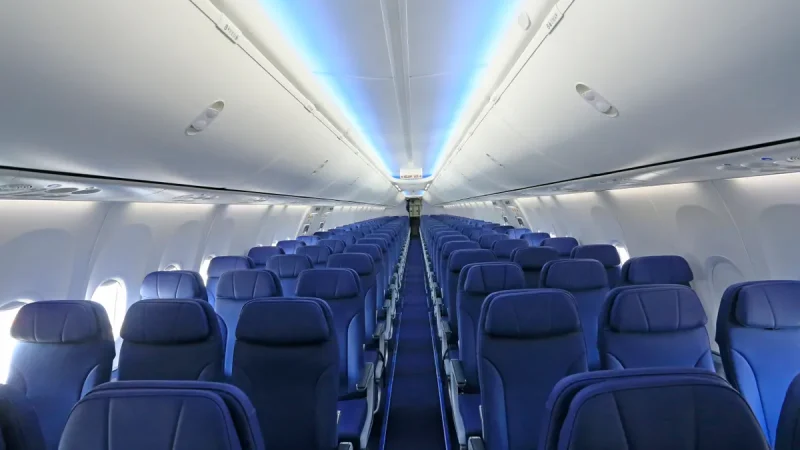
Delta Air Lines (DAL) slashed its Delta Air Lines 2026 outlook on Friday, cutting full-year adjusted earnings per...

The Tesla (TSLA) production outlook for 2026 points to a genuine volume recovery, but the more pressing question...