
Xiaomi Sky Nomad Orders Can’t Close the 2026 Delivery Gap
Xiaomi Sky Nomad orders crossed 70,000 in the model family’s first month, a result that lifted the stock...
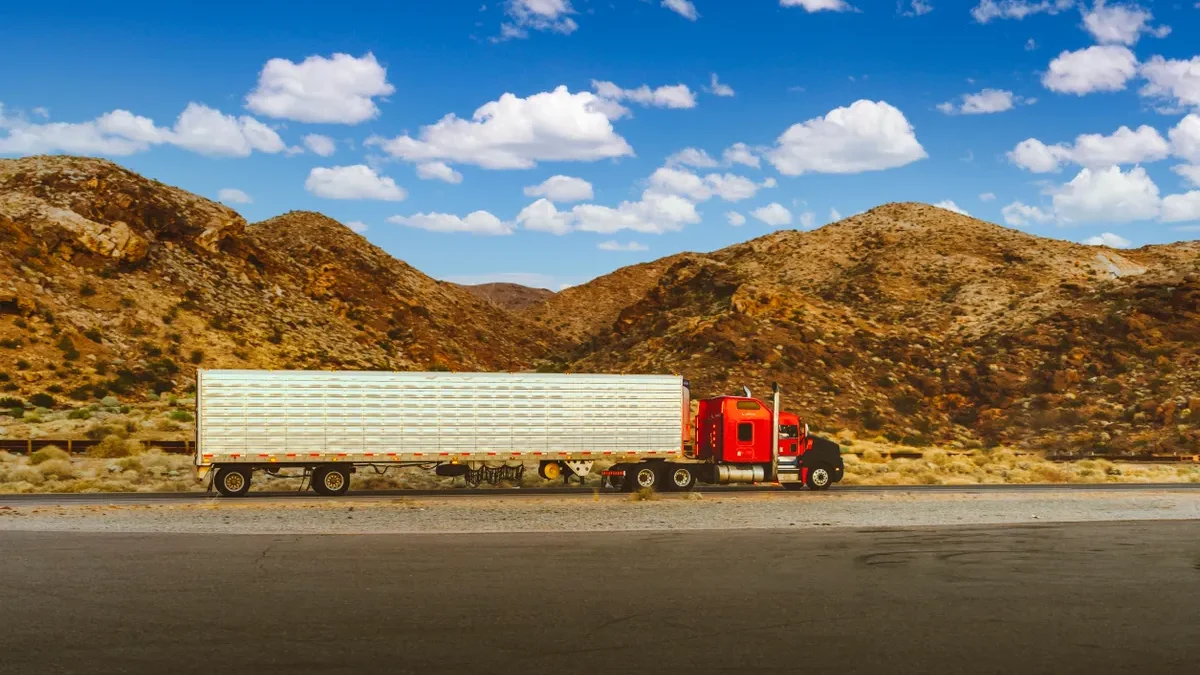
The Einride Tesla Semi deployment of 500 trucks across North America is the clearest signal yet that electric heavy freight has crossed from pilot programs into commercial-scale operations. For Einride (ENRD), listed on Nasdaq, it also marks a hard inflection point: the company now has a fleet large enough to pursue its stated target of $800 million in annual recurring revenue.
Announced on August 18, 2026, following Einride’s second-quarter earnings call, the agreement will deploy 500 Tesla Semi trucks across California, Texas, New Jersey, Illinois, and Georgia. Amazon is the anchor customer, though the fleet will serve other shippers across the same lanes. The rollout runs across multiple phases over 24 months beginning September 2026 and is fully financed with third-party capital, meaning Einride’s shippers take on no fleet balance-sheet risk.
The scale here matters. Einride describes this as the largest Tesla Semi deployment in the world, and the 500 trucks triple its existing electric fleet. For a company founded in Stockholm in 2016 that built its business around a Freight-Capacity-as-a-Service model, converting signed shipper contracts into active capacity at this volume is a different proposition from anything it has done before.
Each truck will run on Saga AI, Einride’s fleet intelligence platform. The system has logged more than 19 million electric miles and processed 42,000 optimization sessions across seven years of operations. The argument Einride makes is that every truck added to the network compounds the data advantage: more route data, more charge-cycle intelligence, more network efficiency for every subsequent shipper.
Strip away the operational detail and this is a revenue-path announcement as much as a logistics one. Einride has publicly tied the 500-truck order to its path toward $800 million in annual recurring revenue. That figure is a target, not guidance, but the as-a-service structure is what makes it credible as a recurring number: shippers pay for freight capacity, not trucks, which means revenue scales with utilization rather than with one-time fleet sales.
The timing is deliberate. In its H1 2026 results, per Markets Insider, Einride described the first half as “an important milestone” as the company began its journey as a public company, with management citing disciplined execution, growing recurring revenue, and continued development of Saga AI, charging infrastructure, and autonomous capabilities. Dropping the world’s largest Tesla Semi order the same week as those results is not coincidental positioning.
Roozbeh Charli, Einride’s Chief Executive Officer, said the deployment was “yet another proof point that we can execute at the scale our customers demand.” That framing is aimed at investors as much as at shippers.
Dan Priestley, Director of Semi at Tesla, added weight to the cost argument. According to Yahoo Finance, Priestley detailed that electric heavy trucks deliver lower costs per mile through fuel savings, reduced maintenance, and better uptime relative to diesel, with those savings compounding further at deployment scale. That is the economic logic Einride’s entire customer proposition rests on, and having Tesla’s own commercial vehicles leadership endorse it publicly is useful cover for Einride’s sales cycle.
The bull read is straightforward. A 500-truck fleet serving Amazon and other large shippers, on a phased 24-month rollout, fully financed off Einride’s balance sheet, converts the as-a-service model from theory to evidence. If Saga AI’s data-compounding thesis holds, network margins should improve as the fleet scales. The longer-range vehicle variants the deployment unlocks for customers extend the addressable lane set beyond short-haul regional corridors.
The bear case sits in execution and timeline. Twenty-four months is a long runway during which charge infrastructure constraints, regulatory shifts, or customer renegotiations could compress actual deployed capacity below the announced 500-truck ceiling. The $800 million ARR target also assumes continued shipper adoption at a pace the company has not yet demonstrated at this fleet size. Einride describes this as North America’s largest electric freight network, but network scale advantages are only realized if utilization rates stay high across the full lane set.
The bet here is that a tripled fleet size, anchored by Amazon, with third-party financing absorbing capital risk, gives Einride the operational proof it needs to close the gap between its ARR target and its current revenue base. The first hard test arrives when the phased rollout data becomes public: utilization rates and cost-per-mile actuals will either validate the Saga AI compounding thesis or expose it.
Xiaomi Sky Nomad orders crossed 70,000 in the model family’s first month, a result that lifted the stock...
Delta Air Lines (DAL) slashed its Delta Air Lines 2026 outlook on Friday, cutting full-year adjusted earnings per...

The Tesla (TSLA) production outlook for 2026 points to a genuine volume recovery, but the more pressing question...