
Xiaomi Sky Nomad Orders Can’t Close the 2026 Delivery Gap
Xiaomi Sky Nomad orders crossed 70,000 in the model family’s first month, a result that lifted the stock...
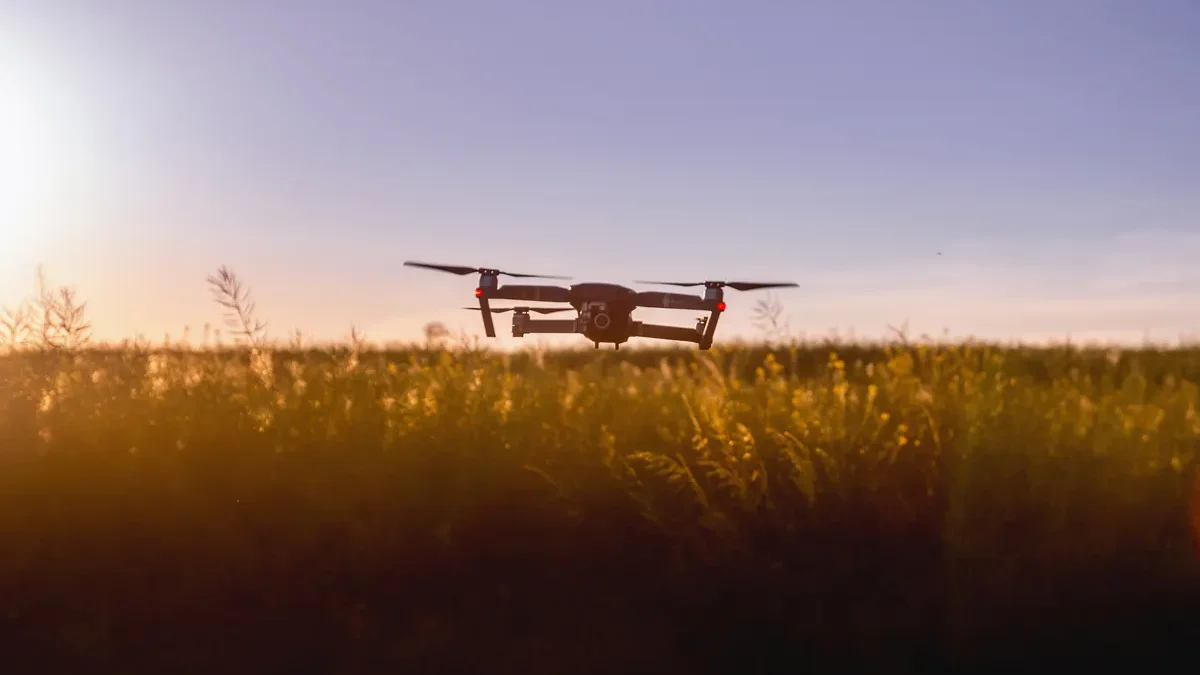
The U.S. Air Force has issued a Request for Information seeking Air Force target drones capable of replicating everything from hobby-grade quadcopters to supersonic stealth fighters, and the document makes clear that nothing in today’s fleet comes close to meeting that requirement.
The RFI, with a response deadline of September 28, asks industry for a family of expendable aerial targets that can represent “the full range of airborne threats, spanning from inexpensive ‘hobby drones’ to the most advanced adversary fighter and large-scale aircraft.” The investment thesis for defense contractors here is straightforward: the Air Force is signaling a procurement gap it cannot fill with existing hardware, and it is explicitly courting non-traditional suppliers.
The performance bar the RFI sets for fighter simulation is steep. Those drones must reach supersonic speeds up to and exceeding Mach 1.6 at 40,000 feet, execute high-G combat maneuvers, carry precise low-observable radar cross-section profiles, emit multi-spectral infrared signatures, and integrate electronic attack capabilities.
At the other end of the spectrum, targets simulating C-130-class transports must match physical scale and subsonic flight envelopes rather than raw speed, while strategic-bomber and AWACS surrogates need to replicate massive physical dimensions and multi-spectral thermal signatures. Group 5 UAV surrogates must reach 50,000 feet; Group 3 and 4 surrogates must fly at Mach 0.5 to 0.8 and pull 3 to 6 Gs; Group 1 and 2 targets cap out at less than 150 knots and must be capable of swarm operations.
The cost language in the RFI is just as pointed as the performance specs. The Air Force wants drones cheap enough to be treated as attritable or expendable, and specifically flags interest in “commercial, modified commercial, dual-use, and non-developmental solutions” that offer “advantages in cost, scalability, and simplicity over legacy systems.” That framing is an open door for defense-adjacent commercial drone makers, not just traditional prime contractors.
The existing fleet illustrates exactly why this RFI exists. The BQM-167A, built by Composite Engineering Inc. and powered by a MicroTurbo Tri 60-5+ engine, tops out at Mach 0.92 and carries a unit cost of $570,000. The Air Force holds an active-force inventory of just 37 units. At 20 feet long with an 11-foot wingspan, it is not a convincing stand-in for a 67-foot Chinese J-20 stealth fighter or a 108-foot-wide H-6 bomber.
The QF-16, a converted F-4 Phantom successor in the full-scale target role, can fly both manned and remotely piloted under what the Air Force terms “Not Under Live Local Operator” (NULLO) operations. It serves as a live-fire target during the Weapon System Evaluation Program-East, formal two-week exercises designed to test a squadron’s live-fire air-to-air capabilities. But a converted fourth-generation fighter cannot plausibly simulate a fifth-generation stealth platform, and at the cost of a retired combat jet, it is not something the Air Force can afford to expend in volume.
The 82nd Aerial Targets Squadron at Tyndall Air Force Base, the unit that operates both the BQM-167A and QF-16, averages only 14 target recoveries per year. That cadence reflects a fleet sized for peacetime evaluation exercises, not for the high-volume attrition training the Air Force now says it needs.
For historical context, the QF-16 replaced the QF-4 aerial target, a supersonic full-scale drone modified from the F-4 Phantom by BAE Systems that reached initial operational capability in 1997. The pattern of adapting retired fighters as surrogates is a long-running workaround, not a designed solution, and the RFI is the clearest acknowledgment yet that the workaround has run its course.
The bull case for new entrants is real: an explicit government preference for commercial and dual-use approaches, a performance envelope that spans Mach 1.6 fighters down to sub-150-knot swarm drones, and a stated desire for expendability at scale. The bear case is that “RFI” is still two or three steps from a funded contract, and the Air Force has a habit of ambitious requirements that compress when budgets tighten.
The key level to watch is whether this RFI converts to a formal solicitation, and at what unit-cost ceiling. If the Air Force targets a price point meaningfully below the BQM-167A’s $570,000 unit cost for its supersonic tier, the program becomes interesting. If the cost floor slips upward, the case for commercial disruption weakens and the primes reassert their advantage.
Xiaomi Sky Nomad orders crossed 70,000 in the model family’s first month, a result that lifted the stock...
Delta Air Lines (DAL) slashed its Delta Air Lines 2026 outlook on Friday, cutting full-year adjusted earnings per...

The Tesla (TSLA) production outlook for 2026 points to a genuine volume recovery, but the more pressing question...