
Xiaomi Sky Nomad Orders Can’t Close the 2026 Delivery Gap
Xiaomi Sky Nomad orders crossed 70,000 in the model family’s first month, a result that lifted the stock...
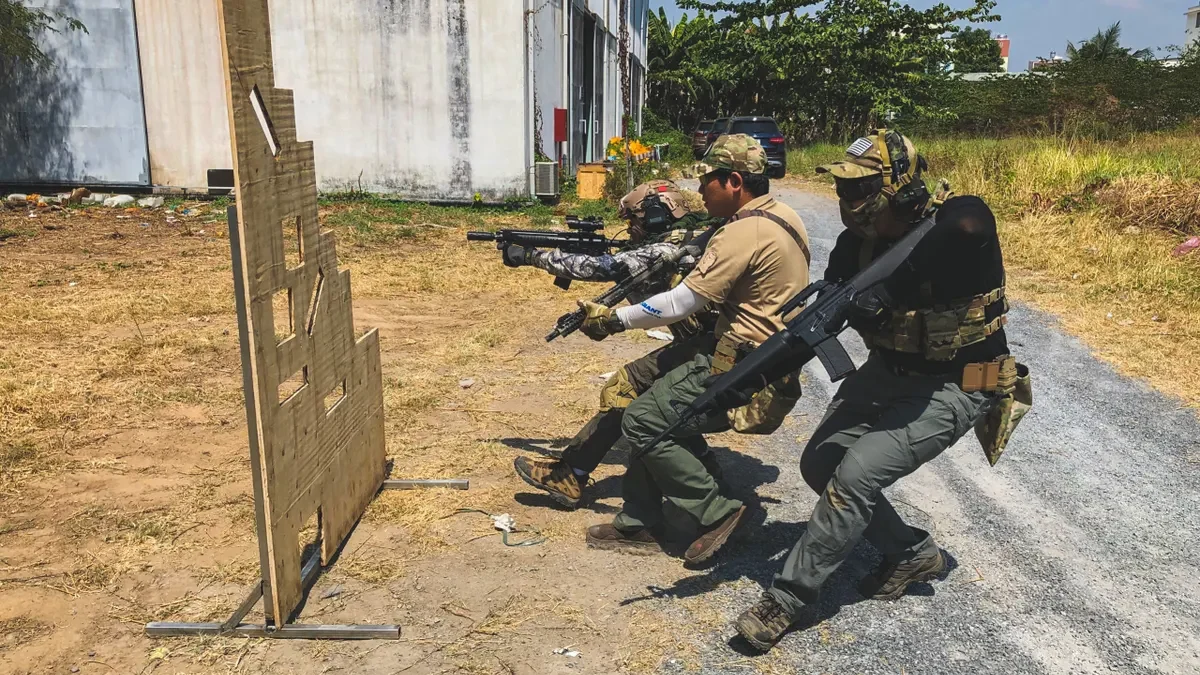
President Donald Trump’s order to substantially reduce Trump South Korea exercises reframes what looked like a cost dispute into something more geopolitically loaded: a deliberate signal toward Pyongyang that comes at the direct expense of a treaty ally. The move conflates three separate grievances, and that conflation is where the real risk sits.
Trump posted on Truth Social hours before U.S. Forces Korea‘s Ulchi Freedom Shield drills were set to begin, saying he was “not happy” that the U.S. had agreed to participate. He called the exercises “costly” and said they “send a signal that is totally inappropriate and hostile, to a Country that, as long as Donald J. Trump has been President, has been unthreatening and respectful.” South Korea’s Joint Chiefs of Staff told Reuters the drills started Monday as scheduled, with roughly 18,000 South Korean military personnel taking part and the exercise running through August 27.
The Pentagon referred questions to the White House, which did not respond. Seoul’s Blue House said it was reviewing Trump’s post and that it hopes the U.S.-North Korea relationship will “lead to meaningful dialogue” and advance “peace and stability on the Korean Peninsula.”
U.S. Forces Korea describes Ulchi Freedom Shield as a combined, joint, all-domain exercise designed to build interoperability across Combined Forces Command, United States Forces Korea, the United Nations Command, and the ROK Joint Chiefs of Staff, using live, virtual, and constructive training elements. Curtailing it is not a logistical tweak; it erodes the institutional muscle memory the alliance runs on.
Trump tied the exercise reduction to three distinct complaints. First, cost: he has long pushed Seoul to pay more for the 28,500 U.S. troops stationed on the peninsula. Under the five-year Special Measures Agreement covering 2026 through 2030, South Korea agreed to raise its contribution by 8.3%, according to the Congressional Research Service. Reuters reports that first-year contribution at $1.47 billion, though Stars and Stripes has reported the figure as $1.2 billion starting 2026; the Reuters figure, sourced to the agreement itself, is used here. Even taking the higher number, a U.S. official this year called Seoul a “model ally” committed to increasing defense spending in line with U.S. regional strategy.
Second, Iran: Trump wrote that he asked South Korean President Lee Jae Myung to join U.S. efforts to “denuclearize” Iran and was told “No thanks!” Seoul said it was still discussing potential military contributions while weighing its readiness posture on the peninsula and domestic legal constraints.
Third, and most consequentially, Trump praised Kim Jong Un. He flagged his “very good relationship” with the North Korean leader and described North Korea as “unthreatening and respectful” under his presidency. This is the tell. The cost complaint and the Iran snub are irritants; the Kim framing is the argument.
Jenny Town, head of the Stimson Center’s 38 North program, put it plainly: “This decision may be part of a larger effort to create a diplomatic opportunity with Pyongyang, as Trump has consistently wanted since coming back to office, although the haphazard nature of this move is unlikely to make much of an impression in Pyongyang.”
Victor Cha, who leads the Korea program at the Center for Strategic and International Studies, offered a related read: Trump may want to engage Kim partly to complicate the Russia-North Korea relationship, given that North Korean troops have fought alongside Russian forces in Ukraine and Pyongyang has supplied ballistic missiles used in attacks there.
The military friction sits on top of a deteriorating economic relationship. The two countries signed a trade deal to reduce Trump’s auto tariffs in exchange for Seoul committing to invest $350 billion in the U.S. South Korea has not announced the details of that investment plan. A former U.S. official who worked in the first Trump administration told Reuters that Trump is “frustrated with the intransigence” of the Lee government, adding that it “has repeatedly pursued policies antagonistic to American companies.” A dispute involving U.S.-listed e-commerce firm Coupang, under investigation in Seoul over a data leak, is a live irritant.
The bear case for the alliance is that Trump is accumulating grievances faster than Seoul can address them, and the exercise reduction is the first concrete military consequence. The bull case is that the drills started anyway, the Blue House signaled continuity on combined defense, and Trump’s Truth Social posts have historically preceded negotiating pressure rather than structural change.
The key test is whether Washington follows the post with an actual operational directive to commanders. If the drills run in full and no formal reduction order materializes, this episode is leverage theater. If U.S. participation is scaled back for the next scheduled exercise cycle, the alliance posture has genuinely shifted, and Seoul’s defense planning calculus changes with it.
Xiaomi Sky Nomad orders crossed 70,000 in the model family’s first month, a result that lifted the stock...

Delta Air Lines (DAL) slashed its Delta Air Lines 2026 outlook on Friday, cutting full-year adjusted earnings per...

The Tesla (TSLA) production outlook for 2026 points to a genuine volume recovery, but the more pressing question...