
The Drone Delivery Aviation Stock That Is Processing More Commercial Flights Per Day Than Any Other Company in the Sector
A small white aircraft is hovering thirty feet above a backyard somewhere over a suburb outside of Dallas,...

There isn’t a clear winner in the public market, which is the most peculiar aspect of the enterprise software category that everyone in venture capital seems to be pursuing at the moment. Not just yet. Not at all. When you look at the agendas of any tech conference in 2026, the topic of agentic AI, AI-native platforms, and the next software layer being developed on top of big language models keeps coming up. The growth figures appear bizarre. On a public exchange, the dominant company—the one that investors can confidently point to as having won—just doesn’t exist.
According to Gartner, task-specific AI agents will be incorporated into 40% of enterprise applications by the end of 2026, up from the current rate of less than 5%. That type of jump typically results in a clear winner. A Salesforce. A ServiceNow. Some business whose ticker becomes the category’s abbreviation. The leaders are private instead. According to recent reports, Anthropic generates about $4 billion in recurring revenue annually, which is about 40% of OpenAI’s size. Both remain confidential. While the public market players—those who have shareholders to answer to—are rushing to add agentic features to products that were designed for a different era, both are competing with a long tail of AI-native rivals.
My friend works at one of these AI-native startups in a building in San Francisco. There are more math-covered whiteboards, fewer beanbag chairs than the stereotype implies, and a soft hum to the office. He once told me that his team can’t afford to think further ahead, so they develop in two-week sprints. The product roadmap changes, the pricing assumptions are broken, and the model providers ship something new. Wall Street is unable to find a winner in part because of this instability. A company whose competitive position can fluctuate between earnings calls is difficult to assign a multiple to.
AlixPartners’ figures provide an alternative perspective on the same narrative. They forecast that in 2026, software M&A will increase by 30 to 40 percent annually, with deal values approaching $600 billion. Squeezed between AI-native upstarts below and hyperscalers above, mid-market software firms are increasingly faced with a difficult decision. Construct, purchase, or sell. The first option is out of reach for most, and the second is becoming costly. So they search for a way out. According to data from Sapphire Ventures, the top twenty enterprise software deals accounted for 41% of all category funding last year. This kind of concentration typically precedes either a painful correction or a few huge winners.
The other quiet revolution is pricing. The model that made SaaS a trillion-dollar industry—per-seat licensing—is under threat. By 2026, it is anticipated that 40% of AI software revenue will come from hybrid pricing based on usage and results. Pay-for-performance agreements are preferred by over half of enterprise buyers. On a slide, that sounds tidy. In reality, CFOs are staring at erratic monthly invoices and wondering how to budget for the year while sales teams are renegotiating contracts they believed were settled. There seems to be a real-time rewiring of the entire commercial layer of enterprise software.
It’s difficult to ignore the pattern as you watch this develop. Within a few years, categories with this much growth and capital typically produce a public champion. This one hasn’t, and it may not for some time because the underlying technology is changing too fast for any business to raise an alarm. Investors appear to think a winner is on the horizon. They are making large, covert bets, frequently at valuations that would make a fund manager in 2021 blush. The public markets are still waiting to see who will win, whether it’s a current AI-native leader, a quiet incumbent who made a good pivot, or something no one has yet to identify. And that wait seems to be the most costly seat in the room.
A small white aircraft is hovering thirty feet above a backyard somewhere over a suburb outside of Dallas,...

Observing Cathie Wood sell into a rally that she helped organize has an almost unsettling quality. Taiwan Semiconductor...
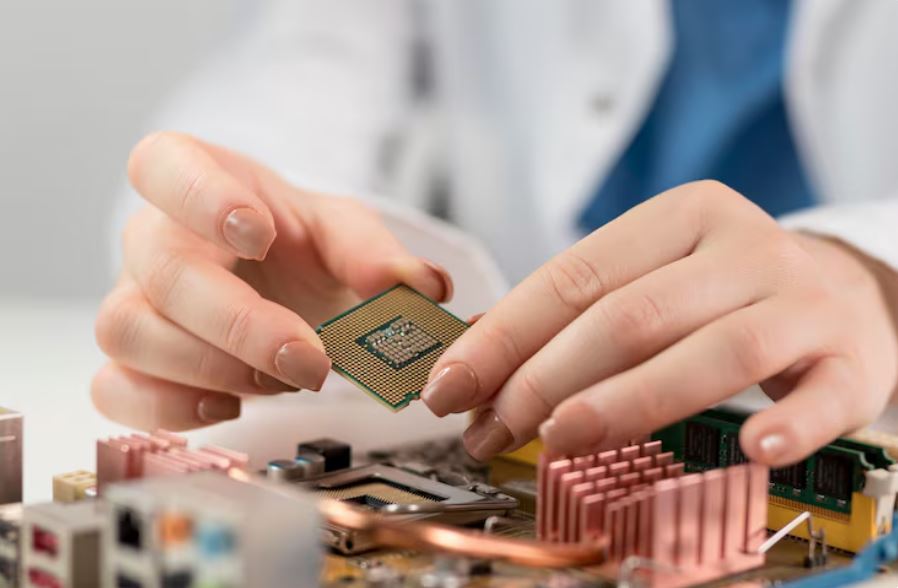
The discourse surrounding semiconductors has mostly adhered to a well-known script for the last two years. Nvidia, GPUs,...