
Why Warren Buffett Was Right About Airline Stocks — Until He Wasn’t — and What His Original Logic Teaches You Now
For almost forty years, Warren Buffett warned anyone who would listen that investing in airlines was a bad...
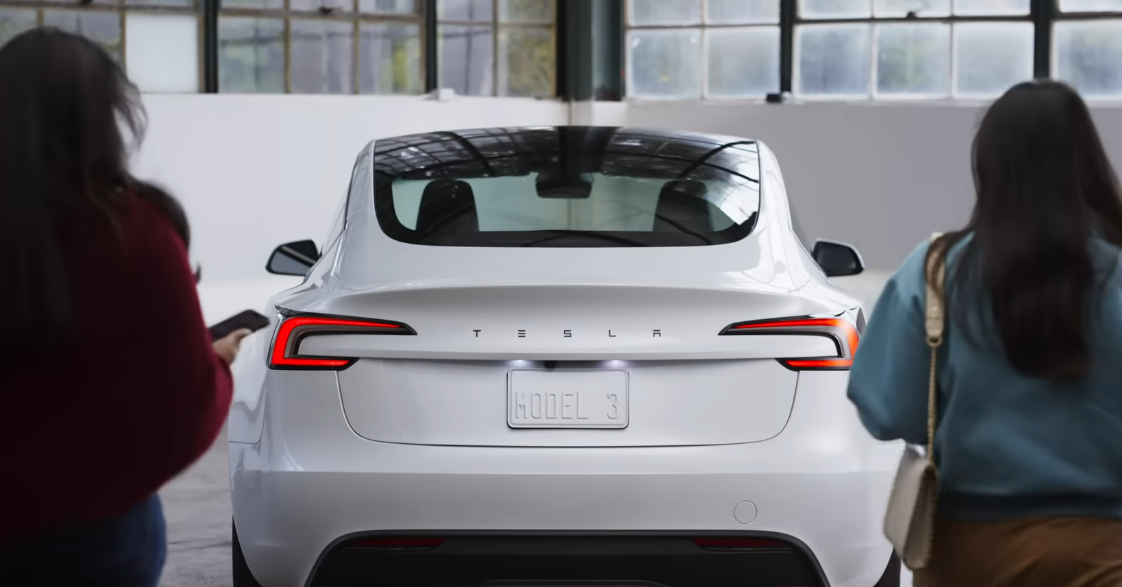
On Wednesday, something changed in the discourse surrounding Tesla. For the first time in weeks, there was a noticeable shift in the tone on trading desks and in the analysis notes that were arriving in Wall Street inboxes. The stock started the day at $391.95 and increased by almost 8%. Tens of billions of dollars in paper value appeared, vanished, and then settled higher than where it began when Tesla added almost $27 per share in a single day. The company has a $1.47 trillion market capitalization. There were actual proximate causes: Tesla released a spring software update with new Full Self-Driving engagement features, UBS upgraded the stock from Sell to Neutral, and Elon Musk declared that the AI5 chip had finished its tape-out. Many things occurred simultaneously. However, it’s rarely about just one thing when watching TSLA move.
The AI5 chip is the most technically significant of the three catalysts, so it’s worth taking a moment to consider it. With 2,500 TOPS of processing power, the chip is significantly more powerful than Nvidia’s Drive Thor, which has 1,000 TOPS for integer calculations, and about three and a half times the capacity of Tesla’s current HW4.0 dual-chip setup, which manages 720 TOPS. Musk made reference to AI6 in the same sentence, which could be an indication of his confidence or his propensity to leapfrog the present with promise for the future. The practical implications for the production of vehicles in 2026 are limited because the AI5 chip won’t be available until at least 2027. However, for investors who have priced Tesla more like an AI infrastructure company than an automaker, the tape-out served as confirmation that the hardware roadmap is moving forward according to a timeline.
The strange tension that permeates every conversation about Tesla stock at the moment is difficult to ignore. The numbers are genuinely mixed, on the one hand. Tesla reported negative revenue growth for the third of four quarters in 2025, with Q4 revenue of $24.9 billion, down 3.1% year over year. In the first quarter of 2026, the EV market in North America shrank, with overall industry sales declining by more than 20% from the previous year. Compared to the 89 days for gasoline-powered vehicles, the inventory is currently at 130 days. Nevertheless, Tesla has a 364-fold P/E ratio. That figure only makes sense if you’re purchasing the AI company, the robotaxi network, the Optimus robot program, and all of Musk’s forward bets, varying in degree of accuracy and ambiguity.
Some people are interested in insider selling. Early in March, CFO Vaibhav Taneja sold 2,264 shares for about $397 each. At the end of the month, director Kathleen Wilson-Thompson sold 25,809 shares, reducing her stake by 43%. Last quarter, insiders sold over 53,000 shares totaling about $20.8 million. In isolation, none of that is particularly concerning; executives sell stock for a variety of reasons unrelated to company pessimism. However, the selling at least raises an eyebrow when compared to the 7.6% single-day surge and the excitement surrounding AI5. In the meantime, smaller wealth managers like Lbp Am Sa and Revolve Wealth Partners expanded their holdings in Q4, and Cathie Wood’s ARK raised its exposure to Tesla. More buyers and sellers have been drawn to the stock at about the same time.
The next significant event that the market is pricing around is the earnings call on April 22. Analysts predict Q1 2026 revenue of $22.34 billion, a 15.54% year-over-year increase, and EPS of $0.22, up from $0.12 in the same quarter the previous year. That appears to be an improvement on the surface. However, the delivery figure that has already been made public reveals a more complete picture: 358,023 vehicles were delivered in Q1 2026, up just 6.3% year over year during a quarter when the EV market was generally contracting. Another issue is energy storage, where Q1 deployments of 8.8 GWh show a significant drop from Q1 2025 (10.4 GWh) and Q4 2025 (14.2 GWh). Internal resources have been redirected toward Optimus, Cybercab, and AI. Engineering bandwidth that was previously allocated to energy products is being absorbed by the robotics and autonomy program.
Because both bulls and bears are operating from partially correct frameworks, TSLA stock is extremely difficult to assess. The bears are correct that FSD continues to produce near-miss headlines in addition to real progress, that Unitree and other robotics competitors are accelerating, that Chinese rivals like BYD are pressing hard, and that car sales are not growing quickly enough to support a 364x earnings multiple. The bulls are correct that Tesla’s software and AI assets are genuine, that Musk’s $25 billion chip manufacturing goal, Terafab, could generate a whole new revenue stream if it comes to pass, and that the company’s 50% market share for EVs in the United States is a stable position. At $391, the stock is essentially a bet on which of those realities will prevail over the medium run.
For its part, the analyst community is mirroring that division. Mizuho has an Outperform rating and a $540 target. New Street Research can be purchased for $600. A few days prior to the most recent spike, JPMorgan reissued a Sell rating. TD Cowen maintained a buy but lowered its target from $519 to $490. With an average target of $398.61, which is essentially where the stock is currently trading, the consensus is at Hold. Price target convergence may be the most accurate way to describe real uncertainty. Tesla could be valued at $600. It could be worth $200. The stock is just at ease enough to trade in the middle and spike on chip news because no one knows for sure.
For almost forty years, Warren Buffett warned anyone who would listen that investing in airlines was a bad...

A closed automobile plant has a certain kind of silence. You get the same impression when you read...
When the number of believers begins to decline, a certain silence falls over a stock. The trading data...