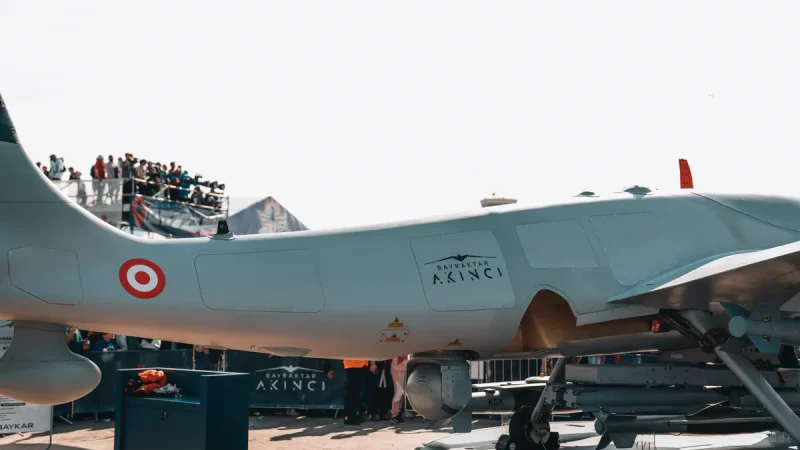
Vector and Nammo Armed Drones Scale Up for Mass Production
Vector Defense and Nammo announced an expanded partnership Monday at the Association of the United States Army’s annual...
While Tesla’s core automotive business shows clear signs of contraction, its share price tells a different story. The market’s focus is undergoing a fundamental shift, moving away from vehicle delivery counts and toward the company’s potential in energy infrastructure and autonomous systems. This strategic pivot is driving a significant re-rating of the electric vehicle pioneer’s stock.
Recent delivery figures underscore a notable slowdown in Tesla’s traditional operations. The data reveals a pronounced dip:
For a growth stock of Tesla’s magnitude, these numbers constitute a meaningful setback. However, the market reaction has been relatively muted. Wedbush analyst Dan Ives characterized the results as “better than feared,” suggesting that many investors had already priced in a more severe demand slump and were anticipating weaker data.
The current revaluation is being fueled not by cars, but by two key developments outside the core auto segment.
Despite trading slightly below the previous day’s close at around $436, the stock remains comfortably above its 50- and 200-day moving averages. This technical position reinforces that a medium-term upward trend persists, even in the face of recent automotive weakness.
This altered perspective is clearly visible in recent analyst research, where price targets are being revised upward based on new growth pillars.
Concurrently, traditional EV sales face persistent pressure from intense competition and expiring subsidies. This reality prevents Tesla from being defined solely by unit volume. Instead, the “AI thesis” is moving to the forefront, forming what many investors see as a new valuation floor.
In summary, the market is rewarding strategic direction over current delivery metrics. The challenges in the auto business are evident but are being overshadowed by robust energy storage performance and tangible advances in autonomous driving. Analysts are lifting their price targets primarily on the promise of software, robotaxis, and robotics, while the classic vehicle operation’s role in the investment story diminishes. The key question for Tesla’s future trajectory is whether it can substantiate the high expectations for margins and growth in energy and autonomy with further concrete milestones in the coming quarters.
Vector Defense and Nammo announced an expanded partnership Monday at the Association of the United States Army’s annual...

The TSMC earnings season preview is the week’s focal point, with Taiwan Semiconductor Manufacturing (TSMC) reporting Thursday as...

The EU-China hybrid deal announced on October 9 in Beijing is less a resolution than a redirect: Brussels...