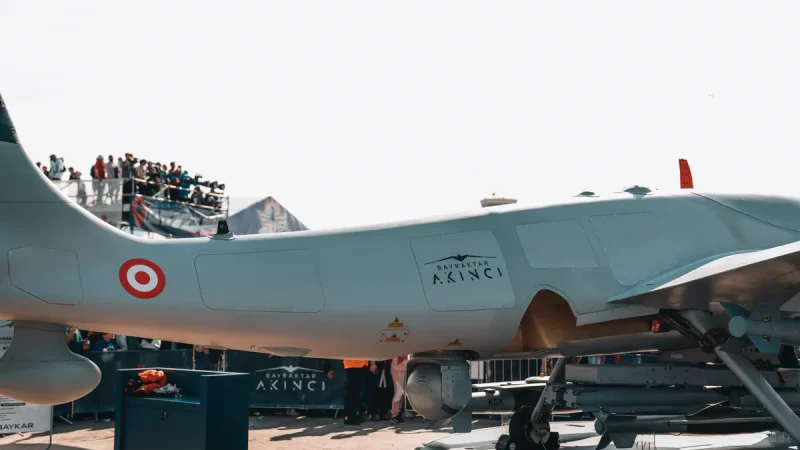
Vector and Nammo Armed Drones Scale Up for Mass Production
Vector Defense and Nammo announced an expanded partnership Monday at the Association of the United States Army’s annual...

A multi-billion dollar contract modification from the Pentagon has substantially extended Lockheed Martin’s revenue visibility deep into the next decade. Announced just before the Christmas holiday, the expansion of an existing program provides the defense giant with a fortified order book and reinforces its medium-term earnings trajectory.
The U.S. Air Force has significantly increased the ceiling of its existing contract for the C-130J Super Hercules transport aircraft by $10 billion. This adjustment raises the total notional value of the master agreement to $25 billion. The move directly bolsters the company’s backlog, ensuring high utilization rates at its manufacturing facilities for years to come.
Contract modification P00014 extends the period for production and sustainment activities at the Marietta, Georgia site through July 16, 2035. This long-term commitment provides the U.S. military with sustained supply chain certainty while granting Lockheed Martin over a decade of predictable revenue from this program alone.
A key component of the contract expansion is its provision for Foreign Military Sales (FMS). The additional funding volume is not solely for U.S. forces but also facilitates deliveries to allied nations.
Confirmed recipients of the aircraft and related support services include:
* Germany
* France
* Australia
* New Zealand
* Norway
* The Philippines
* Egypt
This broad international customer base reduces reliance on the U.S. defense budget alone and highlights sustained global demand for Lockheed’s transport platforms. For the corporation, this translates into more stable cash flows distributed across multiple national budgets.
Alongside these fundamental developments, market observers are assessing the stock’s technical position. DailyForex analyst Adam Lemon outlined a specific trading scenario on December 24, suggesting a potential long position within an entry range of $477.43 to $484.95.
His analysis points to a price target band between $523.95 and $534.43. Lemon cites the C-130J contract increase from $15 billion to $25 billion as a primary catalyst. Further support for an optimistic view comes from the anticipated growth in the military satellite market, which is estimated to expand by approximately 10%.
From a valuation perspective, the stock does not appear stretched relative to sector and broader market comparisons. Lockheed Martin trades at a price-to-earnings ratio of about 26.88, slightly below the S&P 500 average of 27.85, suggesting a moderate valuation in the current market environment.
The current share price of around €410 remains just above its 50- and 200-day moving averages. While the stock has gained roughly 4.7% over the past 30 days, its year-to-date performance remains negative, down just over 12%. This indicates the recent long-term contract news is impacting a share price that still has room for recovery.
The C-130J expansion is not an isolated development. Lockheed Martin has reported progress in other divisions. Its missiles and fire control segment recently completed a successful flight test of the Extended-Range GMLRS (ER GMLRS) at White Sands Missile Range. The system achieved a distance of 112 kilometers, confirming its precision capabilities at extended ranges.
Separately, the company secured an additional contract modification from the U.S. Navy valued at $3.63 billion. Collectively, these awards reinforce Lockheed Martin’s role as a principal equipment supplier within the Western defense alliance.
A new Pentagon report on global military capabilities, also published on December 24, emphasizes the strategic necessity of ongoing procurement programs. In this context, the recent contract expansions appear less as isolated events and more as components of a longer-term modernization wave within the defense sector.
Lockheed Martin’s business model is currently characterized by strong reliance on long-term government contracts. The increase of the C-130J master agreement to $25 billion, coupled with additional multi-billion dollar U.S. Navy awards and successful missile tests, significantly extends the company’s planning horizon for both revenue and capacity utilization.
With an order book now reliably stretching to at least 2035 and supported by multiple NATO and partner nations, the focus is clearly on predictable, government-backed revenue streams rather than speculative projects. For the coming years, the critical factor will be how efficiently Lockheed Martin executes these programs and converts them into tangible margin improvement.
Vector Defense and Nammo announced an expanded partnership Monday at the Association of the United States Army’s annual...

The TSMC earnings season preview is the week’s focal point, with Taiwan Semiconductor Manufacturing (TSMC) reporting Thursday as...

The EU-China hybrid deal announced on October 9 in Beijing is less a resolution than a redirect: Brussels...