

Close Menu
  • Automotive Stocks
  • Defense & Aerospace
  • Industrial
  • ETFs
  • News
What's Hot

The De-SPAC Disaster Zone: Finding the Few Legitimate EV Startups Amidst the Rubble

May 24, 2026

The Tesla Trajectory: Ex-Stellantis CEO Warns of a “Colossal” Stock Market Value Loss

May 24, 2026

Behind the Tariff Whiplash: Calculating the True Cost of Banning Chinese Autos from the U.S.

May 24, 2026
  • Contact Us
  • Privacy Policy
  • About Primary Ignition
  • Terms & Conditions
  • Disclaimer
  • Automotive Stocks
  • Defense & Aerospace
  • Industrial
  • ETFs
  • News
Home » Tsunami Leaves Trail of Destruction in Northeast Japan
News

Tsunami Leaves Trail of Destruction in Northeast Japan

By Pris ClaireJune 5, 2025No Comments3 Mins Read
Share Facebook Twitter Pinterest LinkedIn Tumblr Reddit Telegram Email
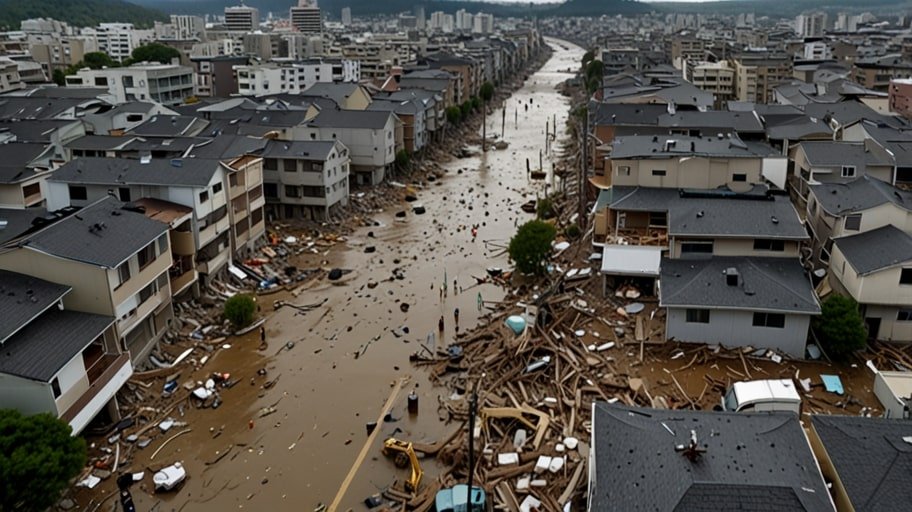
Flooded streets of Sendai, Japan, with debris scattered and rescue teams searching through wreckage after a tsunami.
Rescue teams navigate Sendai’s flooded streets, searching for survivors after a deadly tsunami struck Japan’s coast.
Share
Facebook Twitter LinkedIn Pinterest Email

On June 4, 2025, a massive tsunami hit the northeastern part of Japan, leaving at least 15 people dead and displacing many others. When a 7.8-magnitude undersea earthquake hit Miyagi Prefecture, people were flooded with chaos as coastal areas were submerged. Emergency workers hurried to save people as the waves damaged buildings and other facilities.

Huge earthquakes triggered warnings of tsunamis in the morning, and residents immediately fled to safer high areas. Huge waves, as high as five meters, hit Sendai and nearby regions, sweeping apart many vehicles, boats, and buildings. The event reminded many of the 2011 Tohoku disaster, which led to worries that more coastal communities would suffer big losses.

Emergency workers waded through waterlogged areas to assist people trapped at the tops of homes and building floors. Those who survived in secluded areas were lifted out by helicopters, and Japan’s Self-Defense Forces helped look for more people. According to the government, more than 200 people went missing, and officials believe the number of deaths could increase.

In Miyagi and Fukushima prefectures, health professionals were under tremendous stress as they treated people injured by the earthquake and those who had drowned. Hospitals continued to treat patients as medical staff started to use tents in safer places around the city. Some areas could not access immediate assistance because roads were broken or power went out.

The warning from the Japan Meteorological Agency was issued right away, but the fast arrival of the tsunami surprised many. Since most fishing involved fishermen and early birds, many capsized boats were recorded in the moving waves. Eyewitnesses said that walls of water rushed through neighborhoods, dragging everything along with them.

Speaking to the nation, Prime Minister Fumio Kishida promised to back the recovery work wholeheartedly. Funds were put aside to offer shelter, food, and healthcare to those who had to leave their homes. Community centers and schools became places for thousands of homeless people to find shelter.

The disaster shows that Japan still faces difficulties regarding tsunami preparation. Even though warning systems had been improved, several coastlines could not hold back the increase in water height. Various experts point out that aging infrastructure may not be adequate, causing them to encourage more money for better defenses. There is more pressure on the government to check and maybe change building safety standards in high-risk regions.

Social media footage revealed the tragedy’s size as it captured people running from towns, unable to escape the floods. Many family members posted heartbreaking messages, leading to even louder calls for speeding up rescue missions. Several people across Japan are joining the effort to assist in the relief.

These unfortunate losses mainly affect local small businesses that operate in fishing and tourism. Coastal markets in Sendai, which sold fresh seafood, were all destroyed. Reconstruction will probably take a long time, and its effects will be seen in the surrounding economies. Community leaders are working to help workers who have suffered.

Assistance from the international community has arrived, and rescue squads from South Korea and the United States are also ready. People around the world admire Japan’s strength during past natural disasters, but this tsunami is especially challenging. Authorities or groups of nations have expressed their sympathy.

Environmental experts say climate change might increase the number and severity of disasters, such as rising seas and more earthquakes. The tsunami’s impact on nearby ocean habitats, marine life, and coral reefs is being evaluated. Actions to keep the area safe will involve cleaning debris and fuel from the environment.

Share. Facebook Twitter Pinterest LinkedIn Tumblr Email
Previous ArticleFatal Truck Collision Shakes Mexico Capital
Next Article Manila Faces Catastrophic Typhoon Aftermath
Pris Claire

Pris Claire combines her love for writing with a deep curiosity about the evolving automotive landscape. At Primary Ignition, she focuses on breaking news, industry shifts, and the cultural impact of cars on everyday life. Known for her clear, engaging style, Pris makes complex topics approachable for all readers, from enthusiasts to casual drivers. Her coverage highlights not just the vehicles, but the people and ideas shaping the road ahead.

Related Posts

Automotive & E-Mobility

Behind the Tariff Whiplash: Calculating the True Cost of Banning Chinese Autos from the U.S.

May 24, 2026
Automotive & E-Mobility

How the Rise of Chinese Auto Brands in Southeast Asia Is Creating a Financing Vacuum That Global Banks Are Racing to Fill

May 22, 2026
Automotive Stocks

Lucid Stock Slides to a 52-Week Low, and Wall Street Has Stopped Pretending

May 22, 2026
Add A Comment
Leave A Reply Cancel Reply

Automotive & E-Mobility

The De-SPAC Disaster Zone: Finding the Few Legitimate EV Startups Amidst the Rubble

David ChenMay 24, 2026

A closed automobile plant has a certain kind of silence. You get the same impression…

The Tesla Trajectory: Ex-Stellantis CEO Warns of a “Colossal” Stock Market Value Loss

May 24, 2026

Behind the Tariff Whiplash: Calculating the True Cost of Banning Chinese Autos from the U.S.

May 24, 2026

CHERY’s Auto China Vision: Could This Unlisted Giant Disrupt Global Auto Stock Valuations?

May 24, 2026

The Creditor-Side Auto Financing Risks That Are Rising in 2026 — and the Opportunities Hidden Inside Them

May 24, 2026
Our Picks

The De-SPAC Disaster Zone: Finding the Few Legitimate EV Startups Amidst the Rubble

May 24, 2026

The Tesla Trajectory: Ex-Stellantis CEO Warns of a “Colossal” Stock Market Value Loss

May 24, 2026

Behind the Tariff Whiplash: Calculating the True Cost of Banning Chinese Autos from the U.S.

May 24, 2026
ABOUT PRIMARY IGNITION

Primary Ignition is your trusted source for automotive, defense, and industrial stock news. We deliver real-time analysis, market insights, and expert commentary to help you navigate the dynamic world of equity news.
Primary Ignition Media

QUICK LINKS
  • Home
  • Automotive & E-Mobility
  • Defense & Aerospace
  • ETFs
TOP CATEGORIES
  • Automotive & E-Mobility
  • Electric Vehicles
  • ETFs
  • Industrial
  • Tech & Software
INVESTMENT DISCALIMER

Investment Warning: All information provided on Primary Ignition is for educational and informational purposes only. Stock markets involve substantial risk of loss and are not suitable for every investor. Past performance is not indicative of future results. Always conduct your own research and consult with licensed financial advisors before making investment decisions. We do not provide investment advice, and no content should be considered as such.

  • Imprint
  • Privacy Policy
  • Terms of Service
  • Editorial Standards
© 2026 Primary Ignition Media. All rights reserved.

Type above and press Enter to search. Press Esc to cancel.