


In a time when urban dwellers are chasing the idea of being able to work efficiently without losing style, the Puma Ford has become a sensation in the small SUV market. Introduced as a compact competitor to other larger crossovers, this pocket-sized powerhouse is a combination of a European spirit and American engineering expertise. However, the new version of its hybrid model is being rolled out and is causing shockwaves in the showrooms. The demand for the Puma hybrid is beating the supply rate, as fuel prices fluctuate and environmentally savvy consumers are scavenging the marketplace. With the month of September 2025 approaching, we shall explore what makes this car not only a car, but a culture on four wheels.
Ford Puma: Small Design with Big Performance
The Ford Puma is not a typical subcompact SUV; it is a masterpiece of making the most out of the least amount of hassle. It is a little less than 4.2 meters long and thus will easily fit in tight parking spaces, and its ride is raised high, as SUV enthusiasts love. It costs around 25,000, which is below competitors such as the Volkswagen T-Roc and Hyundai Kona, and is therefore an affordable introduction to high-end driving.
What will make the Puma stand out from the pack? Its cutting-edge handling is due to the advanced independent suspension by Ford and the light-weight chassis that it shares with the Fiesta platform. The base model under the hood boasts of a turbocharged 1.0-litre EcoBoost with 123 horsepower and a slick-shifting seven-speed automatic. The time 0-60 mph acceleration of the car is a brisk 9.5 seconds, and it proves that size is not everything.
To others who value practicality, the Puma has innovative storage options. The drainable underfloor compartment is called the MegaBox–it gulps (p. 281) muddy boots or spills in the grocery. Cargo capacity with seats folded increases to 456 litres, competing with bigger models.
Key specs at a glance:
| Feature | Details |
|---|---|
| Engine Options | 1.0L EcoBoost (123 hp), Hybrid (155 hp combined) |
| Fuel Economy | 52 mpg (hybrid) combined. |
| Dimensions (L x W x H) | 4,186 mm x 1,805 mm x 1,556 mm |
| Towing Capacity | 1,100 kg braked |
| Infotainment | 8-inch SYNC 3 touchscreen, Apple CarPlay/Android Auto |
Safety is not an afterthought either. Its standard features throughout the range: adaptive cruise control, lane-keeping assist and pre-collision braking. It received a perfect five-star rating in Euro NCAP crash tests, which highlights the importance of Ford taking care of what is most important.
Hybrid Version: Environmentally Friendly Power but Not Sacrifices
The next contender: the Ford Puma Hybrid. On sale in the middle of the year 2025, this mild-hybrid system will combine the well-known 1.0-litre three-cylinder with a 48-volt battery and electric motor to increase the overall power to 155 horsepower. The result? The smooth torque fill-in acceleration, the regenerative braking which rejuvenates on the stop-go traffic, and the whisper-quiet idle mode to take its nap during the red-light naps.
Comparing to full hybrids which require plug-ins, the Puma is self-charging, -pure plug-and-play convenience. It consumes fuel at an estimated 52 mpg combined by the EPA, a twenty per cent improvement over the gas-only model. The urbanites can cheer up: in the urban cycles, it goes up to 58 mpg, and the savings in yearly fuel expenses run into hundreds. CO2 emissions? To 110 g/km, which is in line with stricter EU rules and in favour of green-conscious millennials.
Performance remains punchy. The electric assist saves the 0-60 sprint by 0.8 seconds, achieving an 8.7-second hit. There are smoother rides, according to the drivers, and the system suppresses the low-end vibrations to a refined hum. Ford engineers boast of the hybrid to have an invisible integration- you feel the difference without having to re-learn how to drive.
However, the tech-savvy is what takes it higher. The AI of the system predicts driving patterns, which optimise battery deployment when it comes to hills or highways. It comes with the Co-Pilot360 suite in Ford that provides hands-free driving on the highway up to 80 mph, which is a blessing to busy commuters.
It is not efficiency that buyers are purchasing, but future-proofing. Puma puts the owners of the Puma business ahead of the curve with hybrid mandates coming to California and other states by 2030. First-mover reviews of the faux-guilt euphoria of driving away from gas stations without losing any money are even more extollatory.
Buyer Demand: An Ideal Tempest of Trends
Provided that the sales numbers can narrate a story, that of the Ford Puma is one of the fastest rising. European deliveries started the year 2025 up by 28 per cent compared to the past year, and the UK market alone took up more than 45,000 units. Stateside, imports through the growing crossover portfolio of Ford have increased three times to 12000 sales, triple the increase. According to dealers, waitlists are up to three months, which is unusual in the flooded SUV market.
Why the frenzy? It’s a confluence of factors:
- Affordability in Inflationary Times: When the hybrid is priced at less than $30,000, it wins out when compared against lease payments of the pricier EVs, such as the Tesla Model Y.
- Urban Attractiveness: As 70 per cent of the world population is urbanised by 2030, compact size is more attractive than bulky trucks.
- Hybrid Hype: Industry polls show that 62 per cent of customers will be fuel-saving conscious when it comes to buying hybrid vehicles after the pandemic.
- Social Media Buzz: Viral Puma drifts and cargo hacks TikToks have 50 million views, attracting Gen Z flocks.
- Incentives Galore: Government rebates on hybrids to the tune of 4500 dollars in major retail markets make the deal sweeter.
A snapshot of Q2 2025 sales:
| Region | Units Sold | YoY Growth | Market Share |
|---|---|---|---|
| Europe | 35,200 | +28% | 8.2% |
| North America | 6,500 | +150% | 2.1% |
| Asia-Pacific | 4,100 | +45% | 1.8% |
| Total | 45,800 | +52% | 4.5% |
Making a Name in an Overcrowded Crossover World
The Puma car cuts its niche in the small SUV tussle with an unashamed fun-to-drive attitude. It handles the corners as a toy, with 150 horsepower of torque-vectoring all-wheel drive on some models, unlike the appliance-like Honda HR-V. The interior? A blend of soft-touch materials, ambient lighting and a 12-speaker B&O sound system, which transforms commutes into concerts.
It is even distinguished through customisation: 10 exterior colours, such as Solar Silver and Agate Black, and 20-inch alloys to make the car look aggressive. Families with a technological orientation are fond of wireless charging pads and 360-degree cameras, as they simplify the manipulations in the labyrinths of megalopolis. 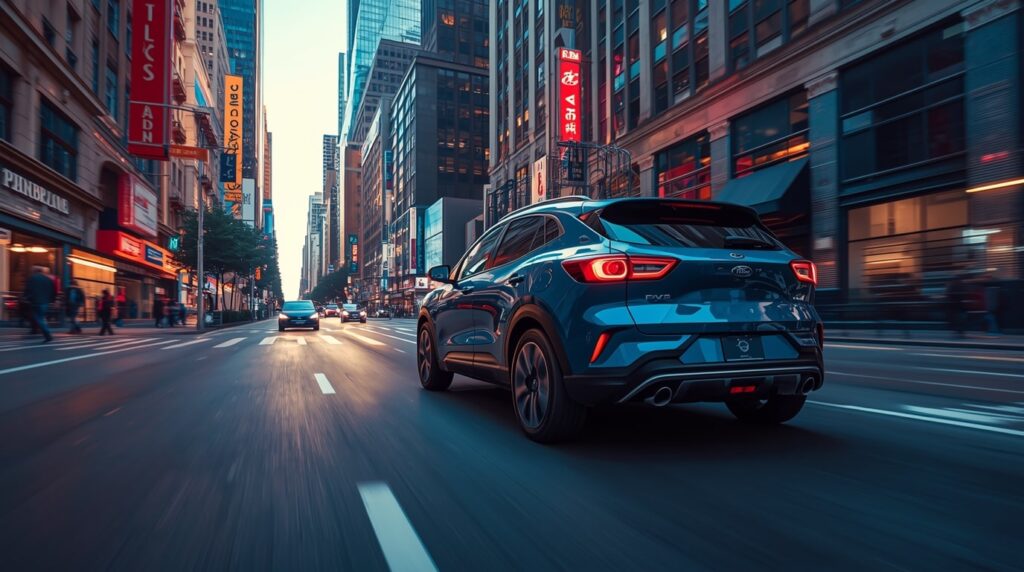
Competitor comparison:
| Vs. | Strengths |
|---|---|
| Toyota Corolla Cross | Puma is the winner in terms of style and handling; Corolla is the winner in terms of resale value. |
| Kia Seltos | Puma has a better efficiency as a hybrid that has similar prices. |
| Mazda CX-30 | Competing on a premium feel neck-and-neck, Puma throws practicality with its MegaBox. |
Owners echo this sentiment. One of London’s drivers refers to it as the Goldilocks SUV, not too large, not too dull. Message board hype is all about mods: bike haul roof racks, or computer modifications to give it extra power.
It has sustainability in its DNA. Seats made of recycled fabrics, low-VOC paints, Ford going net-zero by 2050, and the poster child of Puma.
Future Future: Puma in Electrified Mobility
In the future, the hybrid blueprint of Puma leads to complete electrification. There are rumours of a Puma EV in 2027 that will have a 50-kWh pack and a 300-mile range. The fact that Ford has invested $11 billion in EVs is indicative of a serious commitment, and the Puma is an investment towards battery hegemony.
Market ripple effects? It is putting pressure on old-fashioned brands to go hybrid more swiftly, democratising green technology. Ford should rebound around the world with localised Puma hybrids taking a 15% share in emerging markets such as India by 2028.
The obstacles are approaching: There is still a shortage of chips, and trade tariffs may increase the prices of the U.S. by 5%. However, playing the odds, Ford has 75 per cent buyer loyalty in surveys.
The Puma adapts as urban areas are transformed into bike-friendly places with fewer car parking disputes. It is not only transport, but lifestyle, it is a mixture of fast-paced escapes and hassle-free ownership.
A Recap of the Puma Phenomenon
The Ford Puma, particularly its hybrid form, is not just riding on the small SUV tide, but it is, in fact, surfing on it. The booming demand is evidence of a larger desire for intelligent, rogue mobility in the climate of crisis and economic scarcity. This minuscule competitor has a lot to offer on a little platform, whether you are avoiding the rush-hour traffic tieups or you are just off on a weekend outing.
To potential customers, time is of the essence: test drives are solid and incentives expire after every three months. The Puma demonstrates that agility prevails in a world that is moving at a rapid pace towards sustainable spins. Strap–the hybrid revolution is in the air, and it purrs.