
Forvia Anand India Seating JV Targets 10% Market Share
The Forvia Anand India seating joint venture, announced October 7, 2026, is the clearest sign yet that even...
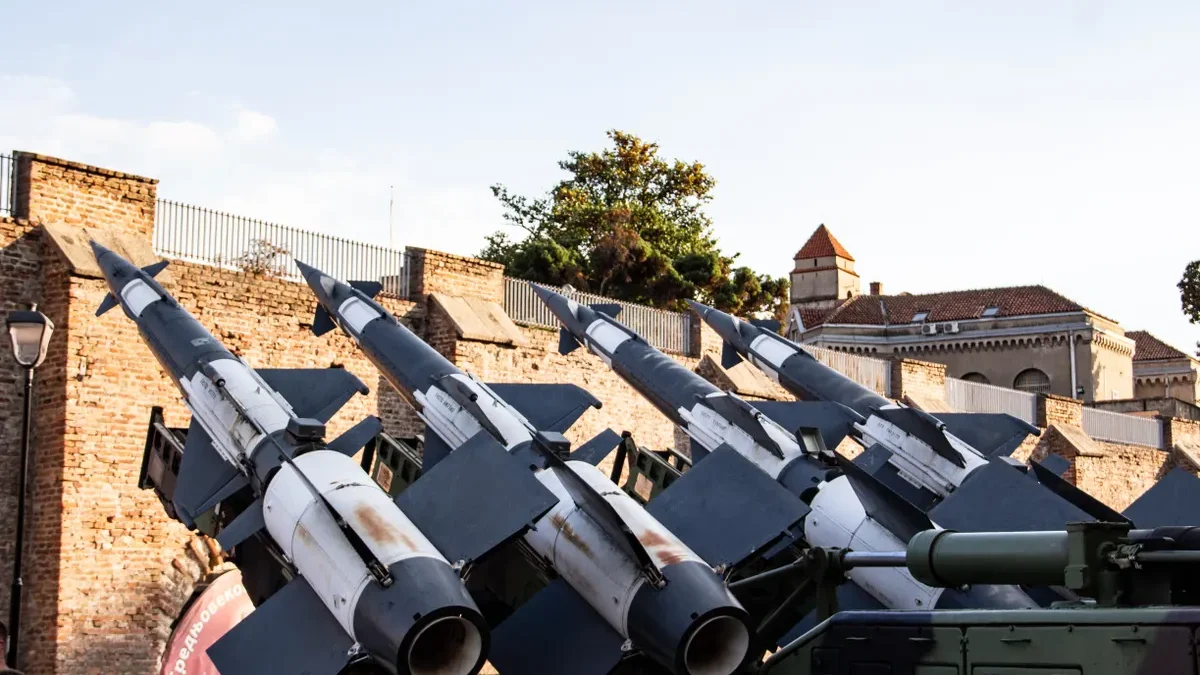
Germany’s Patriot interceptor deal moved into new territory Tuesday when German Defense Minister Boris Pistorius and U.S. Defense Secretary Pete Hegseth signed a co-production agreement at the Pentagon, positioning Germany as an overflow manufacturing hub for American weapons when U.S. plants cannot keep pace with demand. The pact is more than a logistics fix: it marks Berlin’s deliberate effort to lock in a structural role in U.S. weapons supply chains at a moment when the transatlantic relationship is under political strain.
MBDA’s German arm already produces PAC-2 generation Patriot interceptors at its plant in Schrobenhausen. Pistorius told reporters that production of the more capable PAC-3 MSE interceptor is set to begin at the same facility later this year.
The timing matters. Lockheed Martin reported that its PAC-3 MSE program surpassed 500 builds for the first time in 2024, a record production year, and the company is targeting a further 20 percent increase in capacity for 2025. That expansion is being pushed from the top: the U.S. Department of Defense announced a seven-year framework agreement with Boeing and Lockheed Martin to triple seeker production for the PAC-3 MSE, described as directly supporting a separate deal to more than triple all-up-round output. Even with that ramp underway, demand from NATO allies rebuilding Patriot inventories stripped for Ukraine keeps supply tight. Adding German industrial capacity to the network is the logical next move.
Hegseth framed the broader agreement as an alignment of acquisition-reform initiatives in both countries. “When we align the two, you expand opportunities for joint development, production, licensed manufacturing and expanded maintenance and sustainment capacities, exactly what allied countries should be doing,” he said.
The second leg of the deal is murkier. Pistorius said officials from both countries will examine which Tomahawk cruise missile components Germany could supply. Berlin wants the missiles, along with Typhon ground-based launchers, as the centerpiece of a “deep precision strike” capability it is assembling from scratch.
A letter of intent signed on July 8, 2026 committed Washington to approving Germany’s procurement of Tomahawk missiles and Typhon launchers, Reuters reported, citing German government sources. The number of missiles and launchers involved was not disclosed, classified as sensitive information. Political approval and industrial participation are two different things, however: manufacturing a weapons system whose design authority stays in the U.S. takes considerably longer than buying it off the shelf, and Berlin’s defense planners are impatient.
The Tomahawk is already scarce. U.S. forces drew down the Pentagon’s stock considerably during operations against Iran, making the missile, prized for its precision at a range of 1,000 miles, hard for European nations to obtain. Germany is hedging by eyeing the Anthem cruise missile from U.S.-based firm Covenant, exploring cooperation with Ukraine, and participating in ELSA, a European consortium developing a homegrown long-range strike alternative. Berlin is also developing an upgraded version of the German-Swedish Taurus missile. The Germany Patriot interceptor deal and the Tomahawk discussions together form a layered bet: lock in supply through U.S. co-production while keeping European and alternative options alive.
The agreement will not play well in Paris. France has watched Berlin walk away from joint development programs in favor of U.S. off-the-shelf purchases, including P-8 maritime surveillance aircraft from Boeing and Lockheed Martin F-35 fighters, and has argued those decisions weakened bilateral efforts to build next-generation European platforms.
Then-Armed Forces Minister Sebastien Lecornu, now France’s prime minister, said in February 2025 that using European money to produce U.S. weapons under license would be a “historic mistake.” The French government’s position is that EU defense funds should build European industrial capacity, not subsidize systems controlled outside Europe. Germany producing PAC-3 MSE interceptors rather than investing in the Franco-Italian SAMP/T system is the specific example Paris has cited.
Pistorius gave the geopolitical context for why Berlin sees the calculus differently. “We need to realize once more that we are currently experiencing what might be the greatest threat to the alliance, the West, and our way of life since the height of the Cold War,” he told reporters at the Pentagon. “Russia will remain the biggest threat to Euro-Atlantic security in the foreseeable future,” he added. With threat urgency driving procurement timelines, Berlin has repeatedly concluded that waiting for European industrial alternatives is a luxury it cannot afford.
Germany has ordered 35 F-35s so far, and Pistorius’s visit to Washington concludes Friday with a handover ceremony for the first German F-35 off Lockheed Martin’s production line in Fort Worth, Texas. Defense officials in Berlin are reportedly considering additional orders. The pattern is consistent: Germany is moving closer to U.S. supply chains structurally, not just transactionally. The question for investors in European defense is whether Berlin’s pivot accelerates or whether French-led political pressure over EU defense-spending rules eventually forces a rebalancing. For now, the evidence points one way.
The Forvia Anand India seating joint venture, announced October 7, 2026, is the clearest sign yet that even...

The Morgan Stanley Wells Fargo upgrade, issued Monday ahead of the bank’s earnings next Tuesday, is more than...

Stellantis Italy output rose 28% to 340,745 vehicles in the first nine months of 2026, putting the automaker...