Sweden HIMARS Deal Signals a Deeper Nordic Strike Capability

Sweden’s HIMARS deal, valued at roughly 7 billion Swedish kronor ($733 million), gives Lockheed Martin a firm Nordic foothold and, more broadly, accelerates a Scandinavian push toward integrated long-range precision fire that has real consequences for allied interoperability, industrial supply chains, and at least one French competitor.
What Sweden Is Actually Buying
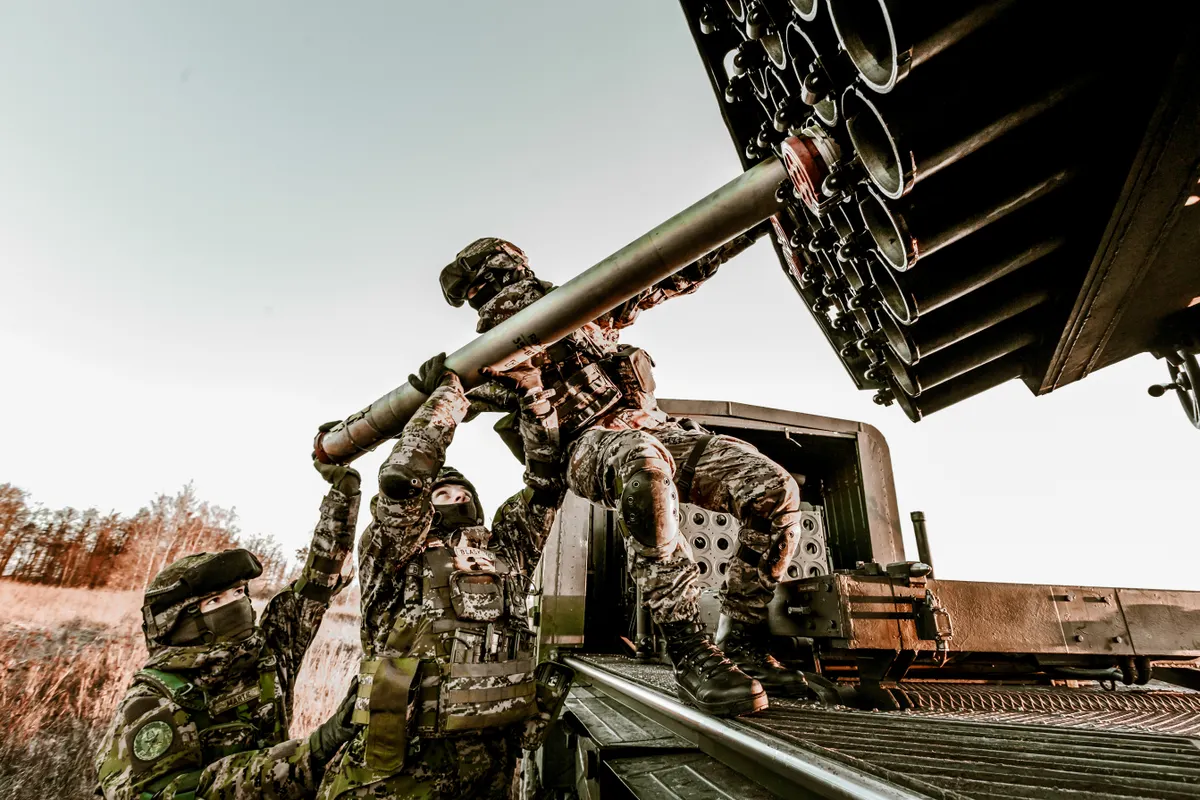
The Swedish Ministry of Defence confirmed that the first deliveries of the M142 High Mobility Artillery Rocket System are scheduled for 2027. According to Breaking Defense, Defence Minister Pål Jonson said at a press briefing at Ärna Airbase that the contract covers just over ten launchers along with a substantial quantity of ammunition.
Ammunition will initially be manufactured at Saab’s factory in Grayling, Michigan, with Jonson indicating he wants Saab to expand production there or elsewhere to secure supply. That preference for domestic-adjacent production is not incidental: Jonson described the Lockheed Martin-Saab cooperation as covering the Ground-Launched Small Diameter Bomb, the Precision Strike Missile, and potentially other long-range strike capabilities, with the first steps now being taken toward joint production of rocket artillery ammunition in Sweden.
The read here is that Sweden is not just buying a weapons system. It is buying into a production architecture, one where Saab acts as the industrial bridge between US munitions technology and European manufacturing capacity.
The Sweden HIMARS Deal in Strategic Context
Army Chief Maj. Gen. Johan Pekkari described HIMARS as a deep-strike capability that complements the Taurus missiles now operational on Swedish Air Force Gripen fighters, per Breaking Defense. “The fact that we are now procuring HIMARS and getting long-range precision combat capability on the ground is important not only for the Army but for the Armed Forces as a whole and for our allies,” Pekkari said.
The layering matters. Gripen-launched Taurus handles air-delivered deep strike; HIMARS adds ground-launched precision fire at range. Together they give Sweden a multi-domain long-range strike posture that did not exist a year ago.
The Sweden-Finland cooperation declaration signed alongside the purchase extends the logic further. According to the Swedish Government press release, the declaration covers training, education, capability development, maintenance, security of supply, and joint production. Finland operates the Multiple Launch Rocket System, which shares munitions and components with HIMARS, so the two countries can pool logistics from day one. Finland’s Defence Minister Antti Häkkänen co-signed the declaration at Ärna Airbase.
The funding base for all of this is real. Sweden’s Defence Resolution 2025-2030 allocates over SEK 170 billion in additional funding for military defence and SEK 37.5 billion for civil defence through 2030, with defence expenditure projected to reach 2.6% of GDP in 2028. Rocket artillery procurement is explicitly part of that plan, alongside two Archer howitzer battalions.
Who Gains, Who Loses
Lockheed Martin gets a NATO member order that validates HIMARS as the European baseline for ground-based precision strike, even as delivery timelines face scrutiny. Estonia flagged concern about HIMARS ammunition delays tied to the Iran war; Sweden’s 2027 delivery schedule means launcher production, at least, appears unaffected for now. The ammunition supply question is where Jonson’s push for expanded Saab production becomes commercially consequential for both companies.
Norway’s January choice of Hanwha’s Chunmoo system over HIMARS, partly because of longer-range munitions availability, is the cautionary data point. Sweden chose HIMARS anyway, betting that the Lockheed-Saab partnership and the MLRS munitions commonality with Finland offset the range gap.
The clearest loser is the MBDA-Safran French rocket artillery program. With Europe’s two most acquisition-active Nordic states now committed to US and South Korean systems, commercial space for a home-grown European alternative has narrowed considerably. Defence Minister Jonson’s framing was direct: “The introduction of rocket artillery clearly demonstrates that Sweden is taking responsibility for security in Europe.” That language is aimed at allies, not at Paris.
The swing factor from here is munitions. The Sweden HIMARS deal is structurally sound on launchers, but the supply chain for precision rocket artillery ammunition remains the constraint that will determine whether this capability is deployable at scale by 2027 or sits underarmed for years beyond it.