Raytheon SM-6 Missile Contract Tops $24B as Pentagon Races to Rebuild Stockpiles

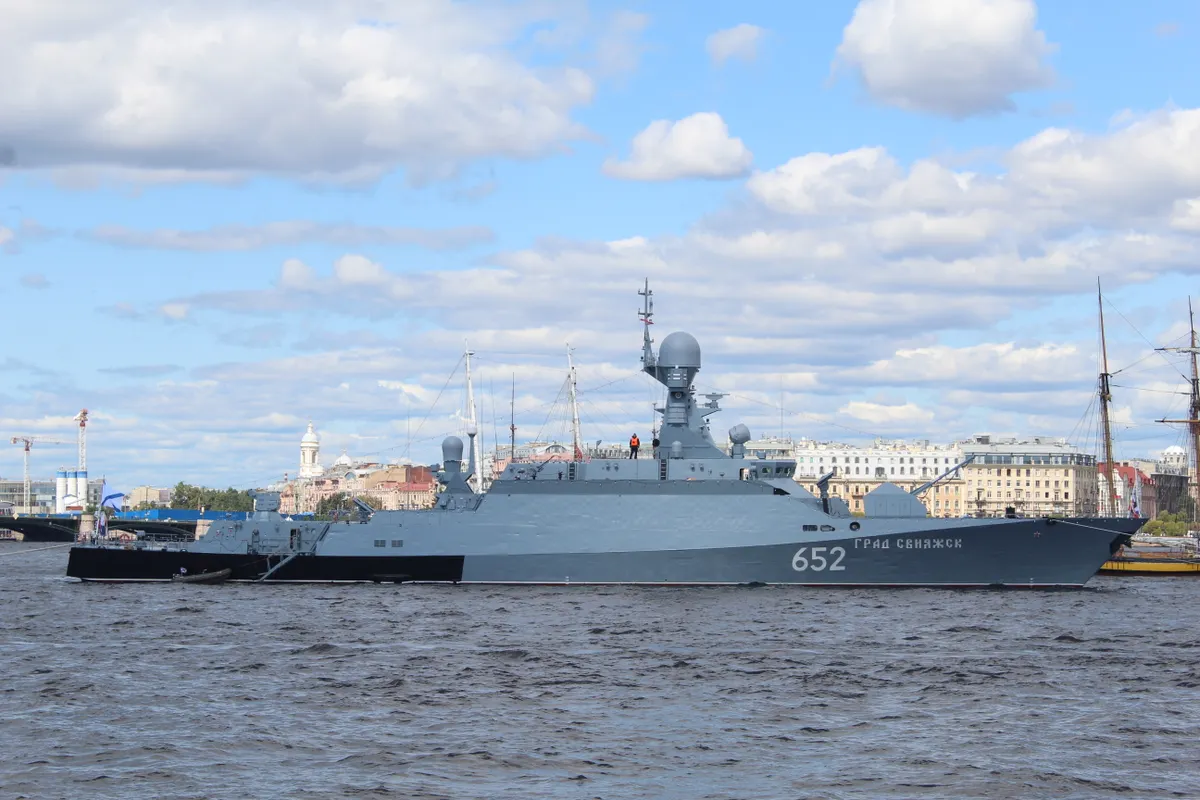
The Raytheon SM-6 missile contract, worth up to $24.4 billion over five years with two additional option years, is the third mega-munitions deal the Pentagon has struck in roughly three months, and it raises an increasingly pointed question for RTX (RTX) investors: will Congress appropriate the money before the company has to commit capital it cannot yet fully deploy?
The U.S. Navy announced the award with Acting Secretary Hung Cao framing it as part of an accelerated weapons production push. The SM-6 can perform anti-air warfare, anti-surface warfare, and ballistic missile defense from Navy ships and land-based launchers, making it one of the more versatile interceptors in the fleet.
Three Contracts, One Urgent Signal
The scale of the spending sprint is worth pausing on. In July, the Pentagon converted a one-year undefinitized action into a seven-year multiyear procurement for Patriot interceptors awarded to Lockheed Martin, with a face value of $58,620,843,289 and an estimated completion date of March 31, 2035, according to the Department of Defense contracts announcement. Then, in late September, Raytheon picked up a provisional multiyear deal for its AMRAAM air-to-air missiles, with a ceiling of $20.7 billion. That contract, formally awarded September 25, 2026, and publicly announced September 28, 2026, is designed to nearly double AMRAAM production, targeting at least 1,900 missiles annually, according to Defense News. For context, the previous record AMRAAM award was a $3.5 billion contract issued in July 2025.
The SM-6 award follows in the same mold. Under Secretary for Acquisition and Sustainment Michael P. Duffey put it plainly in the Department of War announcement: “This multi-year award locks in the magazine depth and lethal dominance our forces need to prevail, while demanding our industrial base produce at war-speed.”
The language is deliberate. These contracts are structured to pressure suppliers into faster output, not just to purchase a fixed quantity of hardware. The Trump administration has been explicit that weapons production takes priority over shareholder returns, a posture that has tilted the negotiating dynamic between the Pentagon and its primes.
What the Raytheon SM-6 Missile Contract Means for RTX Shareholders
The bull case is straightforward: Raytheon is stacking multiyear backlog at a pace that has no recent precedent. Between the AMRAAM ceiling and this SM-6 award alone, RTX has secured up to $45.1 billion in contract authority over the coming years, providing a demand floor that makes near-term revenue visibility unusually strong.
The bear case sits in the funding gap. Industry executives, including those at RTX, have flagged that Congress has not yet appropriated money for these deals. A multiyear production agreement without enacted appropriations is a commitment to commit, not a purchase order. Until lawmakers act, contractors face real constraints on investing in new capacity, components, and facilities. RTX has said it has expanded its skilled workforce, automated production lines, and deepened partnerships across the defense industrial base, but the pace of that investment is tethered to funding certainty.
The read here is that the contracts signal genuine political will from the executive branch, but the legislative branch has yet to validate that signal with cash. That gap is the primary risk to the bull thesis.
Raytheon’s positioning within these programs is hard to replicate quickly. The SM-6 is the only combat-proven weapon the company says can cover anti-air, anti-surface, and ballistic missile defense in a single airframe. AMRAAM is the Western alliance’s primary beyond-visual-range air-to-air missile. Both are deeply embedded in allied procurement as well as U.S. service requirements, which limits substitution risk even if budget negotiations drag.
RTX is scheduled to report third-quarter 2026 results on October 20, 2026, per Yahoo Finance. That call will be the first opportunity for management to put quantitative shape around what these contract awards mean for production ramp timelines, capital allocation, and the scale of any contingent investment the company is making ahead of appropriations. The Raytheon SM-6 missile contract headline is large; what investors need from that call is a credible answer to how much of it flows to earnings, and when.