Isuzu 2026/27 Production Outlook Stays Flat as Hormuz Blockade Bites

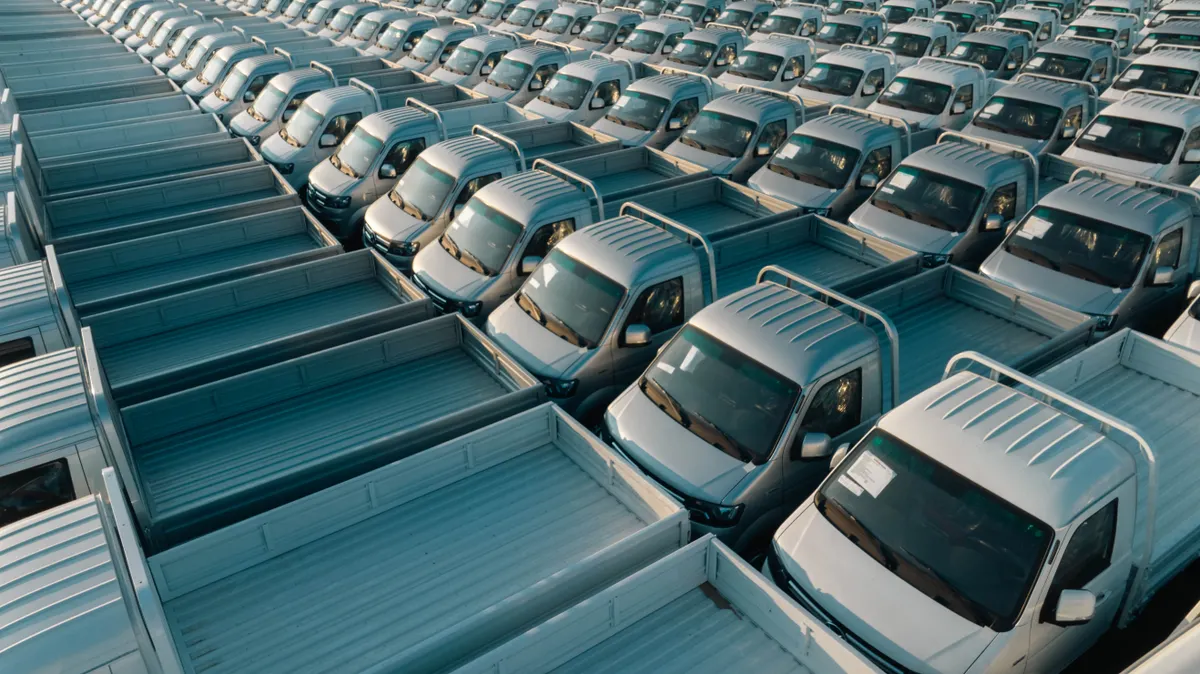
The Isuzu 2026/27 production outlook is effectively going nowhere, with Automotive World’s latest forecast pegging core output (Japan and Thailand) at roughly 568,000 units, broadly unchanged year on year. The reason is straightforward: the Strait of Hormuz blockade is draining volume from Africa, Asia, and the Middle East fast enough to cancel out genuine gains in North America, Japan, and Europe. The result is a company treading water in the near term while betting heavily on a pipeline of new products and plants that will not fully arrive until late this decade.
What Shapes the Isuzu 2026/27 Production Outlook
The Hormuz disruption is the clearest drag on an otherwise improving picture. Isuzu’s exposure to Middle Eastern markets means the blockade is not a peripheral risk: it is removing enough volume to neutralize the regional gains the company has managed to generate elsewhere. Growth is not expected to resume until 2027/28, and even then it depends on the new-generation D-Max and MU-X arriving on schedule and landing well with buyers.
The longer runway beyond that runs through a medium- and heavy-truck platform developed jointly with UD Trucks. Isuzu’s production transfer announcement confirms that heavy-duty truck output will move from the Fujisawa Plant to UD Trucks’ Ageo Plant, with full operations scheduled to begin in 2028 and an annual capacity of approximately 25,000 units for heavy-duty trucks serving Japan and other Asian markets. Total investment in the transfer runs to approximately 40 billion yen. The common platform, leveraging Volvo Group technology, is targeted for a 2028 market launch. That timeline leaves a two-year window where neither the new trucks nor the South Carolina plant are fully contributing.
The South Carolina Bet and Its Limits
The US plant is the most concrete piece of Isuzu’s North America expansion. Located in Piedmont, Greenville County, South Carolina, the facility announcement puts total planned investment at approximately $280 million and expects employment of more than 700 people. The plant will produce N-series battery-electric and gas models alongside F-series diesel trucks, with production set to commence in 2027. Automotive World’s forecast has it reaching 42,000 units by 2030/31, which is already below the 50,000-unit target Isuzu set for itself.
Currently, North America-bound vehicles are handled at Fujisawa and by Shyft, which assembles Isuzu’s N-series and F-series models at its Charlotte, Michigan facility. Production will transfer to South Carolina as it ramps up. Isuzu has also expanded its supply agreement with Accelera by Cummins to develop a battery-electric powertrain for the medium-duty F-Series EV, targeting a North American launch by 2027. The electric powertrain work and the new plant arriving simultaneously is either a clean execution story or a scheduling risk, depending on how confidently you read Isuzu’s ramp-up track record.
By 2030/31, Automotive World’s forecast puts core output at 733,000 units, roughly 30% above 2025/26 levels but still 2% short of the 2022/23 peak. That gap matters because Isuzu’s mid-term plan, ‘ISUZU Transformation – Growth to 2030 (IX)’, targets new vehicle sales of more than 850,000 units in FY2031. Even on the more optimistic end of the production range, the forecast falls well short of that ambition.
The Thai Risk Is the One to Watch
Automotive World flags a structural risk that sits outside any near-term conflict scenario: a sustained shift in the Thai market away from pick-up trucks and toward Chinese battery-electric vehicles. Thailand is one of Isuzu’s two core production bases, and the pick-up segment is central to both its volume and its margins there.
Isuzu is not ignoring the EV threat. Reuters reported that Isuzu plans to use Thailand as a production base for an electric D-MAX, with exports targeted at Norway, Britain, and Australia. The company also plans to invest 1 trillion yen in research and development by 2030, including a testing center in Thailand. That is the right strategic direction, but the electric D-MAX is not yet a volume play, and Chinese BEV makers have a cost and scale advantage that takes years to close.
The honest read: Isuzu’s 2030 plan was written for a world with open sea lanes and a stable Thai pick-up market. Neither condition currently holds. The South Carolina plant and the UD platform are real assets, but both arrive late in the decade, leaving a multi-year stretch where the Hormuz drag and Thai structural risk have room to compound. The 850,000-unit target looks increasingly like a ceiling the forecast cannot reach, not a floor the company is building toward.