
Accenture Earnings Beat Signals the AI Pivot Is Paying Off
Accenture’s (ACN) earnings beat in fiscal Q4 2026 was not a mild outperformance: it was the company’s strongest...
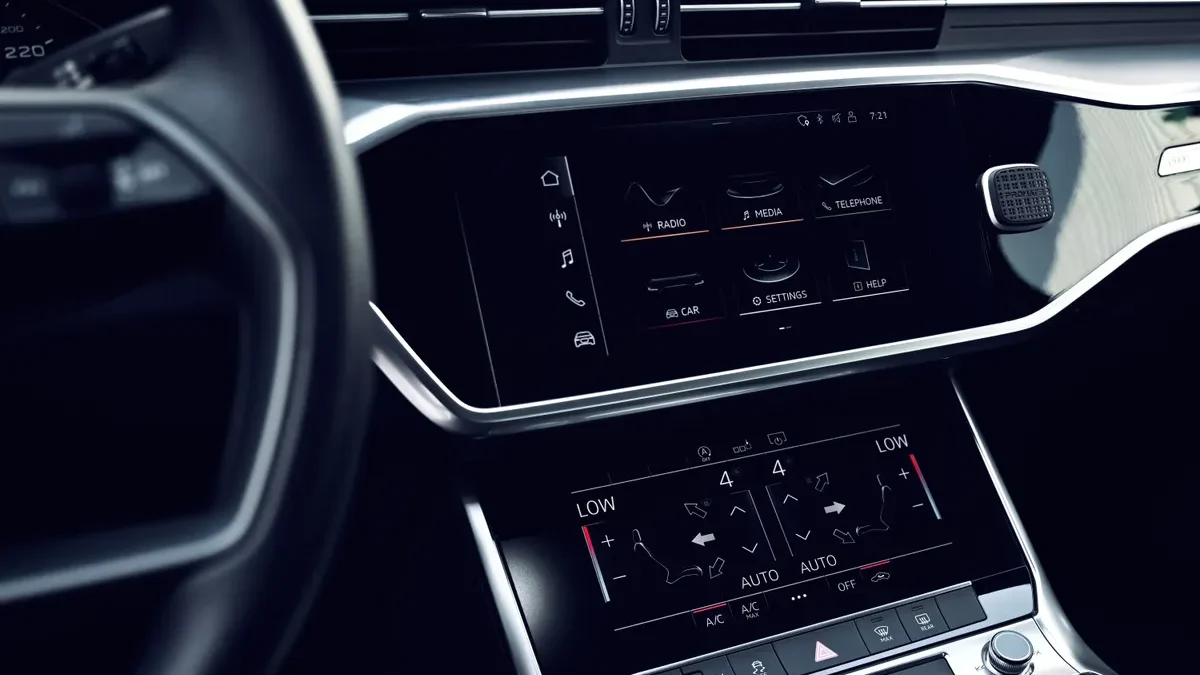
The FPT Software Poland subsidiary launched September 8, 2026, is the company’s clearest statement yet that it intends to compete at the engineering core of Europe’s software-defined vehicle shift, not just at the IT services periphery. By absorbing the Gdańsk design and development unit of Nippon Seiki Europe B.V., FPT acquires embedded software and head-up display expertise accumulated over more than two decades, then packages it inside a dedicated European delivery center.
Nippon Seiki published an official notice confirming the partial transfer of business by its consolidated subsidiary, Nippon Seiki Europe B.V., to FPT Poland. The transferred unit focused on design and development, distinct from Nippon Seiki’s separate Polish manufacturing subsidiary in Łódź, which has produced head-up displays for BMW Group since April 2022.
That distinction matters. FPT is not acquiring a factory or hardware supply chain. It is acquiring an engineering team with production-proven knowledge of HUD software and embedded systems, the exact competencies that OEMs and Tier-1 suppliers need as vehicles migrate toward software-defined architectures. Hiring that talent from scratch would take years; buying a unit with two decades of domain history compresses the timeline considerably.
FPT Poland’s scope will cover embedded software development and validation, system engineering, architecture, testing, and quality assurance. That is a full-stack engineering mandate, not a staff-augmentation play. The Gdańsk operation is positioned as a regional delivery center for European automotive customers.
The acquisition does not arrive in isolation. FPT Software has operated in Europe since 2008 and counts more than 150 enterprises across the region as clients. Its global automotive engineering team exceeds 5,000 engineers. European revenue grew 36.5% in the first seven months of 2026, according to FPT’s own newsroom, making the region the company’s fastest-expanding market by growth rate.
A 36.5% revenue growth rate in a single market, sustained over seven months, creates its own pressure: the organization needs delivery capacity to convert that pipeline into margin. Acquiring an established engineering team in Gdańsk, rather than building one, answers that pressure directly.
The two companies also plan joint initiatives and new business models beyond the immediate headcount transfer, though neither has specified what those will look like. That language is standard in deals of this type and warrants little weight until concrete programs are announced.
The bull case rests on timing and specificity. Software-defined vehicle programs are expanding rapidly across European OEMs, and HUD software is a growth segment within that shift. FPT enters with a credentialed team rather than a cold start, and a client base already exceeding 150 European enterprises to cross-sell into. The 36.5% European revenue growth rate suggests demand is already ahead of supply.
The bear case is execution. Integrating an acquired engineering unit, particularly one transferring from a Japanese automotive supplier with its own quality culture and processes, carries real risk of attrition and disruption. The talent FPT is buying is also the talent most likely to be recruited by the European automotive software firms competing for the same contracts. If the Gdańsk team does not stay, the strategic rationale weakens considerably.
There is also a positioning question. FPT competes against established European engineering services firms with deeper OEM relationships and longer track records in functional safety, a prerequisite for production-grade automotive software. Acquiring a development unit from a supplier is not the same as holding ISO 26262 program credentials across a portfolio of active OEM platforms. FPT will need to demonstrate the latter to move from supplier subcontractor to preferred engineering partner.
The evidence leans modestly bullish in the near term. Nippon Seiki’s endorsement of FPT as the acquirer, rather than a European rival, implies confidence in FPT’s automotive credentials. The 36.5% European growth rate provides the revenue runway to absorb integration costs. The key variable is retention: if the Gdańsk team stays intact through the transition, FPT Poland becomes a credible base for the larger SDV contract pursuit. If it does not, this reads as an expensive talent experiment.
Accenture’s (ACN) earnings beat in fiscal Q4 2026 was not a mild outperformance: it was the company’s strongest...
The BMW Neue Klasse battery plant at Irlbach-Straßkirchen, Bavaria, has entered series production ahead of its original timeline,...
The Raytheon SM-6 missile contract, worth up to $24.4 billion over five years with two additional option years,...