BMW Neue Klasse Battery Plant Opens Ahead of Schedule in Bavaria

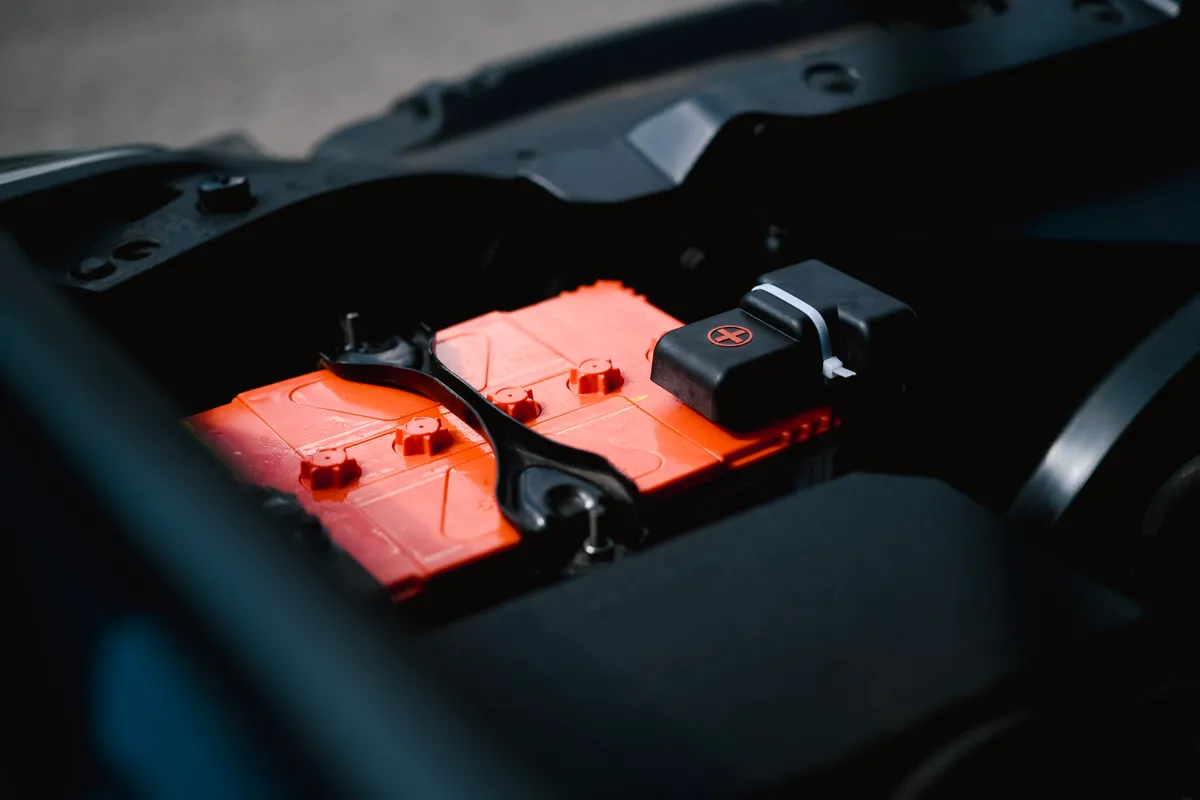
The BMW Neue Klasse battery plant at Irlbach-Straßkirchen, Bavaria, has entered series production ahead of its original timeline, with two shifts running from opening day, a pace that says as much about demand as it does about execution. The roughly €1 billion ($1.17 billion) facility supplies sixth-generation high-voltage packs to BMW’s German vehicle factories, and its early ramp validates the group’s bet that locating battery assembly close to final vehicle production is the right architecture for scaling an EV lineup.
What the BMW Neue Klasse Battery Plant Produces
First output from the site goes to BMW Group’s Munich plant, which began series production of the new i3 in August 2026. The i3’s 108.7kWh pack is not simply bolted in; it uses a cell-to-pack configuration in which the battery housing forms a structural element of the vehicle body, a design that tightens tolerances between pack and plant.
The performance case for that architecture is substantial. According to the BMW Group PressClub opening release, the i3 50 xDrive First Edition achieves a WLTP range of up to 906 kilometres, supported by an 800V architecture with DC charging at up to 400kW, which can recover up to 423km of WLTP range in ten minutes. Bidirectional charging is also supported. That spec positions the i3 at the top of the long-range EV segment.
The Irlbach-Straßkirchen site covers 60 hectares in total, with 50,000 square metres of production floor, 500 robots, and two assembly lines. At full operation it will employ around 1,600 people and produce several hundred battery packs per day. BMW reports that carbon emissions per watt-hour of cell capacity are about 33% lower than for the previous generation. The facility’s Energy Centre, which was completed in just 14 months of construction, supplies heat, cooling, compressed air, and electricity without fossil fuels, according to the BMW Group Energy Centre announcement.
Raymond Wittmann, BMW AG’s Board Member responsible for Production, framed the plant’s role in network terms: “The new plant plays a key role in our production network: As the central platform, it will supply our German vehicle plants with sixth-generation high-voltage batteries. In this way, our high-tech plant in Irlbach-Straßkirchen is making a vital contribution to the ramp-up of the Neue Klasse.”
What the BMW Neue Klasse Battery Network Signals for the Stock
Irlbach-Straßkirchen is one of five Gen6 battery sites BMW is building globally, alongside Debrecen (Hungary), Shenyang (China), Woodruff (South Carolina), and San Luis Potosí (Mexico). The sequencing matters. BMW Group’s Woodruff disclosure confirms that Debrecen reached series production in October 2025, making it the first of the five sites to go live, while Woodruff is scheduled to begin series production of the iX5 in December 2026. San Luis Potosí, which will have more than 80,000 square metres of production space, is targeting a Neue Klasse production start in 2027, per a progress update reported by Yahoo Finance.
The bull read is straightforward. Two shifts from day one at a plant that was not yet supposed to be fully online is a demand signal, not just an operational one. BMW built all five sites near vehicle assembly expressly to avoid the logistics cost and risk of transporting heavy, high-value packs across continents. As Neue Klasse volume scales, that proximity model compresses per-unit freight cost and reduces battery degradation risk in transit.
The bear read is that the network’s geographic spread creates sequencing dependencies. Woodruff’s December 2026 start and San Luis Potosí’s 2027 target mean North American capacity lags the German ramp by at least a year. Any softness in European EV demand during that window leaves BMW over-indexed to a single regional supply chain, with limited ability to redirect packs across the Atlantic cost-effectively.
Construction at Irlbach-Straßkirchen began in April 2024 and the first pre-series battery came off the line in March 2026, a roughly 23-month build-to-output cycle. That cadence, if replicated at Woodruff and San Luis Potosí, suggests BMW’s Gen6 capacity build is tracking on an aggressive but executable schedule.
The decisive test for BMW’s Neue Klasse thesis arrives when all five Gen6 battery sites are operating simultaneously. If demand holds at a level that keeps two shifts running across multiple plants, the proximity model and the structural-battery architecture together form a genuine cost and range advantage. If European EV demand softens before North American capacity catches up, the Irlbach-Straßkirchen ramp will look less like confirmation and more like an inventory problem in the making.