Croatia’s Chunmoo Procurement Adds to Hanwha’s Growing European Footprint

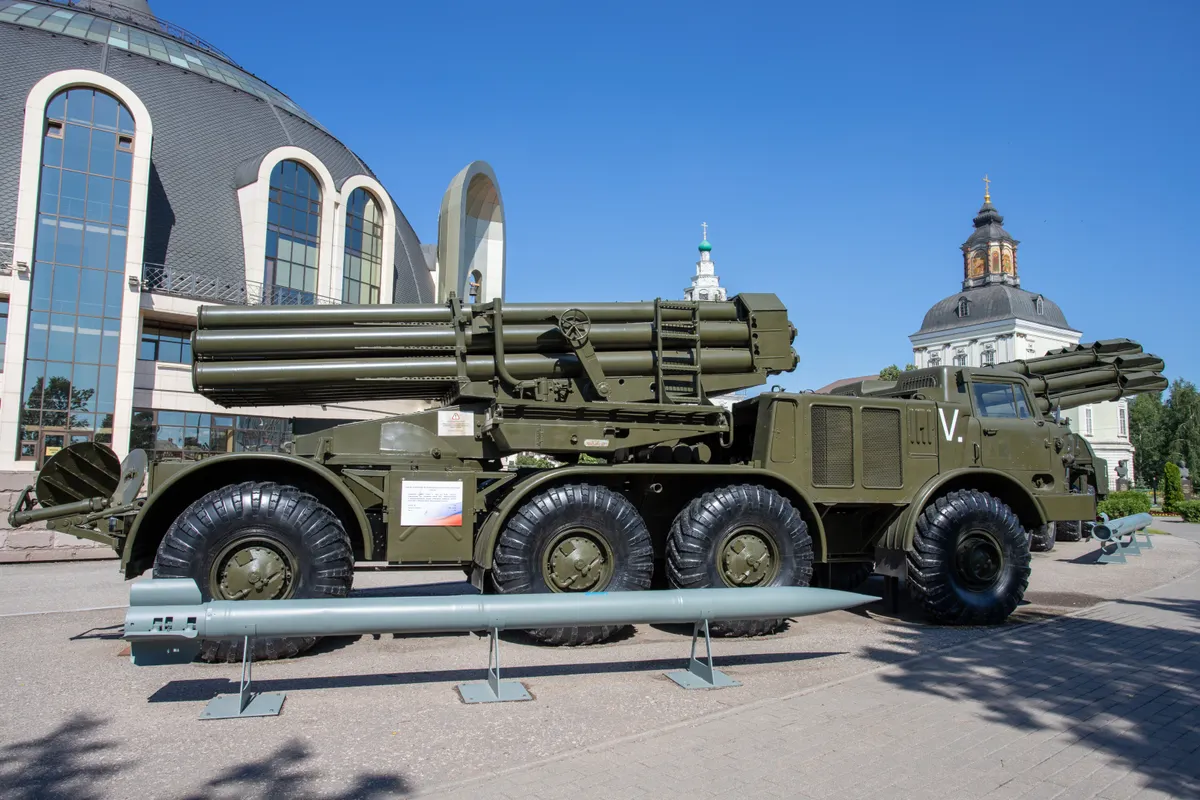
Croatia’s Chunmoo procurement, approved by the government in Zagreb for 18 K239 multiple-rocket launchers from Hanwha Aerospace, is more than a single defense deal. At €544.1 million ($631.9 million), it is the latest signal that Hanwha’s system is consolidating its position as the primary European alternative to Lockheed Martin’s M142 HIMARS, and that South Korean defense exports are reshaping the continent’s artillery landscape.
Why Croatia Chose Chunmoo Over Additional HIMARS
Croatia is not abandoning the US system. The government approved a contract for eight HIMARS launchers from the United States in December 2024, worth approximately $351 million. For context, the US State Department had approved a possible Foreign Military Sale for those same eight launchers in August 2024 at an estimated ceiling of $390 million, per Shephard Media. The $39 million gap between the FMS ceiling and the final contract value is standard FMS mechanics, not a concession.
The more consequential choice is the Chunmoo contract itself. Croatian Deputy Prime Minister and Defense Minister Ivan Anušić pointed directly to the commercial and industrial terms that swung the decision: “Due to the relatively short delivery times of 24 to 36 months, better availability, lower prices, openness to industrial cooperation, the European countries Poland, Estonia and the Kingdom of Norway are increasingly deciding to equip themselves with this unique system.” That framing casts the Chunmoo not as a replacement for HIMARS but as a complement, and it explains why Zagreb ended up ordering both.
Deliveries are scheduled between 2026 and 2029, replacing the Croatian Army’s aging Yugoslav-era M-92 Vulkan and Soviet-designed GRAD BM-21 rocket systems. The contract covers launchers, ammunition, and supporting equipment. Poland’s WB Group will supply the command-and-control layer: specifically, the TOPAZ C2 system, which integrates the Chunmoo platforms into NATO-standard architectures, according to Army Recognition reporting.
Croatia Chunmoo Procurement Fits a Broader Hanwha Pattern Across Europe
Anušić’s reference to Poland, Estonia, and Norway as Chunmoo customers is accurate, and the order book behind those names is building fast. Hanwha Aerospace was awarded a €250 million contract to supply Chunmoo systems to Estonia in December 2025, then signed an additional contract in May 2026 for three further launchers to the same customer. Norway followed in February 2026, when Hanwha Aerospace CEO Jae-il Son and Norway’s ECDI Deputy Director General Katri Raudsepp signed the country’s first Chunmoo supply agreement.
The pattern matters for investors watching Hanwha’s defense export trajectory. Each new European contract reinforces the commercial case Anušić made: shorter lead times than the US industrial base can currently promise, pricing below HIMARS, and a willingness to bring in local industrial partners like WB Group. That last point is not trivial in Europe, where offset arrangements and domestic content requirements increasingly govern procurement decisions.
The bear case is real. US delivery concerns, flagged by Washington after the Iran conflict, have nudged some NATO members toward Chunmoo. If that pressure eases and HIMARS availability improves, some of the urgency driving Chunmoo orders diminishes. Hanwha also faces the challenge of scaling production and maintaining delivery promises to a growing European customer list simultaneously.
The bull case is more structural. European defense budgets are rising across the board, legacy Soviet-era systems need replacing at scale, and the lead-time advantage Hanwha holds is not purely cyclical. Croatia’s own procurement, which Anušić called one of the most consequential since the country’s independence war ended in 1995 alongside the 2021 Rafale purchase, illustrates that governments are making long-term commitments, not opportunistic buys.
The risk to watch is execution. Hanwha is managing simultaneous delivery schedules to Poland, Estonia, Norway, and now Croatia, with the Croatian window running to 2029. Any production bottleneck that causes a slip in that timeline would test the very advantage, short lead times and reliable delivery, that is driving European governments to choose Chunmoo in the first place.