
Xiaomi Sky Nomad Orders Can’t Close the 2026 Delivery Gap
Xiaomi Sky Nomad orders crossed 70,000 in the model family’s first month, a result that lifted the stock...
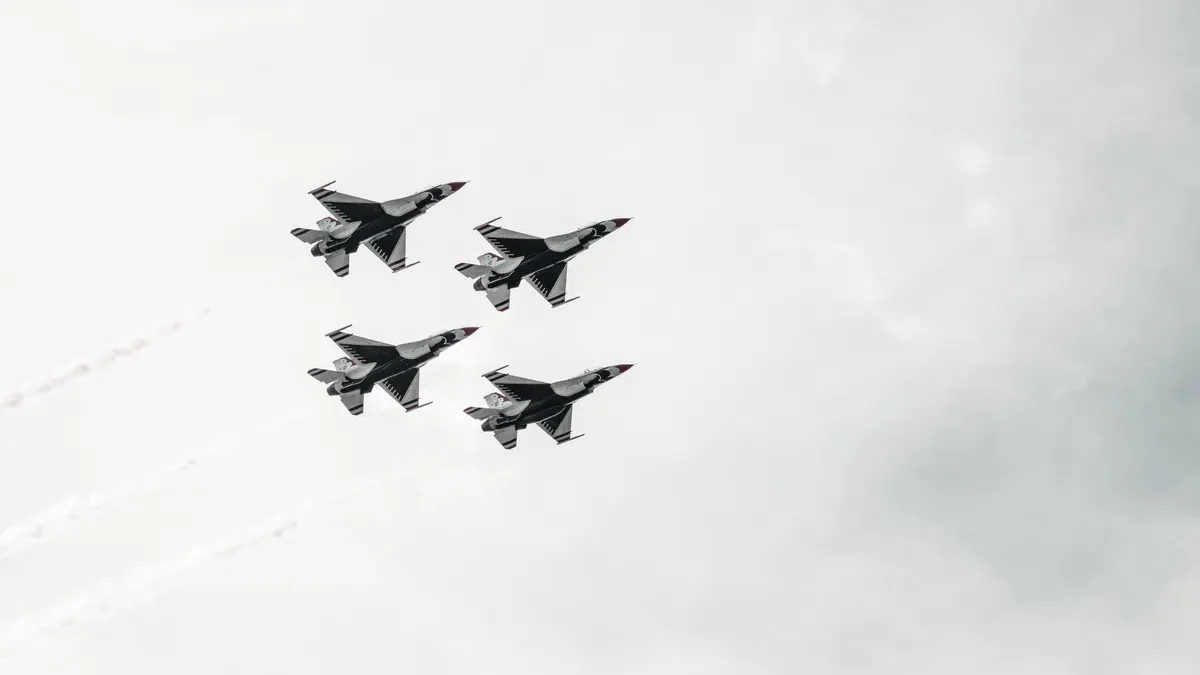
The Air Force has structured its entire F-15 future around a single vehicle: the F-15 Eagle Crest contract, a sole-source indefinite-delivery, indefinite-quantity award to Boeing with a ceiling of $131.23 billion and a performance horizon stretching to 2037. The ceiling is capacity, not a check: only $343,740 in fiscal 2026 research and development funds was obligated at award, and no jet orders accompanied the Aug. 24 notice.
Eagle Crest, identified by the contracting office as FA8634-26-D-B001, consolidates new production, modernization, retrofits, sustainment, and depot support into one framework for the Air Force, the Air National Guard, and foreign military sales customers. An Air Force spokesperson, quoted by Air & Space Forces Magazine, put it plainly: “As an indefinite-delivery, indefinite-quantity contract, it provides flexibility to support future efforts up to the contract ceiling, while each award remains subject to independent decision making. The ceiling represents capacity for future needs, not a commitment to spend the full amount. By consolidating these efforts under a single contract vehicle, Eagle Crest will help the Air Force move faster and reduce administrative burden.”
Orders may be placed through Aug. 24, 2031, with an option extending to 2036. The contract also funds work to build up organic depot maintenance, so Air Force facilities can perform heavy overhauls without sole reliance on Boeing’s St. Louis plant.
The foreign military sales list spans Japan, Israel, Saudi Arabia, South Korea, Singapore, Indonesia, and Poland. Indonesia and Poland do not currently operate the F-15, which signals potential new-production demand. Israel is the most active foreign buyer at present: a separate Dec. 29, 2025 agreement, designated FA8634-26-C-B001, covers 25 F-15IA aircraft with an option for 25 more at $8.58 billion, with work expected to be complete by Dec. 31, 2035. That contract obligated $840 million in Foreign Military Sales funds at award and is structured as a hybrid cost-plus-fixed-fee, fixed-price incentive, and undefinitized contract action.
The scale of Eagle Crest looks more plausible if Congress approves a multi-year procurement strategy for the F-15EX. According to Inside Defense, a multi-year deal would allow the Air Force to buy approximately 36 F-15EXs annually, compared to the 24 aircraft it is requesting in fiscal 2027. That production-rate gap matters: the Israel contract was specifically described in the F-15EX Modernized Selected Acquisition Report as stabilizing the lower-tier supply chain and extending the active manufacturing life of the production line. At 24 jets per year, the line is running below the rate that would make a $131 billion ceiling remotely achievable.
The same Selected Acquisition Report attached to the fiscal 2027 budget raises the U.S. F-15EX buy to 268 aircraft through fiscal 2031, up from a baseline of 98. That expanded buy will require a radar refresh, a new mission computer, an updated electronic warfare suite, and new engines, adding technical complexity to an already stretched program.
The production risk is real. A 15-week strike at Boeing’s St. Louis plant, running from Aug. 4 to Nov. 17, 2025, has already pushed the program past its July 2027 full operational capability date. The F-15EX report attributes the schedule slip to the strike “compounded by the prime contractor’s subsequent failure to meet production recovery goals.” The mitigation plan includes “a re-evaluation of the FOC definition,” which is the program’s way of saying it may redefine the milestone rather than hit the original one.
For context on how differently this contract was structured relative to comparable awards: when the same contracting office gave Lockheed Martin a 10-year, $62 billion framework for F-16 exports in August 2020, it simultaneously issued a $4.94 billion order for 90 jets. Eagle Crest launched with no jet order at all.
The bull read is that Eagle Crest is exactly what Boeing needed: a long-duration, flexible vehicle that keeps the F-15 line alive through foreign demand, locks out competition, and positions Boeing for a surge in orders if multi-year procurement clears Congress. The bear read is that the contract ceiling is a ceiling only, the production line is recovering from a self-inflicted schedule hit, and the Air Force is already rewriting the definition of a milestone it cannot meet. The multi-year procurement decision, and whether Congress funds the buy-up to 36 aircraft annually, is the variable that determines how much of that $131.23 billion Boeing ever sees.
Xiaomi Sky Nomad orders crossed 70,000 in the model family’s first month, a result that lifted the stock...
Delta Air Lines (DAL) slashed its Delta Air Lines 2026 outlook on Friday, cutting full-year adjusted earnings per...

The Tesla (TSLA) production outlook for 2026 points to a genuine volume recovery, but the more pressing question...