
US Army Brain Health Assessment Hits 97%, but Gaps Loom Large
The US Army brain health assessment program has reached 97% completion across active duty, National Guard, and Reserve...

The afternoon before Nvidia releases its earnings, a certain silence descends upon trading desks. You can almost feel a held breath through a Bloomberg terminal, but it’s not quite silence—phones are still ringing, screens are still flickering green and red. The most valuable company in human history will update us on its performance on Wednesday following the closing bell. For once, the outcome might not be as important as what comes next.
Nvidia has evolved into something more bizarre than a stock. At about $5.7 trillion, it is at the heart of a market that is becoming more and more dependent on a single concept. Just five companies accounted for three-quarters of the S&P 500’s gain last week, according to LPL Financial. Nvidia’s meager 8% increase was more significant than chipmakers’ 25% increase. That market isn’t typical. That’s a market that is entirely dependent on one desk.
The anticipated numbers on Wednesday are almost absurdly high. Revenue increased by about 79%. Profit might have doubled. There is no compelling reason to believe that the eight-quarter streak of exceeding estimates will end anytime soon. It’s difficult to ignore the peculiar aspect of this as it develops: none of that might be sufficient. Despite exceeding expectations each quarter since 2023, Nvidia’s stock hasn’t increased the day following a report since this time last year. Investors continue to sell despite receiving exactly what they requested.
The tension was identified by Gene Munster, who has followed this company for years. He wrote that the question is not whether Nvidia grows, but rather what happens if growth slows from about 90% this year to perhaps 45% next. The stock hardly moves while the fundamentals continue to outperform the highest expectations. There’s a philosophical undertone to that. In a market where pricing perfection is already the norm, what do you do with a business that consistently fails?
The bullish argument still has substantial support. The hyperscalers, including Microsoft, Amazon, Meta, and Alphabet, have significantly increased the projected capital expenditure for 2026 from about $400 billion to over $700 billion. Strong numbers from suppliers like Hon Hai and Taiwan Semiconductor indicate that the demand is genuine and not just enthusiasm seeping into spreadsheets. In March, Jensen Huang doubled his Blackwell and Rubin estimate to over a trillion dollars after declaring that demand was “off the charts” while standing on a stage. Men with confidence speak with confidence. Whether the floor beneath those words is changing is an intriguing question.
Because it could be. The question that permeates this report is not whether Nvidia sells chips, but rather which chips and for how long. The market is shifting away from training AI models and toward executing the inference workloads that provide real-time answers to queries. Although that market is bigger, it is much more competitive. Tens of billions of dollars are being made through Alphabet’s proprietary tensor processors. Trainium on Amazon is growing. The less expensive, cost-conscious end is being crowded by AMD and Intel. While AMD, Intel, and Arm have nearly doubled this year, Nvidia’s stock has increased by roughly 19%. Nvidia is no longer the only name in the market’s narrative about potential future winners.
Then there is China, which remains a major unresolved issue. Ten Chinese companies have been given the go-ahead to purchase the H200, but no purchases have been made as of yet, and Beijing appears to prefer building its own.
An 8% swing in either direction is priced by options traders. To put it honestly, no one knows where things stand. It’s evident that Wednesday is no longer primarily about Nvidia. It concerns whether Wall Street’s confidence in the entire AI buildout still has room to grow or if expectations have finally surpassed even a company that consistently achieves success.
The US Army brain health assessment program has reached 97% completion across active duty, National Guard, and Reserve...
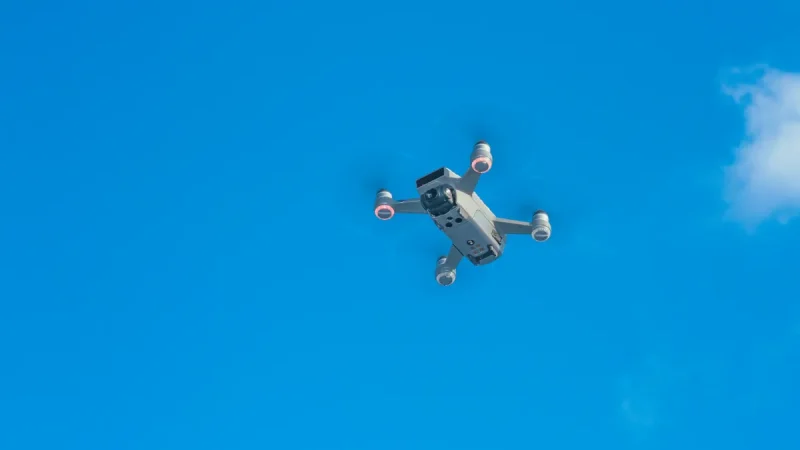
Kongsberg’s Poland counter-drone factory plan, announced at the Warsaw Security Forum on October 12, is more than a...

Three U.S. Army soldiers received Purple Hearts for their actions during the Operation Epic Fury Purple Hearts ceremony...