
Trump and Meloni: A Political Clash That Shook the Alliance
The latest clash between Donald Trump and Giorgia Meloni has added fresh tension to an already fragile political...
Machines are etching circuits onto silicon wafers that will eventually be found inside an Nvidia GPU, an Apple iPhone, or a Broadcom networking chip inside a cleanroom somewhere in Hsinchu, Taiwan, where the air is filtered to remove particles smaller than a micron, where workers wear full-body suits and move with practiced deliberateness. Here, TSMC performs a task that no other business in the world can match. Finally, in 2026, the financial markets are pricing that reality with a degree of seriousness.
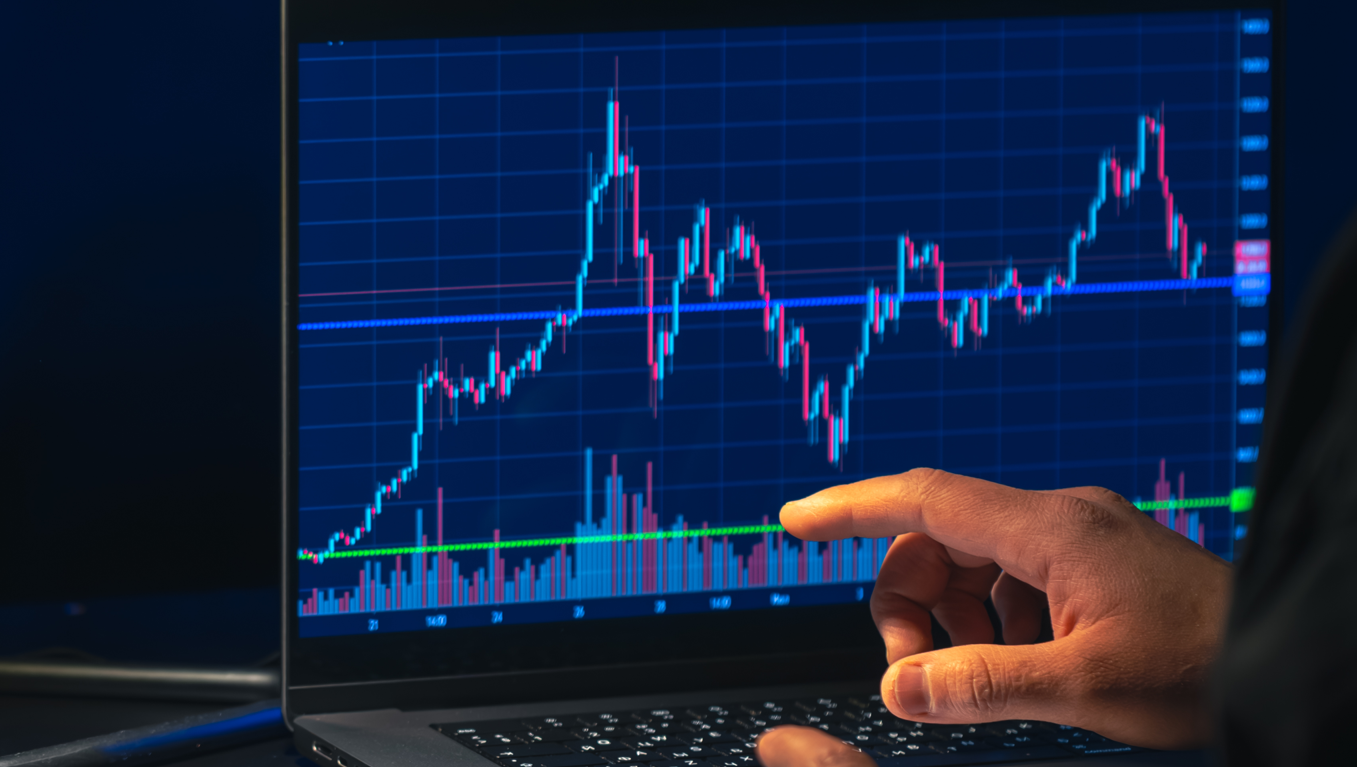
Over the last 12 months, TSMC’s stock has increased by 136%. On the NYSE, the company’s market value surpassed $2 trillion. Revenue increased by 35% in the first quarter of 2026 compared to the same period the previous year, and comprehensive income increased by about 60%. In practically any industry, the profit margin of 46.5% would be remarkable, but in one as capital-intensive as semiconductor manufacturing, it feels especially startling. Investors believe that TSMC was treated by the market for years as a regional industrial stock when, in reality, it was closer to the core of global technology.
Most of the story can be found in the customer list. TSMC’s factories handle the chip designs of Nvidia, Apple, Broadcom, AMD, Qualcomm, and other companies that collectively hold a remarkable portion of the world’s most valuable technology. The reason for this arrangement is that the majority of chip designers do not own factories, and even those who do are unable to match TSMC’s cutting-edge process technology. Because TSMC benefits from the success of everyone it manufactures for thanks to the foundry model, the company’s competitive position is arguably more resilient than that of any single chip designer. TSMC eventually produces the chips when Nvidia secures a contract for an AI data center. It is structural leverage.
The story gained a new dimension with the announcement of the Sony partnership on May 8. A non-binding memorandum of understanding was signed by Sony Semiconductor Solutions, the world leader in image sensors, and TSMC to develop and produce next-generation image sensors through a proposed joint venture in Kumamoto, Japan. The majority and controlling shareholder will be Sony. The strategic reasoning is obvious: the need for high-performance image sensors grows as AI is used in robotics, autonomous cars, and industrial systems. TSMC’s relationship with JASM, the joint fab venture in Kumamoto with a combined investment of over $20 billion across two facilities, is strengthened by the deal.
In the long run, the bull case for TSMC stock is based on a few solid hypotheses. According to TSMC’s own projections, revenue from AI accelerator chips is anticipated to increase at a compound rate in the mid-to-high 50s percent range through 2029. IDC projects that by 2026, total semiconductor sales will surpass $1.29 trillion, with the AI server market expanding more than fourfold between now and 2030. By the end of the decade, TSMC may be close to earnings of about $39 per share, according to analyst consensus. When a 34x multiple is applied, it yields a 2030 price target of about $1,325, which is more than three times the current share price. This is roughly in line with Nasdaq-100 averages.
Whether that trajectory continues uninterrupted is still up for debate. In analyst notes, geopolitical risk surrounding Taiwan is still a recurring background issue that never completely goes away. A new variable was introduced by the recent chip manufacturing agreement between Apple and Intel: TSMC’s share of that relationship could change at the margin if Intel is able to reclaim some of Apple’s production. Although they are not yet a threat at the most sophisticated nodes, growing competition from Samsung and Intel Foundry Services is not static. Additionally, TSMC must continue to build capacity ahead of demand due to its massive capital expenditure requirements. This is a bet on the future that can occasionally result in uncomfortable quarters when timing is off.
It’s difficult to ignore, though, that the fundamental justification for TSMC is remarkably straightforward for a business of this complexity: practically every significant advancement in computing necessitates a chip manufacturer, and the world’s best chips are produced in Hsinchu. It’s been decades since that observation was made. The degree to which the market is pricing it aggressively has changed.
The latest clash between Donald Trump and Giorgia Meloni has added fresh tension to an already fragile political...

It’s never been done before. On June 15, 2026, the White House lawn became something no one could...
Until you look at the numbers for a minute, they don’t seem quite real. Nebius Group recently reported...