
Vector and Nammo Armed Drones Scale Up for Mass Production
Vector Defense and Nammo announced an expanded partnership Monday at the Association of the United States Army’s annual...
Every few years, a room is stopped by something said by Warren Buffett. He says it so simply, and that’s precisely what makes it land, not because he’s dramatic about it—he never is. The 95-year-old told a CNBC interviewer last weekend at the Berkshire Hathaway annual meeting that he had never seen people in “a more gambling mood than now.” He was seated in the front row of the directors’ section for the first time instead of on the stage he had occupied for decades. He went on to refer to the stock market as “a church with a casino attached.” After that, he became silent.
The portion that stays with you is the cash pile. Currently, Berkshire Hathaway has about $397 billion in cash and US Treasury bonds. That figure was $106 billion four years ago. The growth occurred because Buffett and his successor, Greg Abel, have been net sellers of stocks for 14 consecutive quarters, offloading roughly $195 billion more in equities than they have bought. This is not because Berkshire’s businesses suddenly started printing more money, even though they are profitable. That is not an adjustment to the portfolio. That’s a claim.
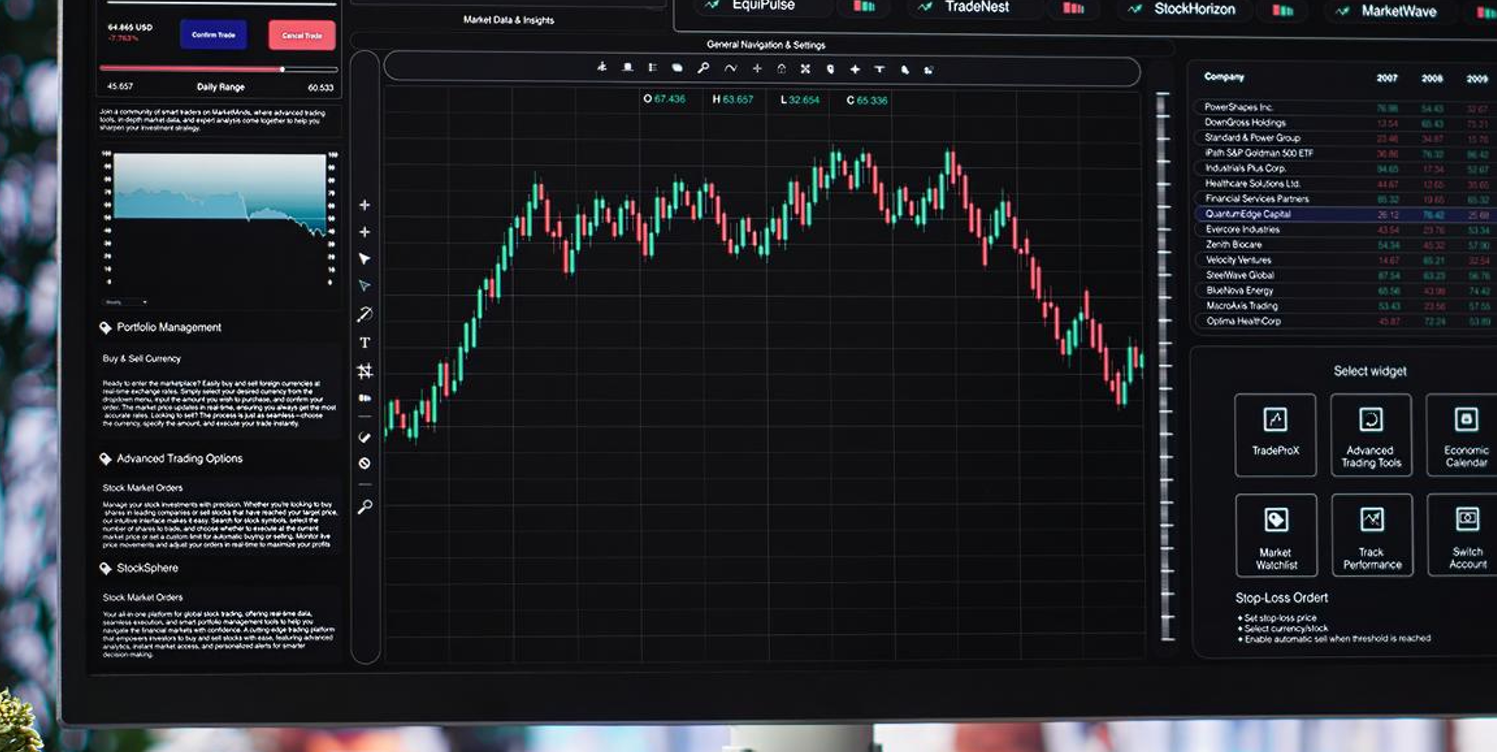
On April 30, the market capitalization to GDP ratio known as the Buffett Indicator—which Buffett once referred to as “probably the best single measure of where valuations stand at any given moment”—screamed to almost 227%. The historical long-term average is 88%. The dot-com bubble was the only other time the ratio was even close to this range, and that comparison is uncomfortable. Similar findings can be found in the S&P 500 Shiller CAPE ratio, which shows that inflation-adjusted stock prices in relation to earnings have hit a level never seen in market history. There is no ambiguity in the data. Simply put, when markets continue to rise, it’s simple to ignore.
There’s a feeling, watching Buffett navigate this moment, that he is doing something he has done before and that most investors missed at the time. Berkshire had been accumulating cash in 2008. In the teeth of the financial crisis, Buffett stepped in and handed Bank of America $5 billion in preferred stock financing, taking 700 million warrants at $7.14 per share as part of the arrangement. When he exercised those warrants in 2017, the immediate profit was $12 billion. It’s possible the $397 billion sitting in Berkshire’s accounts today is simply the same playbook on a much larger scale — waiting, with remarkable discipline, for the moment when prices get genuinely interesting.
What makes the current situation curious is that Buffett isn’t telling anyone to sell everything and hide. He’s been clear that investing right now isn’t exactly “terrible” — Berkshire quietly opened a new position in The New York Times and added to its Domino’s Pizza stake in the fourth quarter of last year. It’s not a fire alarm. It’s more like a careful observation from someone who has seen enough market cycles to know what excessive optimism looks like up close. He sees the speculation in AI infrastructure stocks, in space companies trading at valuations that require extraordinary futures to justify, in corners of the market where price and reality have drifted apart in ways that tend not to end quietly.
It’s hard not to notice the specific language Buffett used. A casino. Not a frothy market, not an overheated sector. A casino. This term suggests that the relationship between price and value has loosened in a way that typically corrects itself, sometimes gradually and sometimes all at once, and that luck is doing more work than analysis. Greg Abel, who currently oversees that massive cash reserve and manages Berkshire’s daily operations, has made no indication that he disagrees with his predecessor’s assessment. They both seem to agree that patience is the best course of action.
It’s genuinely unclear if the warning turns out to be prophetic in three months or three years. As anyone who waited for a dot-com correction in 1998 or 1999 discovered the hard way, markets can remain pricey for a very long time. However, Buffett’s track record over the past 60 years merits at least a moment of serious thought. Because he knew when not to buy, the man amassed one of the biggest fortunes in history. He isn’t making many purchases at the moment. It seems worthwhile to know that.
Vector Defense and Nammo announced an expanded partnership Monday at the Association of the United States Army’s annual...

The TSMC earnings season preview is the week’s focal point, with Taiwan Semiconductor Manufacturing (TSMC) reporting Thursday as...

The EU-China hybrid deal announced on October 9 in Beijing is less a resolution than a redirect: Brussels...