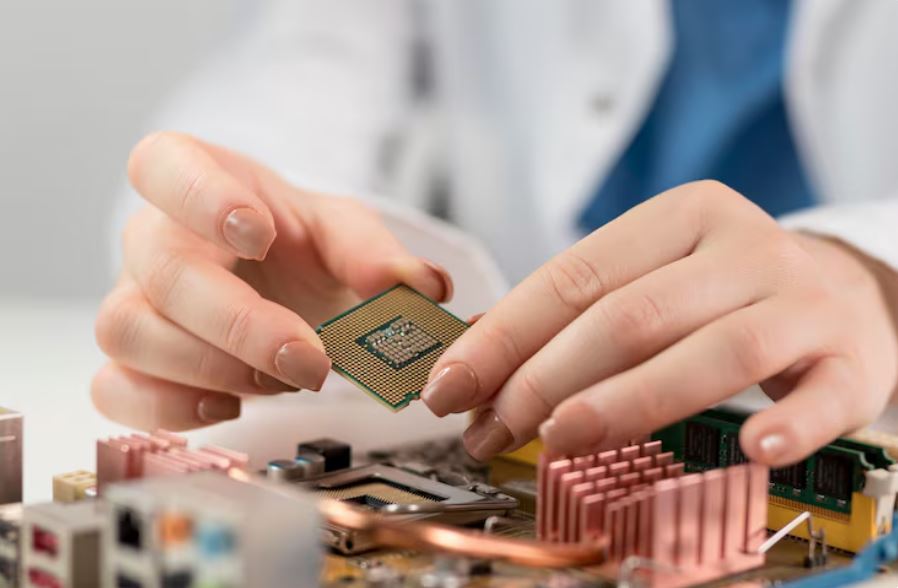
The Chip Stock Symbiosis: Why Semiconductor Surges Are Lifting Automotive Industrial Shares
The discourse surrounding semiconductors has mostly adhered to a well-known script for the last two years. Nvidia, GPUs,...

When someone says something they shouldn’t during a Fortune 100 earnings call, a certain silence descends. That quiet has become Dan Schulman’s specialty. Six months into his position, the new CEO of Verizon continues to publicly state what most CEOs only discuss at private dinners: artificial intelligence will destroy the labor market, and it is now morally wrong to act otherwise.
The number that keeps coming up is Schulman’s. In two to five years, he estimates that unemployment will be between 20% and 30%. That isn’t a qualifier-encased, soft, hedged forecast. The Wall Street Journal interviews, Axios sit-downs, and Morgan Stanley conference rooms all reiterate this flat statement. To put things in perspective, the Great Recession peaked at about 10%. About 25% were affected by the Great Depression. By integrating AI into that business, Schulman is essentially asking why no one else will.
The disruption Schulman describes is already apparent in subtle ways when you walk into a Verizon store in suburban Oregon. There is one in Tigard with the typical blue signage, demo phones attached to their stands, and a few employees who appear to be underemployed. AI is being used more and more in Verizon’s own customer support. The business has been discreetly cutting costs, reorganizing, and shifting funds away from employees and toward technology. The 13,000 layoffs in November of last year were not presented as an AI initiative. However, the pattern points to something more intentional.
The history is important. Over a three-year period, Verizon lost about 2.25 million customers, primarily due to price increases and increased competition. Churn on postpaid phones increased to 0.98%. Schulman took over a carrier that was losing customers, and he found two solutions: streamline the company and heavily invest in artificial intelligence. He stated last month at a Morgan Stanley event that he wants Verizon to become a “AI-first company.” It’s the kind of expression that seems meaningless until you recall what it usually means in terms of headcount.
The willingness to accept the cost is what sets Schulman apart from the throng of CEOs endorsing AI. “Everyone knows it’s a very difficult time,” he stated in the WSJ interview. Therefore, I believe that you should be as truthful, realistic, and authentic as you can.” Lines like that have a hint of wry resignation. Additionally, he established a $20 million career-transition and retraining fund. This is a modest sum of money for Verizon, but it’s a gesture, and gestures count when they’re infrequent.
The degree to which his framing resembles a form of historical romanticism is difficult to ignore. He likened this moment to either the invention of fire or living through the Renaissance. He asked the Journal, “How cool would that be?” There’s not just fear there; there’s belief. By the end of 2027, he believes AI will be on par with humans, with humanoid robots and quantum computing following closely behind. That mixture of caution and hope is uncommon. The majority of executives choose a side.
The information beneath his caution is not fringe. AI was blamed for 54,836 job losses in 2025, according to Challenger, Gray & Christmas. Another 27,645 had already been counted by the beginning of this year. According to a Quinnipiac survey, 73% of blue-collar workers and 71% of white-collar workers believe AI will reduce employment opportunities. According to a survey, 80% of Americans expressed concern. A subtle observation made by Quinnipiac researcher Tamilla Triantoro is that people are more likely to anticipate a tougher market for others than they are to see themselves losing out. The difference between individual denial and societal fear is a warning sign in and of itself.
It’s still unclear if Schulman is correct about the magnitude or if 20%–30% proves to be the kind of prediction that ages awkwardly. It is more akin to the weather than science to predict employment two to five years in advance. However, it appears that the discourse has at last changed. At this point, the courteous part of the AI debate—which is filled with terms like “augmentation” and “human-AI partnership”—feels primarily performative. Schulman is not being courteous. And whether your job is in the way of what he anticipates will likely determine whether you find that reassuring or frightening.
The discourse surrounding semiconductors has mostly adhered to a well-known script for the last two years. Nvidia, GPUs,...

When a research note that no one quite anticipated appears on a trading floor, a certain kind of...
The way BBAI has been trading lately seems almost unyielding. Even though the stock closed at $4.37 on...