
US Army Brain Health Assessment Hits 97%, but Gaps Loom Large
The US Army brain health assessment program has reached 97% completion across active duty, National Guard, and Reserve...

The income statement conveys a different story than the stock chart. Even though the company just delivered what its bulls had been waiting for for years, XPeng closed Monday at $17.80 on the NYSE, down roughly 1.7% on the day and deep in a quarter it would prefer to forget—off 11% over the last three months and 12% year-to-date. For a business that has lost billions since its 2020 IPO, XPeng’s first-ever quarterly profit was announced on March 20. After a quick applause, the market resumed selling it.
The discrepancy between what XPeng is evolving into and how traders continue to price it is the reason that reaction feels strange. In 2025, full-year production reached 429,445 vehicles, which was not far from where Tesla was in China a few years prior. Q4 revenue reached 22.25 billion yuan, a 38% year-over-year increase. The gross margin increased. According to XPeng’s own filings, technology-licensing revenue from Volkswagen is now a legitimate, ongoing line item, totaling 1.72 billion yuan in the first half of 2025 alone. It’s not a pastime. Ten years ago, that would have sounded like satire—a German automaker paying a Chinese startup for its electronic architecture.
Nevertheless, 27,415 vehicles were delivered in March. Though clearly below Li Auto’s 41,053 and behind what the bulls had hoped for following February’s Lunar New Year lull, it was still respectable and improved sequentially. Early in April, the name was downgraded by two brokerage desks. For a company this well-known, short interest was at 47.19 million shares, or more than 6% of the float. Bank of America maintained its rating of “buy.” In a piece, CNBC described XPeng as “a threat Western automakers can no longer ignore.” The $24.79 analyst consensus target suggests an increase of almost 40%. So far, none of that has resulted in a sustained rally.
The Volkswagen narrative is arguably the most overlooked aspect of the whole. What began as a $700 million equity investment in 2023 has evolved into something stranger and more intriguing: a joint electronic-and-electrical architecture that Volkswagen’s CMP platform will employ in China starting in 2026. It was expanded to include ICE and plug-in hybrid platforms last August. In November, XPeng declared that Volkswagen would be its first external licensee and unveiled a new narrow-roads driver-assist system. It’s difficult to ignore how uncommon that arrangement is. German metal, shared charging stations, and Chinese software. This screenplay was not being written ten years ago.
The flying car is another. This year, XPeng’s subsidiary AeroHT plans to begin mass production of its split “land aircraft carrier”—a pickup truck-sized vehicle with a two-seater eVTOL in its bed. When He Xiaopeng first described it, the majority of Western journalists rolled their eyes. Since then, the prototype has been flown in public at a number of Chinese airshows. The question of whether it sells in commercial quantities is different, and to be honest, it probably won’t affect earnings in 2026. What matters is that XPeng’s brand is being defined in China as the tenacious engineering shop, the one that is prepared to try more hardware than Li Auto, faster loops than NIO, and stranger bets than BYD.
To be honest, the macro image is unattractive. Auto sales in China slowed in Q1. Beijing reduced its growth goal. On trailing metrics, analyst notes consistently characterize XPeng as “overvalued”; a P/E of negative 108 does that. The reported plans for an assembly plant in Thailand and an expansion into Latin America are more important than they seem because exports will have to do a lot of heavy lifting. As this develops, it appears that XPeng is one successful export market and one clean quarter away from a significantly higher rating. Additionally, the company has previously fallen short of expectations; on May 21, earnings will reveal to the market which version is succeeding.
The US Army brain health assessment program has reached 97% completion across active duty, National Guard, and Reserve...
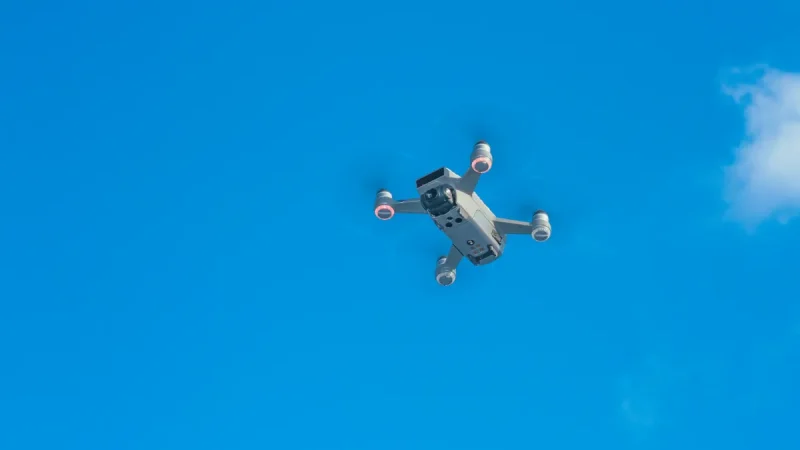
Kongsberg’s Poland counter-drone factory plan, announced at the Warsaw Security Forum on October 12, is more than a...

Three U.S. Army soldiers received Purple Hearts for their actions during the Operation Epic Fury Purple Hearts ceremony...