
US Army Brain Health Assessment Hits 97%, but Gaps Loom Large
The US Army brain health assessment program has reached 97% completion across active duty, National Guard, and Reserve...

The first BYDs to come off a European assembly line are being prepared for shipping at a factory outside of Szeged, Hungary. Under fluorescent lights, workers in branded polos pass rows of Atto 3s and Seals, the vehicles still gleaming with that peculiar freshness only newly painted steel can have. Ten years ago, the notion of a Chinese automaker manufacturing cars in large quantities within the EU would have been greeted with courteous skepticism. It seems almost inevitable these days. Investors in BYD stock are primarily attempting to price that shift rather than any quarterly headline.
As is typical with BYD, the numbers are pulling in two different directions. Sales in Europe reached over 187,000 vehicles last year, a nearly 270% increase. In the first quarter of 2026, more than 21,000 BYDs were registered in the UK alone, with a record 15,000 in March, accounting for more than 11% of the nation’s total battery and plug-in hybrid market. In an unprecedented move for a Chinese automaker, the company has now applied to join ACEA, the European auto lobby. Additionally, BYD plans to open about 20 dealerships in Toronto, Montreal, Vancouver, and Calgary in Canada, where tariffs on Chinese EVs were reduced from 100% to 6.1% in January.
And there’s the house. This is the other side of the story, the side that makes investors wary. BYD’s revenue increased by just 3.5 percent in 2025 following years of remarkable top-line growth. For a company that used to post 40 or 50 percent numbers without blinking, that is a startling slowdown. BYD sold about 700,000 cars domestically in the first quarter of 2026, and in March it accounted for 22.8% of China’s NEV market. Even so, those are huge numbers. However, the pace is slower, price wars are putting pressure on the margins, and analysts like Daiwa have begun to reduce their targets for Hong Kong. At HK$174, Citigroup is still optimistic. A distinct signal is emerging from the divide in sell-side opinions.
In essence, the company’s claim is that everything else is impacted by the future. The management increased its goal for overseas sales in 2026 to 1.5 million units. This week saw the release of the new Sealion 05, which comes with a plug-in hybrid starting at 96,000 yuan and the Blade Battery 2.0 along with a Flash-Charging system that, according to BYD, can charge compatible batteries to 70% in five minutes, even in extremely cold temperatures. Because BYD has subtly developed a habit of shipping technology before it markets it, this is the kind of technical claim that would dominate a Tesla earnings call and hardly raises an eyebrow here.
Observing this business in action is almost disorienting. It differs structurally from all Western automakers due to the vertical integration of batteries, semiconductors, and assembly. From the low-cost Seagull to the high-end Yangwang line, the domestic brand hierarchy is more akin to a consumer electronics portfolio than the lineup of a conventional automaker. Furthermore, the geopolitical positioning is delicate, to put it mildly. Europe is getting warmer. In a sense, the United States is closed. It’s thawing in Canada. Latin America is already a significant consumer base. Because BYDs are economical in terms of fuel and maintenance, taxi drivers in São Paulo and Mexico City are discreetly purchasing them.
On April 28, the Q1 earnings report will provide some information, but probably not all of it. Analysts predict EPS of about 0.53 yuan and revenue of about 148 billion yuan. There is a tiny bit of technical optimism because the stock has held above its 50- and 200-day moving averages thus far. As this develops, there’s a sense that BYD is about to embark on the most fascinating stage of its existence—it’s no longer the tenacious Chinese upstart, it’s not yet the dominant global incumbent, but rather something in between. The remainder of this year will be focused on how investors value that middle ground.
The US Army brain health assessment program has reached 97% completion across active duty, National Guard, and Reserve...
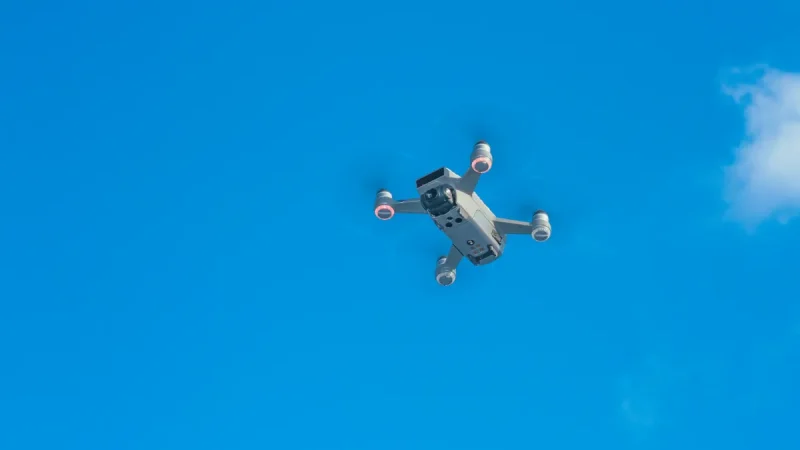
Kongsberg’s Poland counter-drone factory plan, announced at the Warsaw Security Forum on October 12, is more than a...

Three U.S. Army soldiers received Purple Hearts for their actions during the Operation Epic Fury Purple Hearts ceremony...