
US Army Brain Health Assessment Hits 97%, but Gaps Loom Large
The US Army brain health assessment program has reached 97% completion across active duty, National Guard, and Reserve...

As the year draws to a close, Boeing finds itself at a complex crossroads. The aerospace giant is simultaneously experiencing a resurgence of confidence from Wall Street, operational progress, and fresh geopolitical challenges. This mix of factors is testing the ongoing corporate turnaround, with a major U.S. Air Force contract and an upbeat analyst call now facing off against newly imposed sanctions from China.
From a market perspective, Boeing’s shares have demonstrated notable resilience. Currently trading around $216.37, the stock is hovering just below its recent 52-week high and has posted a gain of approximately 29% since the start of the year. This performance marks a significant recovery from its 52-week low.
Fundamentally, the company remains in a restructuring phase. Its third-quarter 2025 results revealed a substantial loss per share of $7.47, which was considerably wider than the anticipated loss of $0.51. This shortfall was primarily driven by special charges related to the 777X program, totaling $4.9 billion. Despite this, quarterly revenue increased by 30.4% year-over-year, pointing to sustained underlying demand even amid operational execution challenges.
Valuation models suggest the equity remains undervalued based on current data, with estimates pointing to a discount of roughly 35%. The analyst consensus rating stands at “Moderate Buy,” with an average price target near $233.
A key source of recent optimism stems from the commercial airplane division’s production stability. After a period of difficulty, Boeing is now consistently building 38 of its margin-rich 737 MAX jets each month. Furthermore, the U.S. Federal Aviation Administration (FAA) has recently approved an increase in this production rate to 42 aircraft per month.
This progress has not gone unnoticed by market experts. J.P. Morgan analysts have named Boeing their “Top Pick” for the coming year, raising their price target to $245. Their upgraded assessment is rooted in the observed stabilization of the company’s production lines, fueling belief that the most severe manufacturing issues may now be in the past.
On the defense side, Boeing’s Defense, Space & Security (BDS) unit provided a clear positive signal. The U.S. Air Force awarded the company a contract valued at approximately $2.044 billion for engine replacement and integration work on the B-52H Stratofortress fleet. This deal underscores regained stability in a segment that has returned to profitability after struggling with loss-making fixed-price projects. For the first nine months of 2025, BDS reported an operating margin of 1.9%, a figure that, while not yet stellar, indicates a positive trend reversal.
However, the operational landscape is far from uniformly positive. In the long-haul commercial segment, delays persist. The inaugural commercial service for the 777X has been pushed back to early 2027. Additionally, the delivery schedule for the new Air Force One aircraft has been delayed to mid-2028.
Geopolitics introduces another layer of uncertainty. China has enacted sanctions against Boeing and other U.S. defense contractors, formally in response to American arms sales to Taiwan. While the direct impact on the defense business is limited due to existing embargoes, the move carries concerning implications for the civil aviation sector. China represents one of the most critical growth markets for passenger aircraft. These sanctions amplify uncertainty at a time when Boeing relies on stable order flow and predictable certification processes. Market observers are closely watching reports that Beijing is considering a major order for up to 500 aircraft from rival Airbus, aimed at reducing dependency on U.S. suppliers.
Strategically, Boeing continues to work on shoring up its supply chain. A cornerstone of this effort was the completed acquisition of Spirit AeroSystems in early December 2025. By reintegrating this key supplier, the company aims to exert greater control over quality standards and production timelines, seeking to avoid future delivery setbacks.
Looking ahead to 2026, the 737 MAX production ramp-up remains the central lever for Boeing’s recovery. Internally, the company is targeting a manufacturing rate of 52 jets per month by the end of 2026. The immediate priority is a smooth and trouble-free increase to 42 aircraft monthly, avoiding new quality defects or regulatory pushback.
The coming months will also clarify the tangible impact of China’s sanctions and potential large-scale Airbus orders on Boeing’s commercial order book. Ultimately, the interplay between a growing defense business, higher production rates, and persistent geopolitical crosswinds will define Boeing’s trajectory as it moves into the new year.
The US Army brain health assessment program has reached 97% completion across active duty, National Guard, and Reserve...
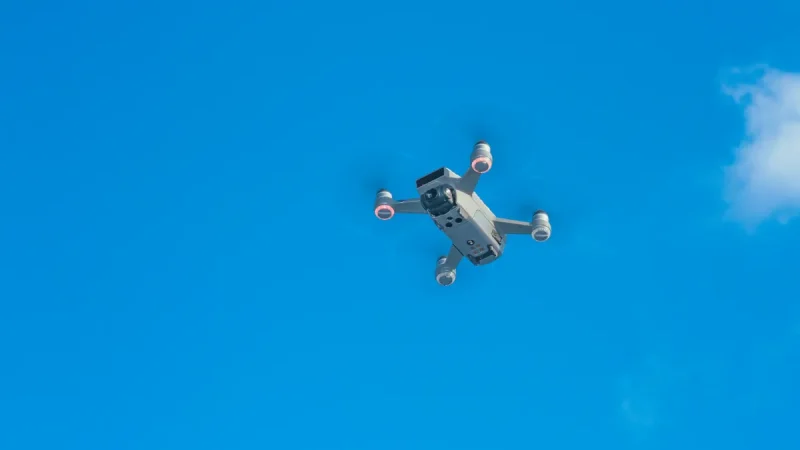
Kongsberg’s Poland counter-drone factory plan, announced at the Warsaw Security Forum on October 12, is more than a...

Three U.S. Army soldiers received Purple Hearts for their actions during the Operation Epic Fury Purple Hearts ceremony...