
US Army Brain Health Assessment Hits 97%, but Gaps Loom Large
The US Army brain health assessment program has reached 97% completion across active duty, National Guard, and Reserve...

The performance of Chinese electric vehicle (EV) maker BYD presents a complex narrative. A dramatic surge in overseas shipments is emerging as a powerful counterbalance to emerging softness within its home market, creating a pivotal moment for the company’s equity story.
For the third consecutive month, BYD’s total vehicle sales have recorded a year-on-year decline. The company sold 480,186 new energy vehicles in November. While this figure represents an upward movement of 8.8% from October’s results, it falls 5.25% short of the volume achieved in the same month last year.
A closer look at the November sales mix reveals divergent trends across its powertrain segments:
* Battery Electric Vehicles (BEVs): Sales remained robust at 237,540 units, marking a solid 19.9% year-over-year increase.
* Plug-in Hybrid Electric Vehicles (PHEVs): This segment experienced a pronounced contraction, with deliveries falling 22.4% to 237,381 vehicles.
* Cumulative Performance: Across the first eleven months of the year, total deliveries have reached 4.182 million units, maintaining an overall growth rate of 11.3%.
In stark contrast to the domestic picture, BYD’s international operations are accelerating at an extraordinary pace. The automaker’s export volume for November skyrocketed to 131,935 electric vehicles. This staggering number constitutes a year-on-year explosion of 325.91%.
Specific regional successes underscore this global push. In the United Kingdom, for instance, BYD registrations surged by 229% to reach 3,217 units. This performance notably diverges from that of key competitor Tesla, which reported a 19% decline in new UK registrations for the same period.
Beyond vehicle manufacturing, BYD’s battery subsidiary, FinDreams, continues its growth trajectory. The division recently broke ground on a new industrial project in Hubei province. Its installed capacity for battery and energy storage systems has climbed to 27.7 GWh, reflecting a 23.13% expansion.
This rapid growth is being accompanied by a heightened focus on quality control. The company has launched a “Zero-Defect Initiative” across its battery production facilities. This move follows a software update campaign affecting 88,981 Qin Plus DM-i sedans manufactured between 2021 and 2023. The update addresses potential inconsistencies in battery pack manufacturing that could pose safety risks. BYD has implemented a monitoring program for the affected vehicles and is providing free battery replacements where necessary.
The company’s burgeoning international success may prove to be a critical stabilizing force as it navigates domestic headwinds and reinforces its manufacturing integrity.
The US Army brain health assessment program has reached 97% completion across active duty, National Guard, and Reserve...
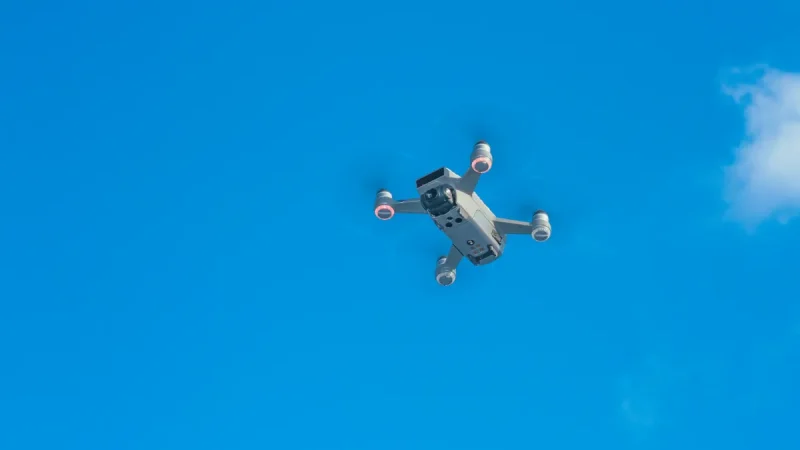
Kongsberg’s Poland counter-drone factory plan, announced at the Warsaw Security Forum on October 12, is more than a...

Three U.S. Army soldiers received Purple Hearts for their actions during the Operation Epic Fury Purple Hearts ceremony...