
The BYD Vertical Integration Premium: Why the EV King is Still Rated a Wall Street “Strong Buy”
BYD’s expansive Pingshan complex in Shenzhen is one of those factory tours that leave a lasting impression. One...
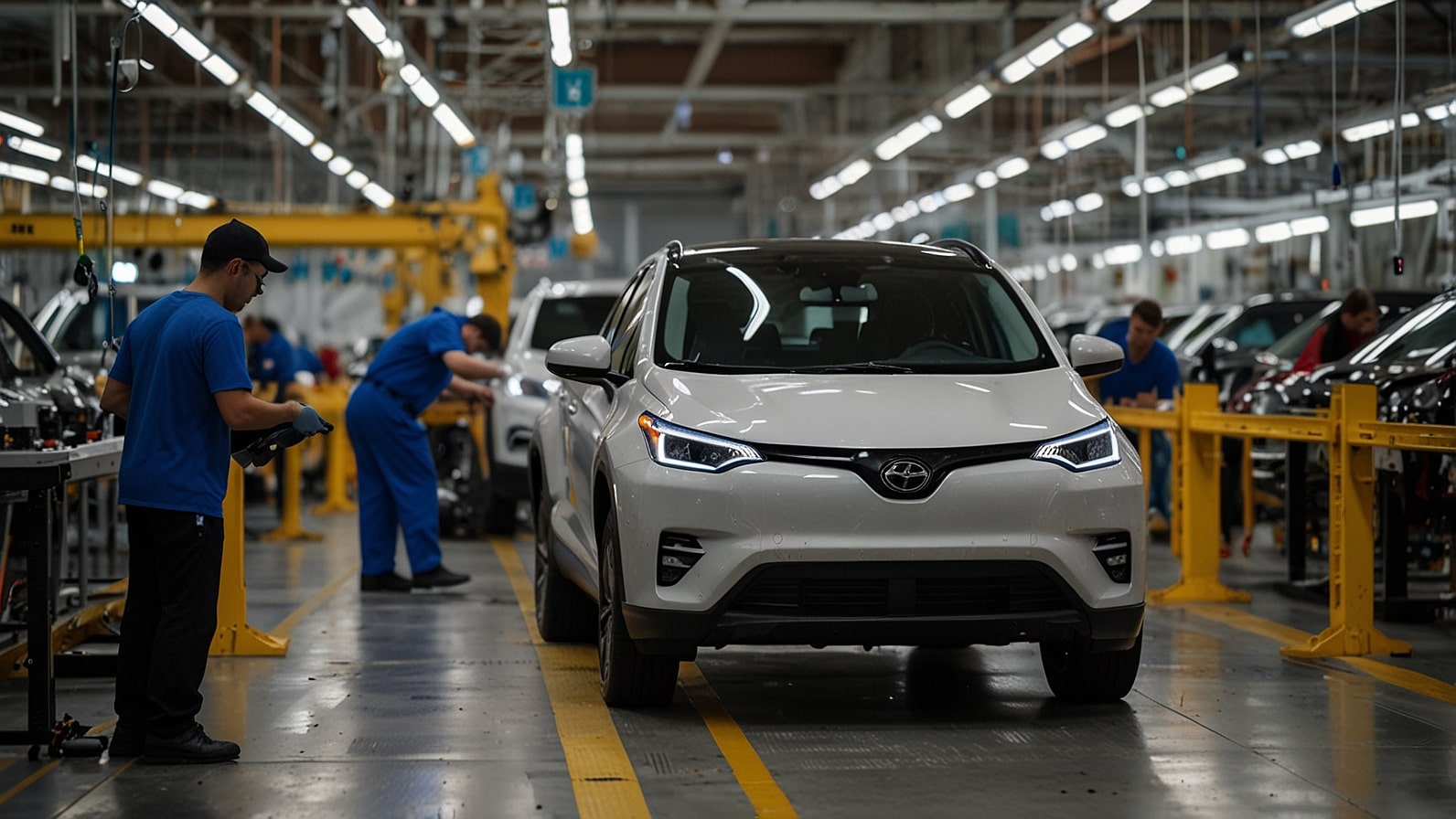
The US automotive industry is undergoing a revolution, with skyrocketing demand for hybrid and electric vehicles (EVs) driving major advancements in local production. By September 2025, automakers such as General Motors, Ford, and Tesla are expected to redouble their investment in U.S. production plants, creating thousands of jobs and rejuvenating industrial heartlands. This consumer-led boom, brought about by sustainable mobility trends and favourable governmental policies, is transforming the global $2 trillion automobile industry, with the U.S. at the centre of the green vehicle revolution.
The shift to hybrids and EVs has been an economic powerhouse despite such disruptions as tariffs and challenges in the supply chain. According to analyst projections, the U.S. auto manufacturing industry will expand by 7% annually up to 2030, contributing an additional $150 billion to the economy. Beyond increasing production, this growth is reshaping competition as American automakers gain an edge over Asian and European rivals.
The driver of this development is clear: American adoption of electrified cars is reaching unprecedented levels. Industry data shows that hybrid and EV sales made up 18% of total U.S. sales in 2024, compared to just 11% in 2022. Hybrids serve as a transitional choice for consumers not yet ready for fully electric models, while EVs like the Tesla Model Y and Ford Mustang Mach-E dominate the electric market.
Government incentives, such as the $7,500 federal EV tax credit and state-level rebates, further encourage localised production.
Domestic investment is reshaping U.S. auto manufacturing, reversing decades of offshoring. Automakers are committing billions:
This resurgence has turned Rust Belt states into green-tech hubs. Auto-related employment has grown 15% since 2023, reaching 1.2 million workers. Ancillary industries, like battery recycling and autonomous-driving software, are also flourishing.
Federal and state policies are fueling momentum. The Inflation Reduction Act of 2022 continues into 2025, injecting $20 billion into battery plants. The Biden administration’s target for 50% of new vehicle sales to be electric or hybrid by 2030 is guiding investments. States like Georgia and Tennessee attract automakers with tax incentives — Rivian’s $5 billion plant in Georgia alone will create 7,500 jobs by 2026.
The ripple effect is massive: each auto manufacturing job creates four indirect jobs in logistics, steel, and technology. In 2024, the industry contributed $110 billion to U.S. GDP, with projections of even higher figures by 2030.
Despite optimism, hurdles remain:
Competition is also heating up. Chinese automaker BYD eyes the U.S. market with low-cost models, while European giants like Volkswagen and BMW expand U.S. manufacturing, including hybrid SUVs in South Carolina by 2026.
Consumer preferences are evolving:
Manufacturers adapt by diversifying offerings — from Stellantis’ plug-in hybrid Jeep Wrangler to Cadillac’s luxury EV Celestiq.
This growth aligns with climate goals: the U.S. aims to cut transport emissions by 40% by 2030. Local production reduces supply-chain emissions, while recycling programs like GM’s battery reuse initiative support a circular economy.
Globally, U.S. automakers are reducing reliance on Asian imports, creating trade frictions with China but strengthening alliances with Europe in next-gen battery research.
Wall Street is bullish: auto stocks have outperformed the S&P 500 by 10% in 2025. Tesla and Rivian lead gains, with investors betting on breakthroughs in autonomous driving and vehicle-to-grid tech. Green bonds are funding new plants at high demand.
By 2030, 40% of U.S. vehicle production is expected to be electrified, with 80% sourced domestically. Advances in solid-state batteries and AI-driven manufacturing may lower costs further, expanding EV access.
The adoption of hybrids and EVs is not just a passing trend but a structural transformation of the U.S. auto industry. Factories are thriving, new models are rolling out, and America is steering toward a future where economic growth and sustainability converge. While challenges remain, the momentum is undeniable — marking a new era in U.S. manufacturing.
BYD’s expansive Pingshan complex in Shenzhen is one of those factory tours that leave a lasting impression. One...

A Chinese car is still not available for purchase at an American dealership. Through two administrations, multiple rounds...

You’ll notice something that wasn’t there five years ago if you stroll through a BYD showroom in Bangkok...